Vivah Panchami 2026: Date, Tithi and How Ayodhya Celebrates
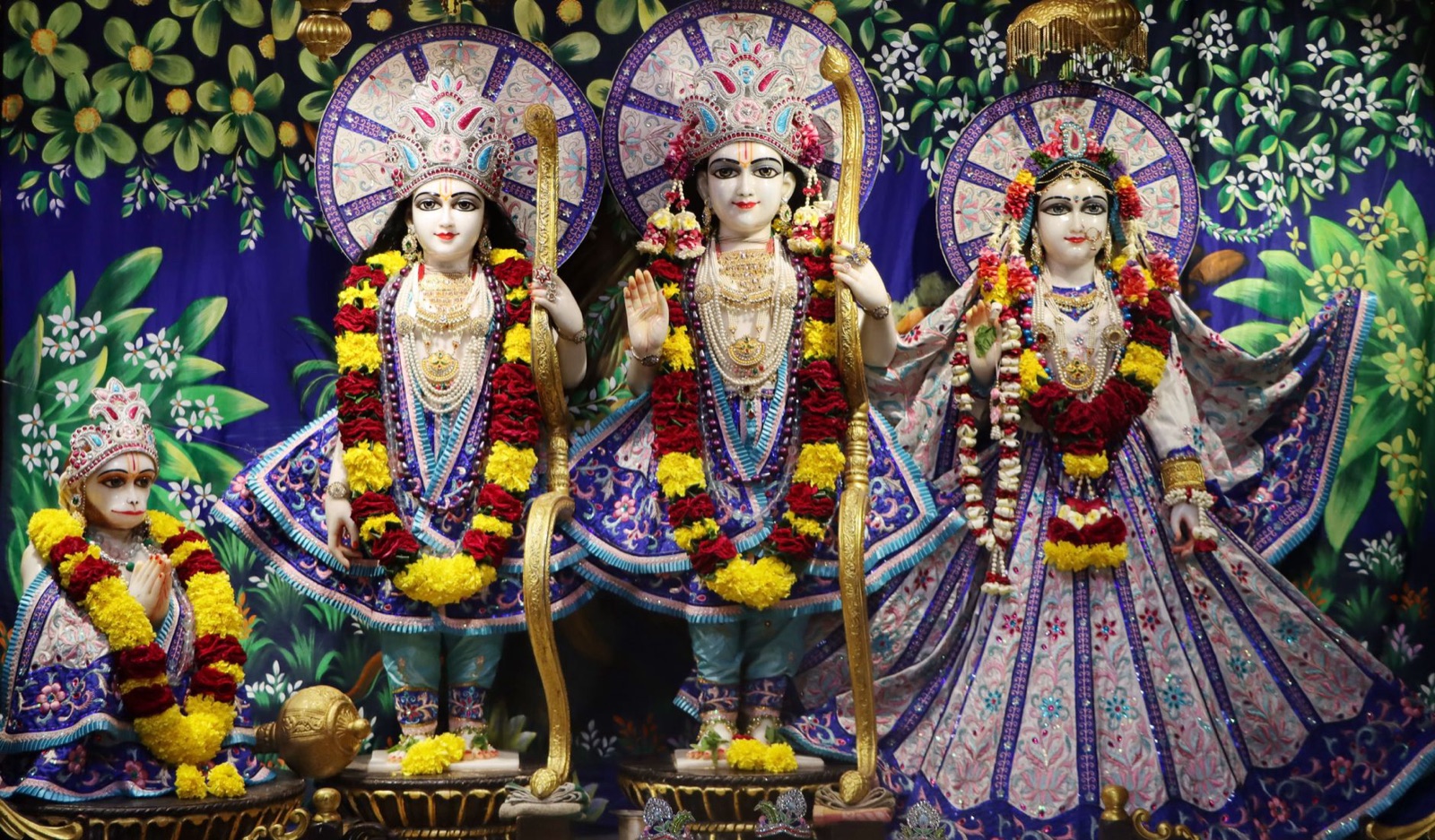
Vivah Panchami 2026 falls on Monday, 14 December 2026. It is the day Hindus remember the wedding of Lord Ram and Mata Sita, and it is observed on the Panchami (fifth day) of the bright half of the month of Margashirsha. In Ayodhya, Ram's city, and in Janakpur, Sita's, it is one of the most loved festivals of the year. This guide gives the tithi timings, explains what devotees do on the day and why many families do not hold weddings on it, and sets out how to plan a December visit to Ayodhya around it.
Key takeaways
- Vivah Panchami 2026 is on Monday, 14 December 2026, per Drik Panchang.
- Panchami tithi begins at 4:47 PM on 13 December and ends at 7:15 PM on 14 December 2026.
- The day marks the wedding of Ram and Sita, celebrated most of all in Ayodhya and in Janakpur, Nepal.
- Many families, especially in Mithila and Nepal, avoid holding weddings on Vivah Panchami; this is a folk belief, not a scriptural rule.
- Kharmas begins with Dhanu Sankranti on 16 December 2026, two days after Vivah Panchami.
- December mornings in Ayodhya are often cold and foggy; plan darshan for late morning and allow for late trains.
On this page
Vivah Panchami 2026 date and tithi
The festival is fixed by the lunar calendar, not the solar one, which is why its English date moves every year. In 2025 it fell in late November; in 2026 it moves to mid-December. According to Drik Panchang's Vivah Panchami 2026 page, the timings are:
| Detail | Vivah Panchami 2026 |
|---|---|
| Festival date | Monday, 14 December 2026 |
| Hindu month and tithi | Margashirsha, Shukla Paksha Panchami |
| Panchami tithi begins | 4:47 PM, Sunday 13 December 2026 |
| Panchami tithi ends | 7:15 PM, Monday 14 December 2026 |
The tithi is running at sunrise on 14 December, which is why that is the day of observance. Tithi start and end times are the same moment everywhere in India, shown here in IST; sunrise differs a little from city to city. Other panchangs give times within a minute or two of these. If your family follows a particular local panchang or a temple's own calendar, go by that, and re-check the week you travel.
Two other dates sit close to Vivah Panchami 2026 and are worth knowing if you are planning anything around it:
- Dhanu Sankranti, 16 December 2026. Drik Panchang gives the Dhanu Sankranti moment as 10:29 AM on Wednesday, 16 December (New Delhi). This begins Kharmas, the month when the Sun is in Sagittarius, and many families do not hold weddings or similar ceremonies until Makar Sankranti in January.
- The weekend before. Vivah Panchami falls on a Monday, so the Saturday and Sunday before it are likely to be busier in Ayodhya than an ordinary December weekend.
The story behind the day
The story is told in the Valmiki Ramayana and, for most North Indian households, in Goswami Tulsidas's Ramcharitmanas. Sita, the daughter of King Janak of Mithila, was to marry whoever could lift and string the great bow of Lord Shiva at her swayamvar (the ceremony at which a bride chooses her husband). Many kings tried and failed. Ram, who had come to Mithila with the sage Vishwamitra and his brother Lakshman, lifted the bow, and it broke as he drew it. Sita placed the varmala (wedding garland) on him, and the wedding followed in Janakpur, with King Dashrath arriving from Ayodhya at the head of the barat (the groom's wedding procession).
Janakpur is now Janakpurdham in Nepal, and the Janaki Mandir there is the centre of the festival on that side of the border, where it is called Bibah Panchami. Ayodhya celebrates the same day as the groom's home.
Key insight
For Ayodhya, Vivah Panchami is a wedding in the family. The city does not just remember Ram's marriage; temples dress Ram as a groom, prepare a barat, and welcome the couple home, much as a family would.
What to do on Vivah Panchami
There is no single prescribed ritual, and families observe the day in their own way. Drik Panchang describes the common practices: devotees fast, perform puja to Ram and Sita, and read or listen to the episodes of their wedding. In practice, that usually looks like this:
- Puja of Ram and Sita at home. Set up an image or idols of Ram and Sita together, offer flowers, a lamp, incense, fruit and sweets, and many households dress the deities in new clothes or offer a small chunari (veil) to Sita.
- Reading the wedding episode. The Ram-Sita vivah passage of the Bal Kand of the Ramcharitmanas is the most common reading. Some families hold a full or partial path (recitation) over the day.
- A fast, if you keep one. Fasting is voluntary. Elderly devotees, anyone unwell and anyone on regular medication should keep it light or skip it, and check with their doctor.
- Darshan at a Ram-Sita temple. In Ayodhya that means Ram Mandir and Kanak Bhawan; elsewhere, any Ram temple near you.
- Kirtan and bhajan in the evening. Many temples hold devotional singing and wedding tableaux after sunset.
If you would like a pandit to perform a Ram-Sita puja for your family, at home or in Ayodhya, MargKGB can arrange a verified Pandit Ji through our puja booking service, and confirm the vidhi and the dakshina with you in advance.
A word on what we do not do: you will find many lists online of rashi-wise upay (zodiac-based remedies) promising results on Vivah Panchami. We do not publish those. The day is about devotion to Ram and Sita, and that needs nothing more than a lamp, a reading and a quiet hour.
How Ayodhya celebrates
Ayodhya marks Vivah Panchami at its temples, and in recent years the Ram Janmabhoomi temple has been at the centre of it. Two recent years show how large the occasion has become.
2024: tilak, barat and the return
Vivah Panchami 2024 was the first after the Ram Mandir consecration. The Shri Ram Janmabhoomi Teerth Kshetra held a Tilakotsav (the betrothal ceremony) at the temple on 18 November 2024, with tilak offerings sent from Sita's side in Janakpur, as reported by Swarajya. A barat then travelled from Ayodhya to Janakpurdham. Amar Ujala reported that the trust's general secretary, Champat Rai, and Ayodhya's mayor left on 4 December 2024 to join it, with the wedding set for 6 December at Janakpur. On its return, the procession, with Ram, his brothers and Sita, was welcomed at the trust's main entrance and again at Karsevakpuram, as the Free Press Journal reported.
2025: the Dharma Dhwaja
In 2025, Vivah Panchami fell on 25 November, and the day was chosen for the hoisting of the saffron Dharma Dhwaja (temple flag) on the shikhar (spire) of the Ram Mandir, marking the completion of the temple's construction. Prime Minister Narendra Modi and RSS chief Mohan Bhagwat hoisted the flag, as widely reported. Across the border in Janakpurdham, processions carrying the idols of Ram and Sita set out from the town's Ram and Janaki temples, with devotees and saints who had travelled with a barat from Ayodhya, according to ANI's report from Nepal.
Kanak Bhawan, the wedding-gift palace
Kanak Bhawan is the temple most closely tied to Ram and Sita as a married couple. Tradition holds that Kaikeyi gave it to Sita as a wedding gift. The present building, which looks more like a palace than a temple, was built by Maharaja Pratap Singh Ju Deo of Orchha and his queen, Vrishbhan Kunwari, and consecrated in 1891, according to the Uttar Pradesh government's page on Kanak Bhawan. The same page gives winter timings of 9:00 AM to 12:00 noon and 4:00 to 9:00 PM. On a festival day those can change, so ask at the gate.
What we cannot tell you yet
The 2026 programme, including whether a barat will travel to Janakpur and when, is announced by the temple trust and organisers closer to the day. We have not found an official 2026 schedule at the time of writing, and we would rather say so than guess. Follow the Shri Ram Janmabhoomi Teerth Kshetra's own announcements in early December.
Key insight
Festival days change how Ayodhya runs: roads near the Ram Mandir can be closed for processions, and darshan slots fill faster. Book your Ram Mandir pass early, keep the evening free, and do not plan a train out the same night.
Why many families avoid weddings on this day
It surprises many people that the anniversary of the most revered wedding in Hindu tradition is a day on which many families will not hold a wedding. The custom is strongest in Mithila and Nepal, and it is followed in parts of North India too.
The reasoning is simple and comes from love for Sita rather than any rule in the scriptures. Her married life was marked by sorrow: fourteen years of exile, her abduction by Ravan, and, later, separation from Ram. Families who follow the custom feel that a daughter married on the same day might share some of that hardship, and they choose another date.
Others see it differently and consider any day linked to Ram and Sita auspicious. Neither view comes from a scriptural injunction; it is a regional folk belief. If your family is choosing a wedding date in this season, the practical points are these:
- Ask your family pandit, and follow your own family's tradition.
- Remember that Kharmas starts on 16 December 2026, so many families will be looking at dates before that or after Makar Sankranti in January.
- Puja, darshan and katha on Vivah Panchami itself are considered good by everyone; the hesitation is only about weddings.
The same spirit is behind other wedding festivals in the calendar. Our guide to Tulsi Vivah explains the wedding of Tulsi and Shaligram, which traditionally opens the wedding season a few weeks earlier.
Planning a December visit to Ayodhya
A December trip for Vivah Panchami 2026 is very different from an October or March visit. The cold and the fog shape the whole day.
| What to plan for | What it means on the ground |
|---|---|
| Cold mornings and nights | Night temperatures in eastern Uttar Pradesh drop sharply in December; carry proper woollens, a cap and socks, especially for elderly parents |
| Dense fog | In December 2025, fog led to flight cancellations at Ayodhya's airport and train delays across the region; build in slack |
| Festival crowds | Book the Ram Mandir darshan slot as early as the trust allows |
| Road closures | Processions and security can close roads near the temples; expect to walk the last stretch |
| Short days | Darkness falls early; plan the main darshan for the late morning or early afternoon |
A simple plan for the day
- Arrive the day before. With fog on the trains and roads, arriving on 13 December gives you a margin.
- Ram Mandir in the late morning. Once the fog lifts, take your booked darshan slot. Our Ayodhya one-day itinerary sets out the trust's darshan slots, aarti timings and how the free passes work.
- Kanak Bhawan after lunch. It reopens in the afternoon; on Vivah Panchami it is the temple to see Ram and Sita together.
- Hanuman Garhi on the way. Many devotees take Hanuman Ji's darshan first; our Hanuman Garhi guide covers the steps and the queue.
- The evening for the celebration. Kirtan, tableaux and processions, as announced locally. Stay somewhere you can walk back from.
With elderly parents
Festival crowds, steps and cold make Vivah Panchami a demanding day for older pilgrims. Choose one or two temples rather than five. Keep them warm and fed before any queue. And make sure someone stays with them throughout. If family cannot be there, a MargKGB Buddy can stay with them through the darshan: handling the queues, the entry rules and the lockers, and keeping touts away. A Buddy does not issue passes or promise special access; only the temple trust issues passes, and its passes are free.
A note of caution that holds every festival: anyone offering to sell a "VIP" Ram Mandir darshan on Vivah Panchami is not acting for the trust. Book only through the trust's own channels.
What to do next
Vivah Panchami 2026 is on Monday, 14 December. If you are going to Ayodhya, book your stay and your Ram Mandir darshan slot now, arrive a day early because of the fog, and check the trust's announcements for the 2026 programme in early December. If you are celebrating at home, all you need is a lamp, flowers, and the story of the wedding read aloud. And if you would like help on the ground, MargKGB's verified contacts and Buddies in Ayodhya are a message away.
Frequently asked questions
What should be done on the day of Vivah Panchami?
Devotees worship Ram and Sita together, offering flowers, a lamp, incense, fruit and sweets, and many dress the deities in new clothes. Reading or listening to the Ram-Sita wedding episode from the Bal Kand of the Ramcharitmanas is the most common practice. Some keep a fast, visit a Ram-Sita temple such as Kanak Bhawan in Ayodhya, and join evening kirtan. Elderly or unwell devotees should keep any fast light.
When are the auspicious muhurats for Ark Vivah in 2026?
Ark Vivah, a symbolic marriage to the Arka plant performed in some families before a man's wedding, has no single fixed date. The muhurat is chosen by the family's pandit from the panchang and the individual's details, so we do not publish a list. Note that Kharmas begins on 16 December 2026, and many pandits avoid marriage-related rites until Makar Sankranti in January.
On which date does Vivah Panchami fall?
Vivah Panchami falls on the Shukla Paksha Panchami of the Hindu month of Margashirsha, so its English date changes every year. In 2026 it is on Monday, 14 December. According to Drik Panchang, the Panchami tithi begins at 4:47 PM on 13 December and ends at 7:15 PM on 14 December 2026. Check your local panchang, as timings can differ slightly.
Why are weddings not held on Vivah Panchami?
Many families, especially in Mithila and Nepal, avoid weddings on this day because Sita's married life was marked by hardship: exile, abduction and separation from Ram. The belief is that a daughter married that day might face similar sorrow. It is a regional folk custom, not a scriptural rule. Puja, darshan and katha on the day are considered auspicious by everyone.
Is Vivah Panchami a good time to visit Ayodhya?
It is one of the most meaningful times to visit, because temples such as the Ram Mandir and Kanak Bhawan celebrate Ram and Sita's wedding. Expect festival crowds, possible road closures, cold nights and dense morning fog that can delay trains and flights in December. Arrive a day early, book your Ram Mandir darshan slot through the trust, and carry warm clothes.