Ayodhya Deepotsav 2026: Dates, the Diya Record, and How to Plan
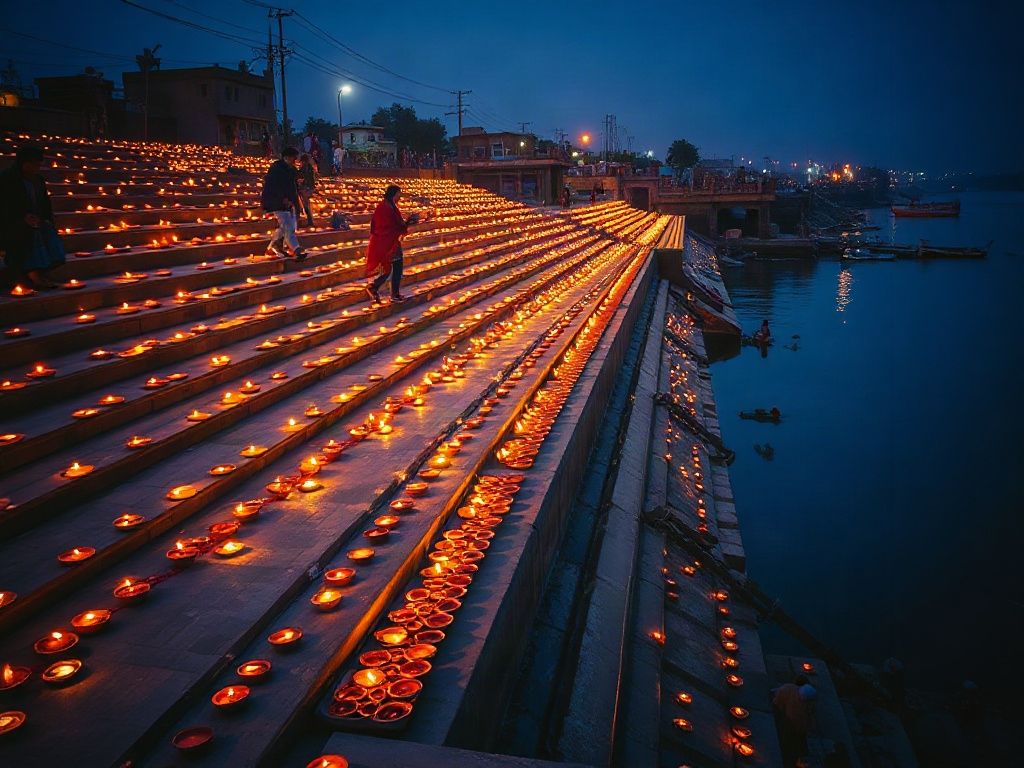
Ayodhya Deepotsav is the night the ghats of the Saryu turn into rivers of light: lakhs of clay diyas lit along Ram ki Paidi to mark Lord Ram's return to Ayodhya, on the eve of Diwali. In 2026 the celebrations run over 5 to 8 November, with the main lighting on Saturday 7 November. This guide covers the dates, what the famous diya record actually was, and how to plan a visit that your family will enjoy rather than endure.
Key takeaways
- Ayodhya Deepotsav 2026: celebrations over 5 – 8 November; the main lighting is on Saturday 7 November.
- Diwali (Lakshmi Puja) falls on Sunday 8 November 2026.
- In 2025, 2,617,215 oil lamps were lit — the Guinness World Record for the largest display of oil lamps.
- The lighting is along Ram ki Paidi, the ghats on the Saryu.
- No official 2026 pass arrangement has been published. Be wary of anyone selling passes.
- With elderly parents, consider visiting just before or after the main night.
On this page
Ayodhya Deepotsav 2026 dates
| Date | What |
|---|---|
| Thu 5 – Fri 6 Nov | Celebrations begin; cultural programmes and processions, as reported |
| Sat 7 Nov | Main Deepotsav lighting of the ghats |
| Sun 8 Nov | Diwali — Lakshmi Puja |
The main night, 7 November, is the evening before Diwali. Earlier press reports disagreed about whether the main lighting would be on 7 or 8 November; 7 November is the date we have confirmed. The detailed programme for each day is announced by the Uttar Pradesh government closer to the event, so check official announcements before you fix your travel.
Diwali is on Sunday 8 November, with Lakshmi Puja in the evening. If you want to celebrate Diwali itself in Ayodhya as well, plan to stay both nights.
What Deepotsav celebrates
Deepotsav marks the return of Lord Ram to Ayodhya after fourteen years of exile and the victory over Ravan — the event Diwali itself remembers. Tradition holds that the people of Ayodhya lit lamps throughout the city to welcome him home. Guinness World Records describes the celebration in the same terms: a spectacle that "symbolized the return of Lord Ram to Ayodhya".
In recent years the Uttar Pradesh government has made Deepotsav into one of the largest light festivals in the world, centred on the ghats of the Saryu and on the Ram Janmabhoomi temple.
Key insight
Deepotsav is not a separate festival from Diwali — it is Ayodhya's way of celebrating the same homecoming, on the city's own riverbanks. That is why it falls on the eve of Diwali, and why many families plan the two together.
The diya record: what actually happened
You will see many large numbers quoted for Deepotsav. Here is the one that has been independently verified.
According to Guinness World Records, the largest display of oil lamps is 2,617,215, achieved by the Department of Tourism, Government of Uttar Pradesh, and Dr. Rammanohar Lohia Avadh University during Deepotsav 2025, in Ayodhya, on 19 October 2025. The record entry notes that more than 30,000 volunteers from the university lit the lamps, transforming the ghats of the Saryu into what it calls "a divine sea of light".
The same evening set a second record, for the most people performing aarti together — 2,128 people, as reported by The Tribune.
For 2026, some reports speak of an even larger target. Until the lamps are counted, treat any 2026 number as a target, not a fact.
Ram ki Paidi: where the lamps are lit
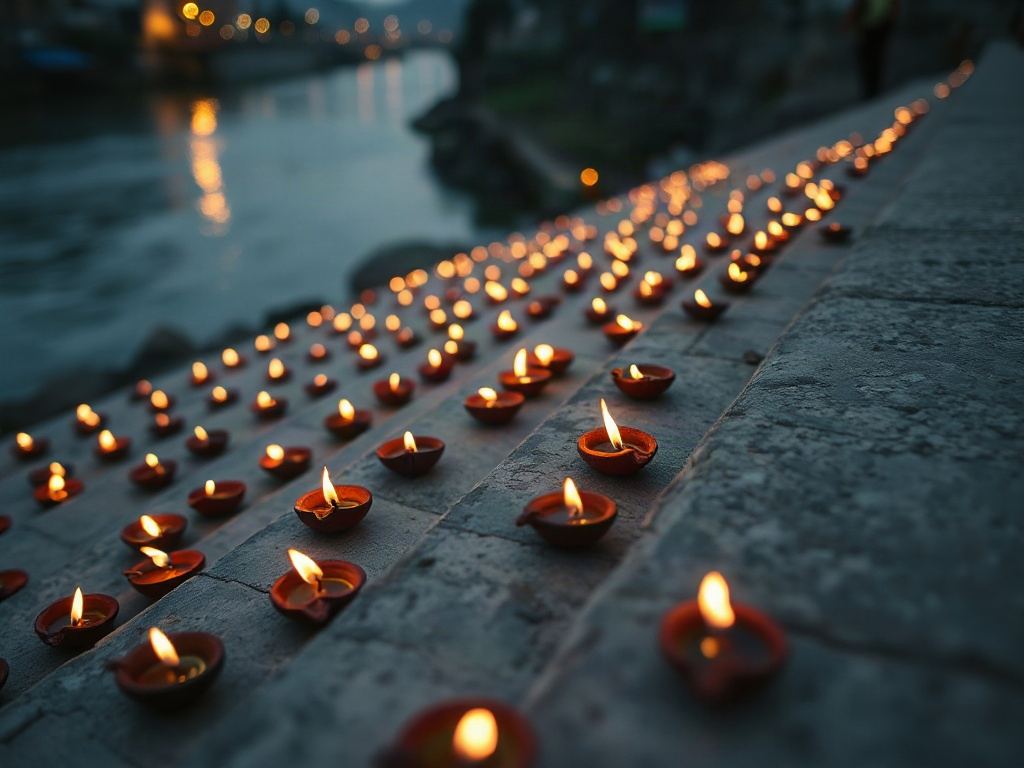
The lighting centres on Ram ki Paidi, a series of ghats along the Saryu. The Ayodhya district administration describes it as a riverfront that "brings forth an outstanding landscape especially in floodlit night", where devotees come to take a dip in the river.
Close by is the Nageshwarnath temple, which the district describes as standing at Ram ki Paidi and traditionally said to have been established by Kush, the son of Ram. On an ordinary day it is one of the quieter places to begin a visit to the riverfront.
Temples to visit the same week
If you are in Ayodhya for Deepotsav, plan the temples for the mornings, before the evening crowds build. The Ayodhya district administration describes several that fit easily into a festival visit:
- Hanuman Garhi. About a kilometre from Ayodhya railway station. The district notes the belief that Hanuman lived here to guard Ayodhya, and describes the idol of Bal Hanuman seated on the lap of Maa Anjani. Tradition has it that devotees visit Hanuman Garhi before going on to the Ram Janmabhoomi temple.
- Kanak Bhawan. North-east of Ram Janmabhoomi, in Ramkot. The district records the belief that it was gifted to Sita by Kaikeyi after her marriage to Ram, and calls it one of the finest temples in the city.
- Devkali. Near Naya Ghat. By tradition, Sita brought an idol of Goddess Girija Devi with her to Ayodhya, and King Dasharath built a temple for it, where Sita worshipped.
During Deepotsav week all of these are busier than usual, and security around the Ram Janmabhoomi area is heavy. Go early, keep the group together, and allow much more time than a map suggests.
Planning your visit
| Plan for | Why it matters |
|---|---|
| Booking a stay now | Ayodhya fills completely for Deepotsav and Diwali |
| Arriving a day early | Roads and trains into the city are packed on the day |
| Expecting restricted movement | Access to the ghats on the main night is tightly managed |
| Following official announcements | Viewing areas, traffic and entry rules are announced closer to the date |
| Ram Mandir darshan on a different day | The temple is extremely busy during Deepotsav week |
| A driver who stays with you | Getting back to your stay after the lighting takes hours |
Where to watch. On the main night, the ghats themselves are reserved for the lighting, and the crowds gather wherever they are allowed. Some families watch from a distance and some prefer to go to the ghats the next morning, when the lamps are cleared and the riverfront is calm again. There is no bad choice — only the one that suits your family.
Passes. We have not found an official pass or ticketing arrangement published for 2026. If one is announced, it will come from the district administration or UP Tourism. Be wary of anyone selling "Deepotsav passes" in the meantime.
Key insight
The most memorable part of Deepotsav for many families is not the moment of the lighting — which you may only glimpse over a crowd — but the evenings before and after, when the city is decorated and the ghats are open to walk.
Deepotsav with elderly parents or children
Deepotsav is joyful, and it is one of the most crowded nights in India. For elderly parents or small children, a few choices make all the difference:
- Visit on 5, 6 or 8 November rather than the main night of 7 November. The city is lit and festive, and far easier to move around.
- Stay close to where you want to be. Once the main night begins, travelling across the city can take hours.
- Keep the group small and together, with a meeting point agreed in advance.
- Carry water, snacks and any medicines. Evenings are long, and shops near the ghats are overwhelmed.
- Give every elderly family member a written note with the name, address and phone number of your stay. If anyone gets separated in the crowd, a police officer or volunteer can help them get back.
Ayodhya is one of the cities where MargKGB works. Our verified contacts include stays and drivers in Ayodhya, and connect you with them directly — worth arranging well ahead of Deepotsav. If your parents are going without you, a MargKGB Buddy can stay with them through the crowds.
If you are thinking about which guide or companion to arrange, our comparison of a tour guide and a MargKGB Buddy explains the difference — it applies in Ayodhya just as in Varanasi.
What to do next
Mark Saturday 7 November for the main Deepotsav lighting and Sunday 8 November for Diwali. Book your stay in Ayodhya now, plan to arrive at least a day early, and follow official announcements for viewing and traffic arrangements. If you are travelling with elderly parents, choose the calmer evenings on either side of the main night. Ayodhya Deepotsav 2026 will be spectacular either way — and your family will enjoy it far more if they are not fighting the crowd to see it.
Frequently asked questions
When is Ayodhya Deepotsav 2026?
The celebrations run over 5 to 8 November 2026, with the main lighting of the ghats on Saturday 7 November, the eve of Diwali. Diwali itself, with Lakshmi Puja, falls on Sunday 8 November.
Where is Deepotsav held in Ayodhya?
The main lighting is along Ram ki Paidi, the series of ghats on the Saryu river, which the Ayodhya district administration describes as especially striking when lit at night.
How many diyas were lit at Ayodhya Deepotsav?
At Deepotsav 2025, 2,617,215 oil lamps were lit on 19 October 2025, which Guinness World Records lists as the largest display of oil lamps. Figures for 2026 are reported targets until the event.
Do I need a pass for Ayodhya Deepotsav?
We have not found an official pass or ticketing arrangement published for 2026. Treat any site selling Deepotsav passes with caution until the district administration or UP Tourism announces arrangements.
Is Ayodhya Deepotsav suitable for elderly parents?
It is spectacular but extremely crowded, with heavy restrictions on movement around the ghats. Many families with elderly parents visit Ayodhya just before or after the main night, when the lights are still up and the crowds are thinner.