Tulsi Vivah 2026: Date, Timings, Story and Home Vidhi
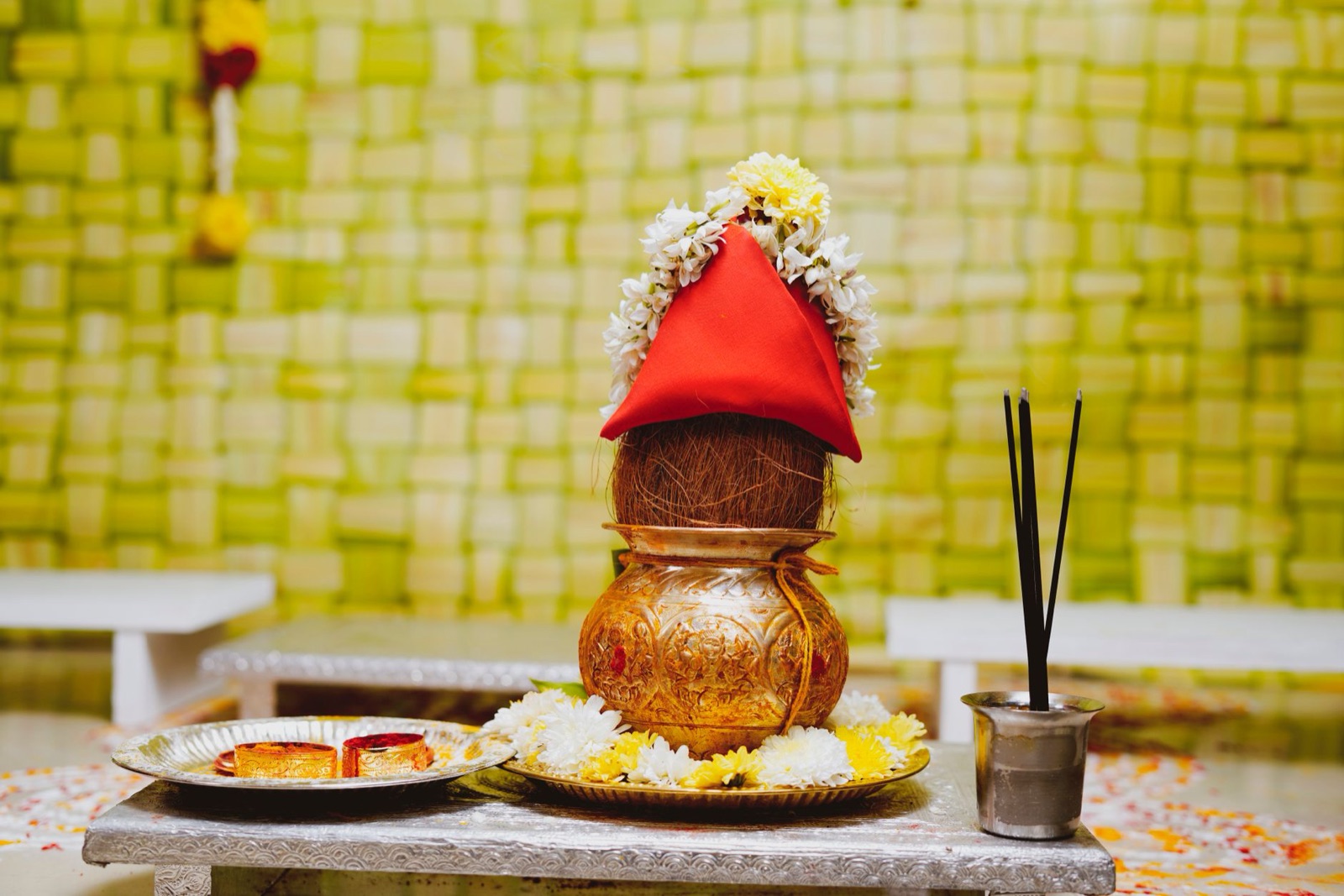
Tulsi Vivah 2026 falls on Saturday, 21 November 2026, the Dwadashi tithi after Dev Uthani Ekadashi, according to Drik Panchang for Varanasi. Many families perform it a day earlier, on the evening of the Ekadashi, Friday, 20 November, and both are long-standing customs. Tulsi Vivah is the ceremonial marriage of the Tulsi plant, revered as Goddess Tulsi, to Lord Vishnu in his Shaligram form, and it marks the opening of the Hindu wedding season after Chaturmas. This guide covers the dates and timings, why there are two days, the story of Vrinda and Shaligram, a samagri list, a simple home vidhi, and how the day is kept in Vrindavan, Mathura and Ayodhya.
Key takeaways
- Drik Panchang lists Tulsi Vivah 2026 on Saturday, 21 November; the Dwadashi tithi runs from 6:31 AM on 21 November to 4:56 AM on 22 November (Varanasi).
- Families who perform it on Dev Uthani Ekadashi do so on the evening of Friday, 20 November 2026.
- The ceremony is traditionally performed at dusk; in Varanasi the Godhuli muhurta on 21 November is 5:08 PM to 5:35 PM.
- In the story told with the festival, Vrinda was the wife of Jalandhara; after her death the Tulsi plant arose, and Vishnu promised to be married to her in his Shaligram form.
- Drik Panchang's 2026 marriage list for Varanasi shows 21 November as the first vivah muhurat after Chaturmas.
On this page
Tulsi Vivah 2026 date and timings
The table below brings the key timings together. All are from Drik Panchang with the location set to Varanasi; the tithi moments are the same across India, while sunset and the dusk muhurta shift by a few minutes from city to city.
| What | When (Varanasi) |
|---|---|
| Tulsi Vivah (Drik Panchang) | Saturday, 21 November 2026 |
| Dwadashi tithi | 6:31 AM, 21 November to 4:56 AM, 22 November |
| Sunset on 21 November | 5:08 PM |
| Godhuli muhurta on 21 November | 5:08 PM to 5:35 PM |
| Dev Uthani Ekadashi (for families who perform it on the Ekadashi) | Friday, 20 November; Ekadashi tithi 7:15 AM, 20 November to 6:31 AM, 21 November |
| Godhuli muhurta on 20 November | 5:08 PM to 5:35 PM |
The date is from the Drik Panchang Tulsi Vivah 2026 page for Varanasi; the sunset and Godhuli times are from its day panchang for 21 November. If you live in another city, set your own location there, and check again in the week of the festival.
Why 20 or 21 November
Search for the date and you will find some sites saying 20 November and others 21 November. Both reflect real practice. Drik Panchang itself notes that the Padma Purana places Tulsi Vivah on Kartik Shukla Navami, while other scriptures regard the five days from Prabodhini Ekadashi to Kartik Purnima as especially auspicious for it. Within that span, two days are most common:
- On the Ekadashi (20 November 2026). In many North Indian homes the Tulsi marriage is performed on the evening of Dev Uthani Ekadashi itself, the day Vishnu is believed to wake. This is why many people call the day Tulsi Ekadashi. Drik Panchang's own katha page for the festival describes it as held on the Kartik Shukla Ekadashi.
- On the Dwadashi (21 November 2026). Drik Panchang's festival listing for 2026 gives Tulsi Vivah on the Dwadashi, the day after the Ekadashi fast is broken. Many families and temples keep it on this day.
So the honest answer is: follow your family or temple custom. If your household has no fixed practice, 21 November is the date the panchang lists, and the evening of 20 November is equally traditional. What matters more than the day is that the ceremony is done with care and at dusk.
For the fast, puja and parana of the Ekadashi itself, see our Dev Uthani Ekadashi 2026 guide.
The story of Vrinda and Shaligram
Tulsi Vivah rests on a story told in the Puranic tradition, retold in the Tulsi Vivah vrat katha on Drik Panchang. In brief:
Jalandhara, a powerful asura born of Shiva's radiance cast into the ocean, married Vrinda, the daughter of Kalanemi. Vrinda was utterly devoted to her husband, and her chastity was his protection: while it held, he could not be defeated. Grown proud, Jalandhara made war on the gods and tried to deceive Goddess Parvati by taking Shiva's form. To end his tyranny, Vishnu took Jalandhara's form and came to Vrinda, and her vow was broken; at the same time Shiva defeated Jalandhara in battle.
When Vrinda learned what had happened, she cursed Vishnu to become a lifeless stone, and he took the form of the Shaligram shila. At the gods' prayer she released him from the curse and gave up her own body; where she was consumed, the Tulsi plant arose. Vishnu told her that, for her devotion, she had become dearer to him even than Lakshmi, that she would always remain beside him as Tulsi, and that whoever performed her marriage to his Shaligram form would earn great merit in this world and the next.
This answers two questions families often ask. Why is Tulsi married? Because the marriage honours Vishnu's promise to Vrinda, and with it her devotion. And who was Tulsi's real husband? In the story, Vrinda's husband was Jalandhara; in the ritual, Tulsi is married to Vishnu as Shaligram, or to Krishna, as in Braj.
Why it opens the wedding season
Through Chaturmas, the four months between Devshayani and Dev Uthani Ekadashi, weddings and similar ceremonies are traditionally avoided. Drik Panchang marks 21 November 2026 as the last day of Chaturmas, and Tulsi Vivah, the first wedding of the season, is held as the gods return to wakefulness.
The Drik Panchang 2026 marriage-muhurat list for Varanasi reflects this. It shows 20 November as partly overlapping with the prohibited Chaturmas period, and 21 November, the day of Tulsi Vivah, as the first date with an auspicious vivah muhurat. It lists four such days in November 2026, on 21, 24, 25 and 26 November, and seven in December. If your family is fixing a wedding date for this season, take these as a starting point and confirm with your own Pandit Ji, who will match the muhurat to the couple.
Key insight
In many households, Tulsi Vivah is performed with the full warmth of a family wedding. Drik Panchang notes that in parts of Maharashtra the costs are often borne by a couple without a daughter, who take the place of Tulsi's parents and perform the kanyadaan. The ceremony is as much about the family as about the ritual.
Samagri list
Customs vary, but the following is what most North Indian homes gather for a household Tulsi Vivah. You do not need every item; devotion matters more than completeness.
| Item | What it is for |
|---|---|
| Tulsi plant in its pot | The bride; clean the pot and decorate it |
| Shaligram, or an image of Vishnu or Krishna | The groom |
| Sugarcane stalks (often four) | Tied over the pot as the wedding mandap |
| Red chunri or a small sari | Draped over Tulsi as the bride's garment |
| Shringar items: bangles, bindi, sindoor, mehndi | Adorning the bride |
| Yellow cloth | For the groom |
| Haldi, kumkum, chandan, akshat (unbroken rice) | Tilak, haldi ritual and blessings |
| Flowers and two small garlands | Puja and jaimala |
| Kalash with water, mango leaves and a coconut | Sanctifying the space |
| Ghee lamp, incense, camphor | Aarti |
| Seasonal fruit: singhara, ber, amla, sugarcane pieces | Offering to the couple |
| Sweets and panchamrit | Bhog and prasad |
| Mauli or sacred thread | Tying the knot between bride and groom |
Home vidhi, step by step
Drik Panchang summarises the scriptural procedure from the Vishnuyamala and Vrat Parichaya: Tulsi is tended for some months in advance; a torana and mandap are prepared; Ganapati is worshipped; and at dusk (Godhuli vela) Vishnu is worshipped and the kanyadaan of Tulsi is performed, followed by havan, circumambulation of the fire, gifts of clothes and a meal for Brahmins. Most households keep a simpler version of the same sequence:
- Prepare the space. Clean the courtyard or balcony where Tulsi stands, draw a rangoli, and tie the sugarcane over the pot as a mandap.
- Dress the bride. Drape the chunri over Tulsi and offer the shringar items. Place the Shaligram or the image of Vishnu or Krishna beside her, on a small seat, dressed in yellow.
- Begin with Ganesha. Offer a short prayer to Ganesha and set up the kalash.
- Worship both. Offer water, haldi, kumkum, chandan, akshat and flowers to Tulsi and to the Shaligram. Many families do a small haldi ritual first.
- Jaimala and kanyadaan. Exchange the garlands. Whoever stands as Tulsi's parents performs the kanyadaan, offering her hand to the groom with water and akshat.
- The pheras. Holding the Shaligram, a family member walks around the Tulsi plant, commonly seven times, while the others sing wedding songs or chant Vishnu's names.
- Aarti and bhog. Perform the aarti, offer fruit and sweets, and share them as prasad.
If you would like a Pandit Ji to perform the ceremony at home or at a temple in Varanasi, Ayodhya, Prayagraj, Vrindavan or Ujjain, our verified puja booking lets you request one; MargKGB assigns and confirms the Pandit Ji before the day.
What time to perform it
A common question is till what time Tulsi Vivah should be done. The traditional time is dusk: Drik Panchang's vidhi places the worship and kanyadaan in the Godhuli vela, the cow-dust hour around sunset. In Varanasi on 21 November 2026 that is 5:08 PM to 5:35 PM; on 20 November it falls at the same times.
The Dwadashi tithi itself lasts until 4:56 AM on 22 November, so families who cannot begin exactly at Godhuli still perform the ceremony within the evening of 21 November. In practice, most households begin around sunset and finish the aarti in the early evening. If you are following the Ekadashi custom, the evening of 20 November is the time.
Key insight
Do not let a precise muhurat become a source of stress. Starting the ceremony as the sun sets, with the lamps lit, is what the tradition asks; your own Pandit Ji can give a city-specific window if your family wants one.
In Vrindavan, Mathura and Ayodhya
Vrindavan and Mathura
In Braj, Tulsi is close to the heart of worship. Drik Panchang notes that in Vrindavan, Mathura and the wider Braj region, Tulsi Vivah is organised in homes and temples with the customs of a real wedding, from haldi and mehndi to jaimala, pheras and the baraat; that in Krishna temples Tulsi is married to Krishna, often with a decorated wedding tableau; and that in the old Krishna temples of Vrindavan a Tulsi enclosure is considered essential, since no bhog is offered without Tulsi leaves.
For pilgrims, this means fuller temples and longer queues across the evening of the Ekadashi and the Dwadashi. If you plan darshan in Vrindavan that week, our guides to ISKCON Vrindavan timings and Prem Mandir timings help you plan around the busiest hours. Arrive early, keep elderly parents close, and check any temple's festival schedule on the day, as special shringar and darshan times are often announced only locally.
Ayodhya
In Ayodhya, the days around Tulsi Vivah are among the busiest of Kartik. The 14 kosi parikrama falls on Akshay Navami, 18 November 2026, the panchkosi parikrama on Dev Uthani Ekadashi, 20 November, and many devotees take a Saryu snan through the month. Tulsi Vivah itself is kept in homes and many temples on the Ekadashi or the Dwadashi. If you are visiting with family, plan one calm day of darshan rather than trying to cover everything; our Ayodhya one-day itinerary shows how.
What to do next
Agree with your family whether you will perform Tulsi Vivah 2026 on the evening of Friday, 20 November or Saturday, 21 November, gather the samagri a day ahead, and plan to begin as the sun sets. If you are travelling to Vrindavan or Ayodhya for the festival, book your stay now and recheck temple timings in the days before you go.
Frequently asked questions
When is Tulsi Ekadashi?
Tulsi Ekadashi is a popular name for Dev Uthani Ekadashi, the evening on which many families perform Tulsi Vivah. In 2026 it falls on Friday, 20 November, with the Ekadashi tithi from 7:15 AM on 20 November to 6:31 AM on 21 November, per Drik Panchang for Varanasi. Drik lists Tulsi Vivah itself on the Dwadashi, Saturday, 21 November 2026.
Why is Tulsi's marriage performed?
In the story told with the festival, Vrinda, a devoted wife, gave up her body after Vishnu broke her vow to end the asura Jalandhara, and the Tulsi plant arose where she was consumed. Vishnu promised she would always stay beside him and that whoever married her to his Shaligram form would earn great merit. The marriage honours that promise and her devotion.
Who was Tulsi's real husband?
In the Puranic story retold in the Tulsi Vivah katha, Vrinda, who became Tulsi, was the wife of the asura king Jalandhara. In the Tulsi Vivah ritual, Tulsi is married to Lord Vishnu in his Shaligram form, or to Krishna, as in Braj temples. Both answers are part of the same story.
Till what time should Tulsi Vivah be done?
The tradition is to perform it at dusk, in the Godhuli vela around sunset. In Varanasi on 21 November 2026, Drik Panchang gives the Godhuli muhurta as 5:08 PM to 5:35 PM, and the Dwadashi tithi continues until 4:56 AM on 22 November, so families who start a little later still complete it that evening. Ekadashi-custom families perform it on the evening of 20 November.
Is Tulsi Vivah 2026 on 20 or 21 November?
Both dates are observed. Drik Panchang lists Tulsi Vivah 2026 on Saturday, 21 November, the Dwadashi. Many families perform it on the evening of Dev Uthani Ekadashi, Friday, 20 November. Drik notes the Padma Purana gives Kartik Shukla Navami and other texts the five days from Prabodhini Ekadashi to Kartik Purnima. Follow your family or temple custom.