Hanuman Garhi Ayodhya: Story, 76 Steps and Darshan Guide
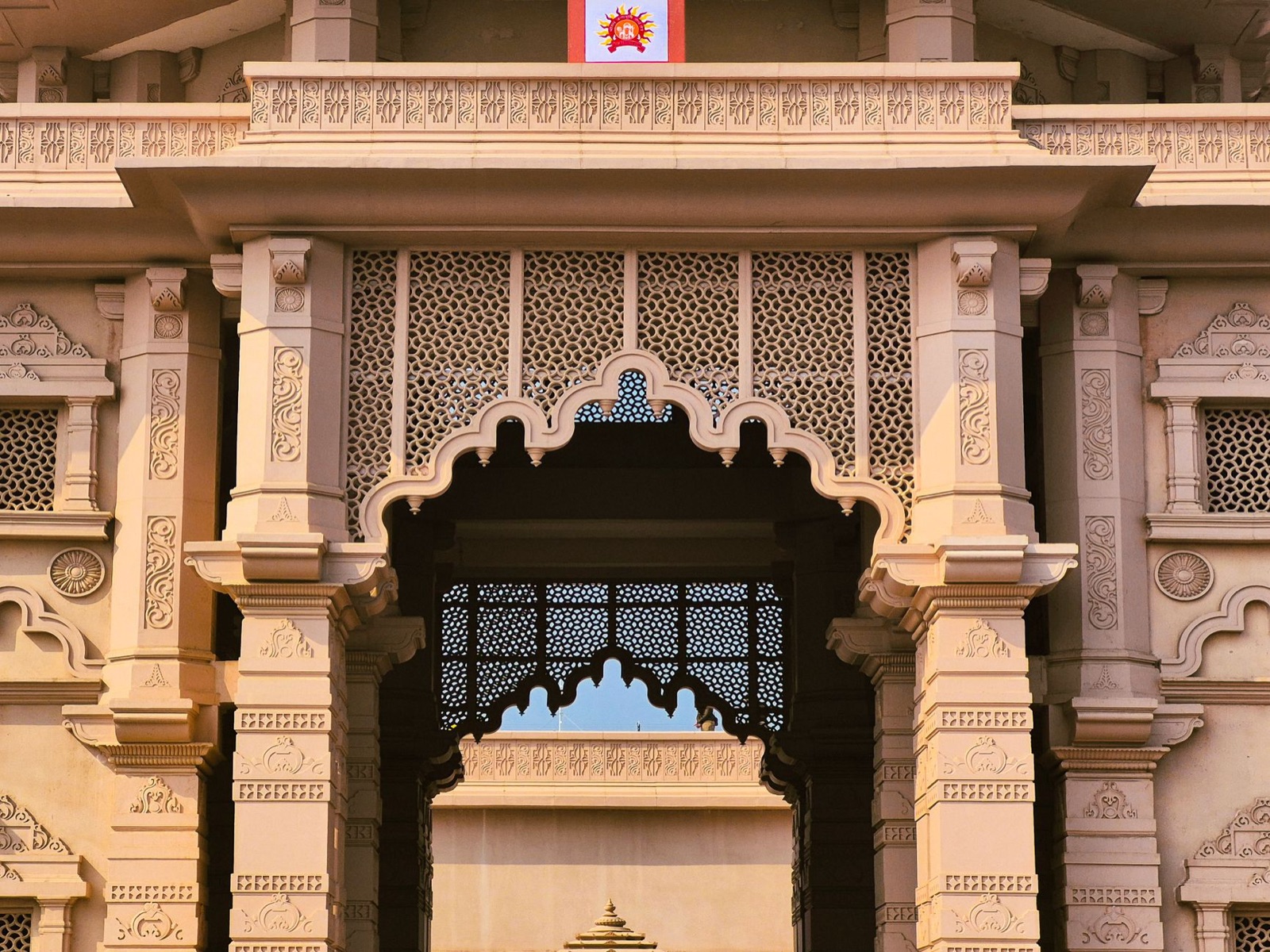
In Ayodhya, the custom is to greet Hanuman before you go to Ram. Most pilgrims climb the steps of Hanuman Garhi first, take darshan of Bal Hanuman seated on his mother's lap, and only then walk on to Ram Lalla at the Ram Mandir. This guide to Hanuman Garhi Ayodhya explains the story behind the temple and that tradition, what the climb and the darshan are like, which days are busiest, how far it is to Ram Janmabhoomi, and how to fit Kanak Bhawan, Dashrath Mahal and the Saryu into the same day. It also covers the question every family asks next: how to book Ram Mandir darshan, through the official channel only.
Key takeaways
- Hanuman Garhi is reached by climbing 76 steps and is built like a fort, with round bastions at its corners, according to UP Tourism.
- The main idol is Bal Hanuman, the child Hanuman, seated on the lap of Mother Anjani, per the Ayodhya district administration.
- By tradition, pilgrims take darshan at Hanuman Garhi before going to the Ram Mandir.
- Hanuman Garhi is about 1 km from Ayodhya Dham railway station, per the district administration.
- Ram Mandir passes are free and are reserved only through the Shri Ram Janmbhoomi Teerth Kshetra's own booking portal.
On this page
- Hanuman Garhi Ayodhya at a glance
- The story of Hanuman Garhi
- Why pilgrims come here before Ram Mandir
- The 76 steps and the darshan
- Timings and the busiest days
- From Hanuman Garhi to Ram Janmabhoomi
- Booking Ram Mandir darshan, the official way
- Combining Kanak Bhawan, Dashrath Mahal and the Saryu
- With elderly parents
- What to do next
- Frequently asked questions
Hanuman Garhi Ayodhya at a glance
| What | Details |
|---|---|
| Deity | Bal Hanuman, seated on the lap of Mother Anjani |
| Where | In the centre of Ayodhya, close to Ram Janmabhoomi |
| From Ayodhya Dham station | About 1 km, per the district administration |
| The climb | 76 steps to the main temple |
| Built as | A fort, with circular bastions at each corner |
| Busiest days | Tuesdays and Saturdays, festivals, and weekends generally |
| Entry | No ticket for darshan |
The name says what the temple is: a garhi is a small fort. UP Tourism describes it on its Hanuman Garhi page as an ancient shrine dating to the 10th century, built in the shape of a fort with round fortifications at each corner and reached after climbing 76 steps. The temple is looked after by the Nirvani Akhara of the Ramanandi tradition.
The story of Hanuman Garhi
The story most families hear is simple. After Ram returned to Ayodhya, Hanuman stayed on to guard the city, living in a cave on this hill. The Ayodhya district administration records the belief that Pavan Putra Hanuman lived here to protect Ayodhya, and that King Vikramaditya built a temple on the spot, which came to be known as Hanuman Garhi.
The Shri Ram Janmbhoomi Teerth Kshetra, the trust that manages the Ram Mandir, tells the story through scripture on its own page of places to see. It quotes verses from the Uttara Kanda of the Valmiki Ramayana in which Ram tells Hanuman to live on and remain happy for as long as his story is told in the world, and a further verse in which Ram asks Hanuman to stay in Ayodhya and look after it. In the trust's telling, Ram seated Hanuman here, and Hanuman has been in Ayodhya ever since.
That is why Hanuman Garhi feels less like one temple among many and more like the gatekeeper of the city. Ayodhya is Ram's city; Hanuman is the one who keeps it.
Key insight
Hanuman Garhi celebrates Hanuman Janmotsav on Kartik Krishna Chaturdashi, the day before Diwali, according to Drik Panchang, rather than only on the Chaitra Purnima date followed in much of north India. It is one of the busiest days of the temple's year.
Why pilgrims come here before Ram Mandir
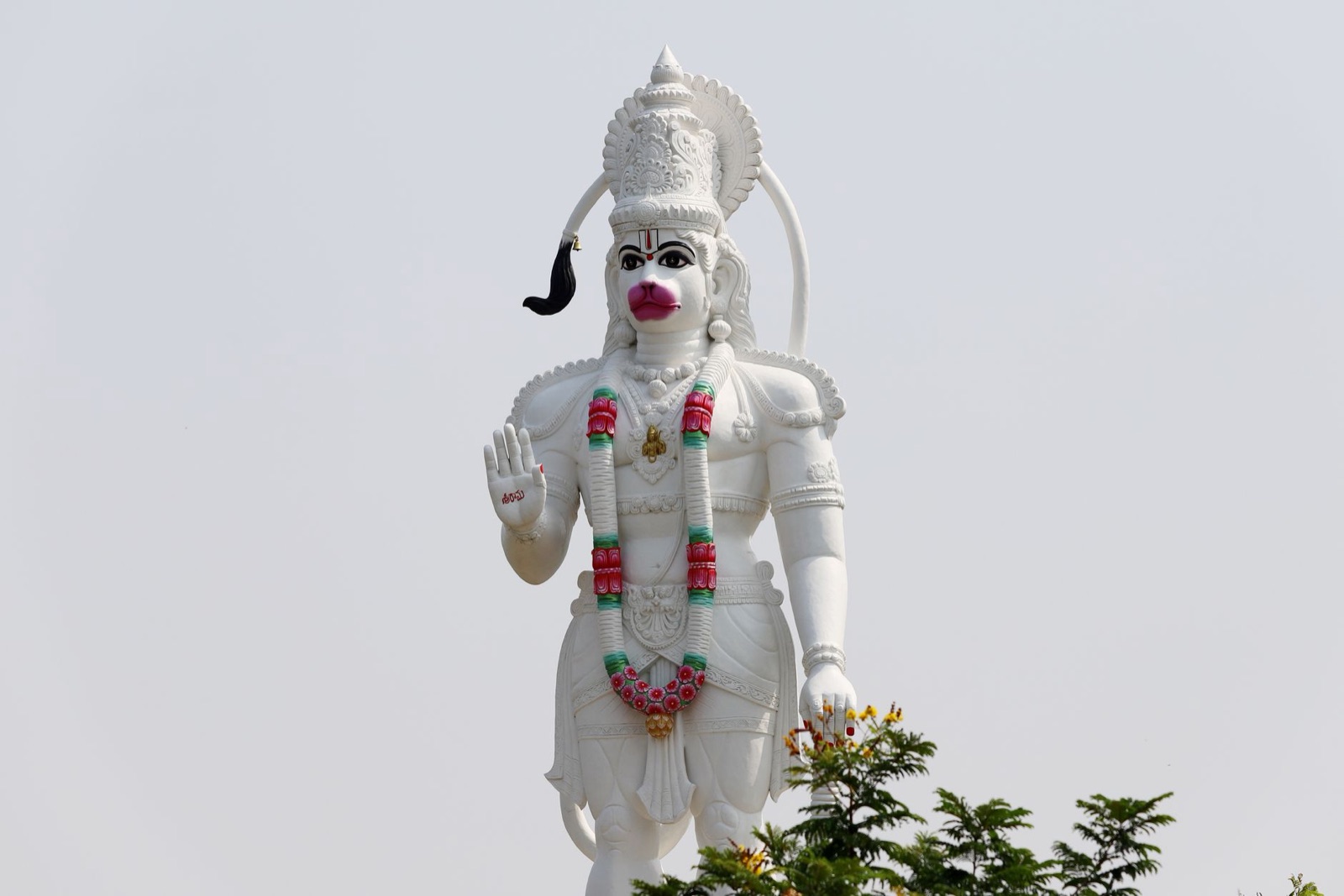
If you ask what to see first in Ayodhya, most local families and priests will say Hanuman Garhi. The reasoning follows the story: Hanuman guards Ram's city, so you greet him, and seek his blessing, before you go to Ram Lalla. It is a custom rather than a rule; no one will stop you going to the Ram Mandir first. But many pilgrims would not think of doing it the other way round.
There is also a practical reason. Hanuman Garhi is close to the station and to Ram Janmabhoomi, so visiting it first fits naturally into the walk. Our one-day Ayodhya itinerary starts the day here for exactly this reason.
Which Hanuman ji is in Ayodhya?
The Hanuman of Hanuman Garhi is Bal Hanuman, Hanuman as a child, seated on the lap of his mother Anjani. The idol is small, and the sanctum is decorated in silver. UP Tourism also describes a golden idol of Hanuman at the temple. Many families find the image of mother and child unexpectedly moving, after the towering Hanuman images seen elsewhere.
The 76 steps and the darshan
The climb is the first thing to plan for. The 76 steps are broad but steep in places, and on a crowded day you climb in a slow-moving line with people on both sides. Flower and prasad sellers line the bottom of the steps; laddoos are the traditional offering here.
- Footwear. Shoes are left at the bottom. Use a shoe stand or a stall you can find again, and keep the token if you are given one.
- Phones and cameras. Rules inside the sanctum are set by the temple and can change. Keep your phone away during darshan and do not assume photography is allowed inside.
- What to carry. As little as possible: your offering, a little cash, and a bottle of water left with someone at the bottom if you can.
- Inside. Darshan is brief on busy days. The line moves past the sanctum, you offer your prasad, and the priests return part of it as blessed prasad.
- Coming down. The exit route is separate from the entry. Agree a meeting point at the bottom before you climb, because families often come out at different moments.
Timings and the busiest days
Hanuman Garhi Ayodhya opens early in the morning, before sunrise, and stays open until late evening, with a break for a few hours around midday. The temple does not publish an official timetable online, and the times listed on travel sites differ from each other, so we have not printed a schedule here as if it were official. Ask at your hotel or at the temple the evening before, and check again the week you travel, especially around festivals or an eclipse, when Ayodhya's temples sometimes close for long periods.
When to go matters more than the exact opening time:
| Day or time | What to expect |
|---|---|
| Tuesday and Saturday | The days traditionally kept for Hanuman; the longest lines of the week |
| Weekends and holidays | Heavy crowds, especially combined with Ram Mandir visits |
| Hanuman Janmotsav, Ram Navami, Diwali week | Very heavy; plan around them if you are travelling with older parents |
| Early weekday mornings | Usually the calmest time to climb |
If you can choose, go early on a weekday that is not a Tuesday. If Tuesday is the day you want for devotional reasons, go as early as the temple opens.
From Hanuman Garhi to Ram Janmabhoomi
Hanuman Garhi and the Ram Mandir are close together. On a map the temple is roughly a kilometre to a kilometre and a half by road from Hanuman Garhi, and most families walk it, or take an e-rickshaw for part of the way. Around Ram Janmabhoomi there are security cordons and restricted vehicle zones, so expect to walk the last stretch and to queue at security. Allow 30 to 45 minutes between coming down the steps at Hanuman Garhi and reaching the Ram Mandir's entry, more on a crowded day.
Plan your Hanuman Garhi Ayodhya visit so that you come down in good time for your Ram Mandir slot, not the other way round. If your darshan pass is for 9 AM, be at Hanuman Garhi soon after it opens.
Booking Ram Mandir darshan, the official way
The only official place to reserve Ram Mandir passes is the trust's Shri Ram Janmbhoomi Teerth Kshetra booking portal. The trust's website states plainly that it does not charge any fee for aarti and darshan passes. You choose a date and slot, enter the details of each devotee, and receive a pass to carry with photo ID.
The trust's website lists these free darshan and aarti timings, which it says apply in booking receipts from 1 November 2026:
| Free darshan slots | Free aarti darshan |
|---|---|
| 7:00 to 9:00 AM | Mangal Aarti, 4:30 AM |
| 9:00 to 11:00 AM | Shringar Aarti, 6:30 AM |
| 11:00 AM to 12:00 PM | Shayan Aarti, 9:30 PM |
| 1:30 to 3:00 PM | |
| 3:00 to 5:00 PM | |
| 5:00 to 7:00 PM | |
| 7:00 to 8:30 PM |
The trust has also said there is no special darshan for a fee or through any special pass, and that anyone asking for money for darshan may be attempting a scam. If someone near the temple offers to arrange a VIP slot, the answer is no. In March 2024 the trust advised devotees, as reported by Lokmat Times, to leave mobile phones, footwear and purses outside the temple premises, and said wheelchairs are available inside the Mandir for elderly and differently-abled devotees without a rental fee, with a small amount given to the volunteer who pushes the chair.
Key insight
Leave your phone at your hotel or in a locker before Hanuman Garhi, not after. Then you climb the steps, walk to Ram Janmabhoomi and go through security without stopping to deposit anything.
Combining Kanak Bhawan, Dashrath Mahal and the Saryu
The old heart of Ayodhya is compact, and the main temples sit within a short walk of each other. A calm order for the day looks like this:
| When | Where | Why then |
|---|---|---|
| Early morning | Hanuman Garhi | Calmest climb; the traditional first darshan |
| Your booked slot | Ram Mandir | The fixed point of the day |
| Late morning | Kanak Bhawan and Dashrath Mahal | Both close to Ram Janmabhoomi, a few minutes apart |
| Midday | Rest and lunch | The Ram Mandir has a midday gap in its slots; use it |
| Evening | Ram ki Paidi and the Saryu | The ghats are at their most peaceful at dusk |
Kanak Bhawan, a short walk from Hanuman Garhi, is the temple of Sita and Ram; the trust's own account records that it was given to Sita at the time of her marriage. Dashrath Mahal, by tradition the palace of King Dasharatha, Ram's father, is close by on the same road. Ram ki Paidi, the line of ghats on the Saryu, is a short auto ride away and is where many families end the day.
With elderly parents
For older pilgrims, the climb at Hanuman Garhi Ayodhya is often the hardest part of the day, because of the steps. Plan it honestly:
- Go early on a weekday, when the steps are not packed and nobody is pushing from behind.
- Let them climb at their own pace with someone beside them, holding the rail where there is one.
- If the steps are too much, one family member can take the offering up while a parent rests at the bottom. Many families do this without feeling they have missed anything.
- Do Hanuman Garhi and the Ram Mandir in the morning, then rest. Don't add Kanak Bhawan and the Saryu straight after if they are tired.
Our checklist for taking elderly parents on pilgrimage covers medicines, food and pacing in more detail. If your parents are travelling without you, a MargKGB Buddy can stay with them through Hanuman Garhi and the Ram Mandir queue: helping on the steps, minding shoes, and keeping touts away. A Buddy does not issue passes or promise slots; the free pass from the trust is still the way in. For a driver or a stay near the temples, our verified contacts in Ayodhya connect you directly.
What to do next
Reserve your free Ram Mandir pass on the trust's portal first, then plan Hanuman Garhi Ayodhya darshan for early that morning, ahead of your slot. Choose a weekday that is not a Tuesday if you can, leave phones behind, and agree a meeting point at the bottom of the 76 steps. Greet Hanuman first, as Ayodhya has always done, and the rest of the day follows.
Frequently asked questions
What is the story of Hanuman Garhi temple?
By tradition, after Ram returned to Ayodhya, Hanuman stayed to guard the city and lived in a cave on this hill. The Ayodhya district administration records the belief that Hanuman lived here to protect Ayodhya and that King Vikramaditya built a temple on the spot. The Ram Janmabhoomi trust cites Valmiki Ramayana verses in which Ram asks Hanuman to remain while his story is told.
How to book Ayodhya Ram Mandir darshan 2026?
Reserve passes only on the Shri Ram Janmbhoomi Teerth Kshetra's official booking portal, online.srjbtkshetra.org. Passes for darshan and aarti are free; the trust states it charges no fee. Choose your date and slot, add each devotee's details and carry the pass with photo ID. Ignore anyone offering paid VIP or special darshan; the trust says no such arrangement exists.
Which Hanuman ji is in Ayodhya?
At Hanuman Garhi, Ayodhya's main Hanuman temple, the deity is Bal Hanuman, Hanuman in his child form, seated on the lap of his mother Anjani, according to the Ayodhya district administration. The idol is small and the sanctum is decorated in silver. Hanuman is regarded as the guardian of Ayodhya, which is why pilgrims visit him before Ram.
What should be seen first in Ayodhya?
By tradition, Hanuman Garhi is visited first: pilgrims seek Hanuman's blessing as the guardian of Ram's city before going to Ram Lalla at the Ram Mandir. It also fits the route, as Hanuman Garhi is about 1 km from Ayodhya Dham station and close to Ram Janmabhoomi. After the Ram Mandir, families usually visit Kanak Bhawan and end the day at the Saryu.
How many steps are there at Hanuman Garhi?
There are 76 steps up to the main temple at Hanuman Garhi, according to UP Tourism. They are broad but steep in places and crowded on Tuesdays, Saturdays and festival days. Elderly visitors should go early on a weekday and climb slowly with someone beside them; if the climb is too much, a family member can take the offering up for them.