Triveni Sangam, Prayagraj: Holy Dip, Boats and Asthi Visarjan
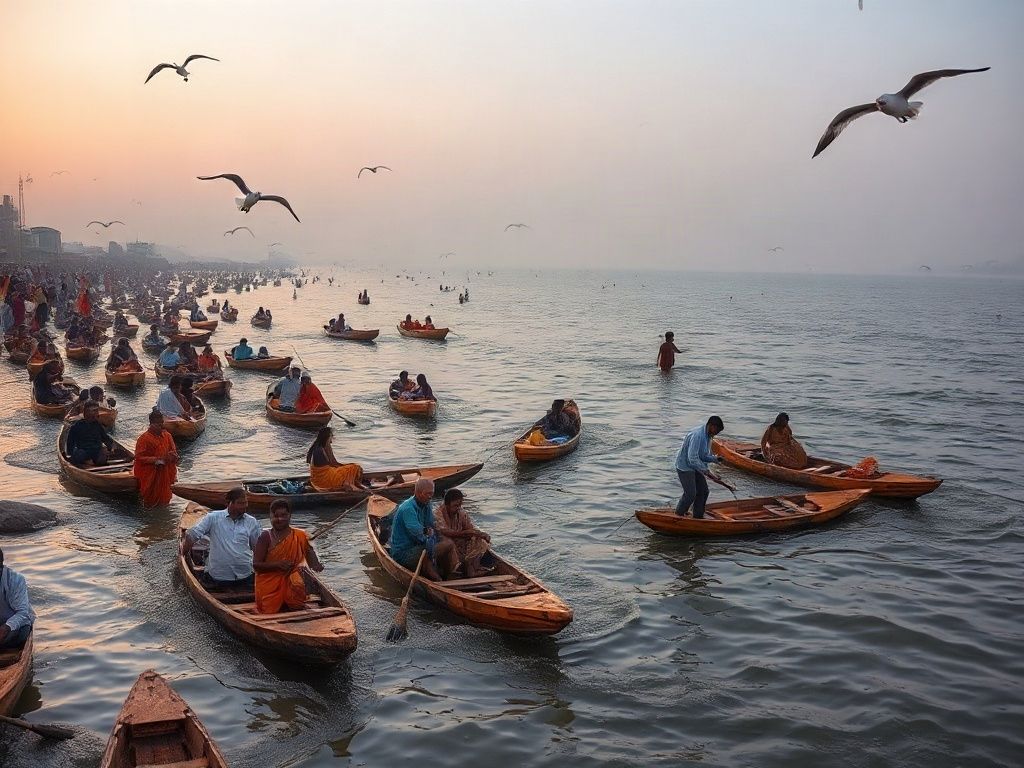
The Triveni Sangam in Prayagraj is where the Ganga and the Yamuna meet, and where tradition holds that a third river, the unseen Saraswati, joins them. It is one of the most sacred places in Hinduism — the Prayagraj district administration calls it Tirtharaj, the King of Tirthas. People come for the holy dip, for ancestral rites, and to immerse the ashes of family members. This guide explains how each of those works on the ground.
Key takeaways
- The Triveni Sangam is the confluence of the Ganga, Yamuna and Saraswati in Prayagraj; the Saraswati is believed to flow unseen.
- Most pilgrims reach the confluence point by boat and take the holy dip in the shallow water there.
- No official boat fares are published. Agree the fare, and what it covers, before you step in.
- Asthi visarjan — immersing a family member's ashes — is one of the most common rites at the Sangam, usually with a pandit.
- The Sangam has no opening hours, but boats can be restricted when the rivers are high.
- Early morning is the calmest time, especially with elderly parents.
On this page
What the Triveni Sangam is
A sangam is a confluence, and triveni means three rivers. At Prayagraj, the Ganga flowing from the north meets the Yamuna flowing from the west. You can often see the meeting line on the water itself, where the two rivers carry slightly different colours before they blend.
The third river is the one you cannot see. The Prayagraj district administration describes the Sangam as the place where "the holy Ganga, Yamuna and the mythical Saraswati meet to become one". Tradition holds that the Saraswati flows underground and joins the other two beneath the surface — which is why a place called the meeting of three rivers shows only two.
River confluences are sacred in many places in India. What sets this one apart is that three rivers meet here, and that it is regarded as the first among all tirthas. The district administration calls Prayag "the most important pilgrimage centre for Hindus".
The story behind the Triveni Sangam
Two stories are told most often about why the Sangam is so sacred.
The first is about amrit, the nectar of immortality. When the gods and demons churned the ocean and the pot of nectar emerged, drops of it are said to have fallen at four places on earth. Prayag is one of them. India's official tourism portal describes the Sangam as the spot where those drops fell.
The second is about Lord Brahma. According to the same account, Brahma performed a great yajna, the Prakrista Yajna, at this spot, and that is how the place came to be called Prayag.
Key insight
You do not need to know the stories to take the dip, but it helps to know why families have travelled here for so long. For many of them, the Sangam is not one sacred place among many — it is the one their elders always said they must reach at least once.
Taking the holy dip
The holy dip, or snan, is the reason most people come. The belief, as India's tourism portal puts it, is that a dip here can wash away sins and bring peace.
In practice, the confluence point is out in the river, not at the bank. The usual way to reach it is:
- Walk down to the riverbank near the Sangam area, where the boats are moored.
- Take a boat out to the confluence. At the meeting point, boats gather close together and the water is shallow in places.
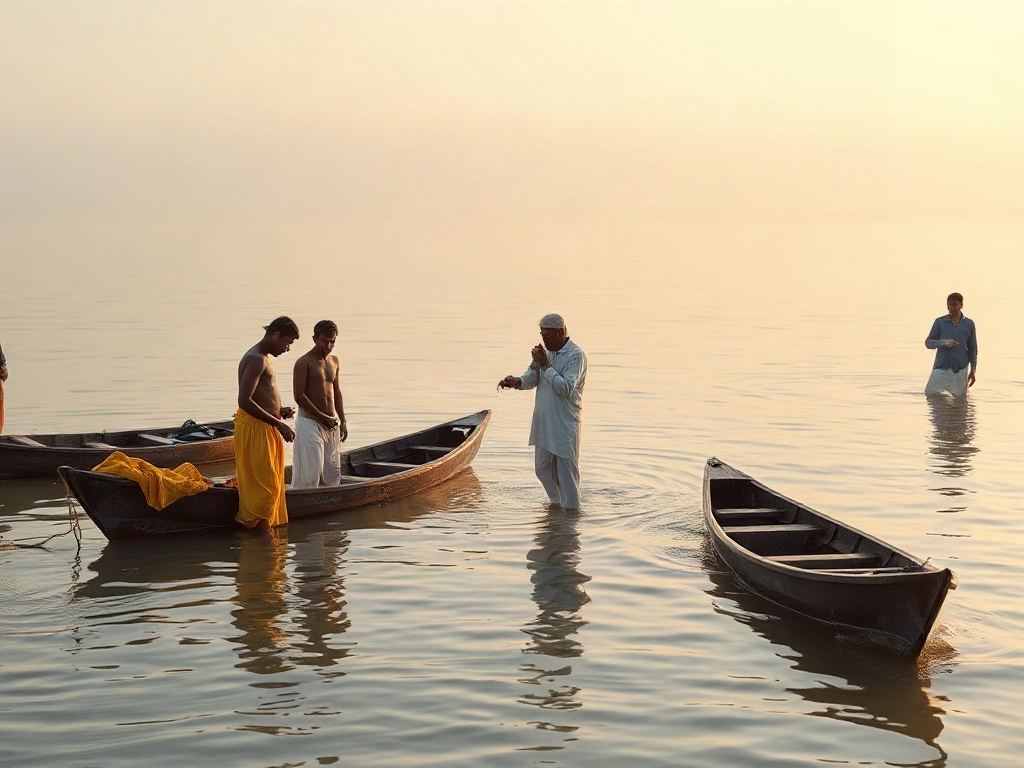
- Bathe where the boatman indicates. Pilgrims step off into the shallow water, take their dips, and climb back in.
- Offer your prayers — many families offer flowers, a diya or milk at the confluence.
A few things make the dip safer and calmer:
- Go early in the morning. It is cooler, quieter, and the light on the water is beautiful.
- Stay where you are told to. The current can be strong away from the shallow patches. Do not swim out on your own.
- Carry a change of clothes and a bag for wet ones. Changing arrangements on the bank are basic.
- Keep phones and valuables with one person who stays in the boat.
Boats: what to know before you get in
Boats are the part of a Sangam visit families most often ask us about, and the part where things most often go wrong. The official sources we checked describe the Sangam and the holy dip, but do not publish boat fares or rules. So we will not print a price either.
| Before you get in | Why it matters |
|---|---|
| Agree the fare for your whole group | Per person and per boat are very different numbers |
| Agree what it includes | Waiting time at the confluence, and the ride back |
| Agree it before you step in | Not after the boat has left the bank |
| Check the boat looks sound | Especially with children or elderly parents |
| Ask about life jackets | Particularly if anyone in your group cannot swim |
When the rivers are high, during and just after the monsoon, boat services can be restricted for safety. The Sangam itself does not "close", but the boats may not run as usual. If you are travelling in that season, check locally before you plan the day around a boat.
Key insight
The single most useful thing you can do at the Sangam is agree the boat fare, and what it includes, before anyone gets in. Almost every unpleasant Sangam story we hear starts with a fare that was never agreed.
Asthi visarjan at the Sangam
Asthi visarjan is the immersion of a family member's ashes, the asthi, in sacred water. Along with Varanasi and Haridwar, the Sangam is one of the places families most often choose for it.
It is usually done with a pandit, who leads a short prayer, the sankalp with the name and gotra of the person who died, and then the immersion at the confluence, from a boat. Some families combine it with tarpan or pind daan for the same person. Our guide to Pitru Paksha 2026 explains how those rites fit together, and our Pind Daan in Varanasi guide covers the same questions for Kashi.
Settle these before the day:
- Who will perform the prayers, and their phone number, so you are not choosing a pandit on the bank.
- The full cost, including the boat and any samagri, agreed in advance.
- What you need to bring: the ashes, carried respectfully, and the name and gotra of the person who died. The pandit will tell you anything else.
If the person died an untimely or unnatural death, families sometimes also ask about Narayan Bali. Our Narayan Bali puja guide explains what that rite is and when it is performed.
Near the Sangam
Most families pair the dip with a visit to the reclining Hanuman temple close to the Sangam. The district administration describes the idol as south-facing and about 20 feet long, lying partly below ground level, and says the temple is believed to be at least 600–700 years old. Tradition holds that Hanuman rested here on his way back from Lanka.
The Sangam is also where Prayagraj's great melas are held, when a tented city rises on the sandbanks. Outside those times, the area is far quieter — which is often the better time for a family visit.
Planning a visit with family
| Plan for | Why it matters |
|---|---|
| An early-morning start | Calmer water, cooler weather, fewer people |
| A pre-agreed boat | The one decision that most affects the day |
| A pandit arranged in advance for any rite | So you are not choosing one on the bank |
| A change of clothes and a towel | Changing facilities are basic |
| Help for elderly parents | Getting into and out of a boat is the hard part |
Prayagraj is one of the cities where MargKGB works. Our verified contacts include pandits, drivers and stays in Prayagraj, and connect you with them directly. If your parents are making the trip, a MargKGB Buddy can stay with them from the riverbank to the boat and back — the part of a Sangam visit that is hardest for older pilgrims.
What to do next
Decide what you are going to the Triveni Sangam for — the dip, a rite, or both. If it is a rite, arrange the pandit first. Then plan an early start, agree the boat before you board, and give yourself time at the confluence rather than hurrying back.
The Sangam has drawn pilgrims for longer than anyone can count. A little planning is all it takes to make sure the day is about the confluence, and not about the boat.
Frequently asked questions
Which rivers meet at Triveni Sangam?
Three: the Ganga, the Yamuna and the Saraswati. The Ganga and Yamuna are visible; the Saraswati is believed to flow unseen beneath them. The Prayagraj district administration calls it the "mythical Saraswati".
Why can't we see Saraswati River in Triveni Sangam?
By tradition, the Saraswati flows underground and joins the other two rivers beneath the surface. That is why only two rivers are visible at the confluence, even though it is called the meeting of three.
Can we take a bath in Triveni Sangam?
Yes. The holy dip, or snan, is the main reason people go. Most pilgrims take a boat out to the confluence point and bathe in the shallow water there. Stay where the boatman and local authorities indicate, because the current can be strong.
Which city is located in Triveni Sangam?
The Triveni Sangam is in Prayagraj, in Uttar Pradesh, the city long known as Allahabad.
What is the story behind Triveni Sangam?
Legend holds that drops of amrit, the nectar of immortality, fell here, and that Lord Brahma performed a great yajna at this spot, which is how the place came to be called Prayag. The district administration calls it Tirtharaj, the King of Tirthas.
Is Triveni Sangam open now?
The Sangam is a river confluence, not a temple with opening hours. It is reachable through the year, but boat services can be restricted when the rivers are high, so check locally before you go during or just after the monsoon.