Narayan Bali Puja: What It Is, Who Needs It and How to Arrange It
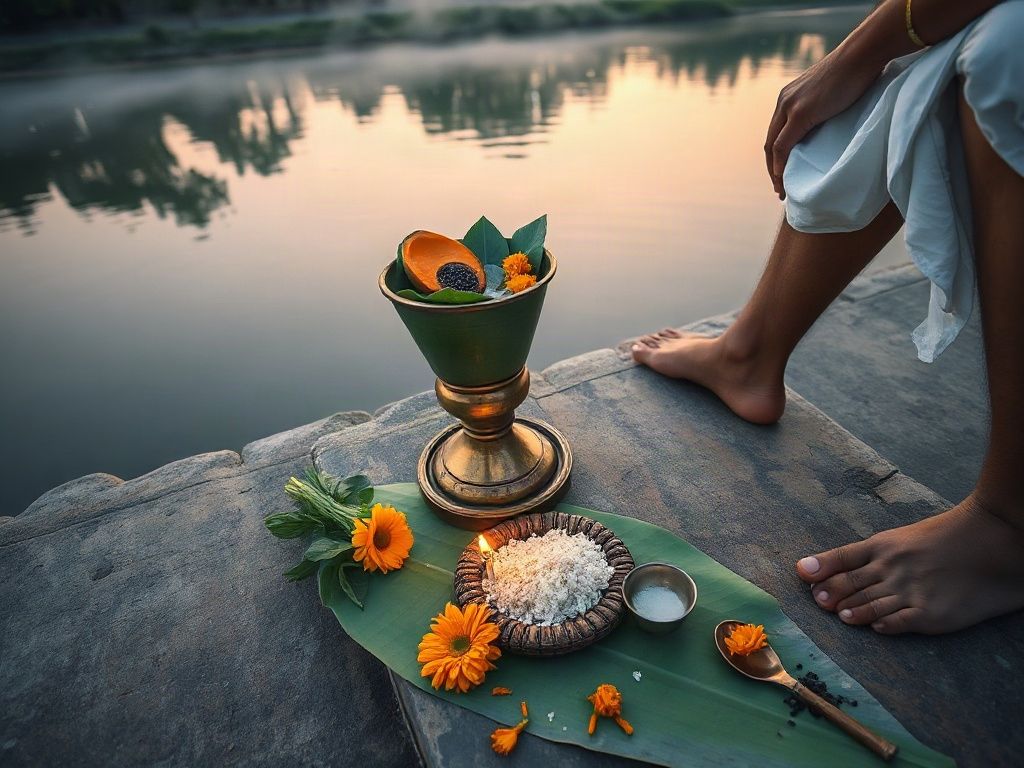
Narayan Bali puja is the rite a Hindu family performs when someone has died an untimely or unnatural death — in an accident, by drowning, by suicide, from a snakebite. Tradition holds that such a death leaves the ordinary last rites incomplete, and Narayan Bali is what completes them. It is best known at Trimbakeshwar near Nashik, where it is performed together with Nag Bali over three days.
Key takeaways
- Narayan Bali puja is for a family member who died an untimely or unnatural death.
- It is traced to the 40th chapter of the Garuda Purana, and is usually performed with Nag Bali as a three-day rite.
- Its best-known home is Trimbakeshwar, where only the town's hereditary Tamrapatradhari priests perform it.
- No official price or date calendar is published. Agree both with the pandit before you commit.
- It is not a home ritual. If you cannot travel, a verified pandit can perform it in your family's name.
On this page
What Narayan Bali puja is
When a person dies in the ordinary course of life, the family performs the usual last rites and, later, the shraddh and pind daan that remember them each year. Our Pitru Paksha 2026 guide explains how those annual rites work.
An untimely or unnatural death is treated differently in the tradition. The belief is that a soul that leaves suddenly and violently is not ready to receive those ordinary offerings, and may remain unsettled. Narayan Bali is the rite that addresses this. It is offered to Lord Narayan — Vishnu — on the departed person's behalf, so that the soul can be released and the family's ordinary rites can then take effect.
Its textual basis is usually traced to the Garuda Purana. As the Wikipedia summary of the rite notes, the Purana's 40th chapter is dedicated to the Narayan Bali rites.
Key insight
Families often come to Narayan Bali years after a death, when they are told it was never done. That is common, and it is not a failure. The rite exists precisely because sudden deaths leave families in no state to think about ritual at the time.
Which deaths it is performed for
The kinds of death usually listed for Narayan Bali include:
| Cause | Examples |
|---|---|
| Accident | Road accidents, falls from a height |
| Water and fire | Drowning, burns, arson |
| Animals | Snakebite, attack by an animal |
| Violence | Murder |
| Illness | Death in an epidemic |
| Suicide | Any death by suicide |
| Other | Starvation, lightning |
This list is how the tradition has classified untimely death for centuries; it is not a medical or legal list. If you are unsure whether a death in your family calls for Narayan Bali, ask a pandit you trust to explain their reasoning, rather than accepting a rite you do not understand.
Narayan Bali and Nag Bali: the three days
Narayan Bali is very often performed together with Nag Bali, and the combined rite is called Narayan Nagbali. The two address different things:
- Narayan Bali is for an untimely or unnatural death in the family.
- Nag Bali is performed to seek forgiveness for the killing of a cobra, knowingly or unknowingly — an act the tradition regards as a grave sin carried by a family.
At Trimbakeshwar the combined rite runs over three days. Narayan Bali is performed on the first day and Nag Bali on the second. The third day is for Ganesh Pujan, Punyavachan and Nag Pujan, which close the rite.
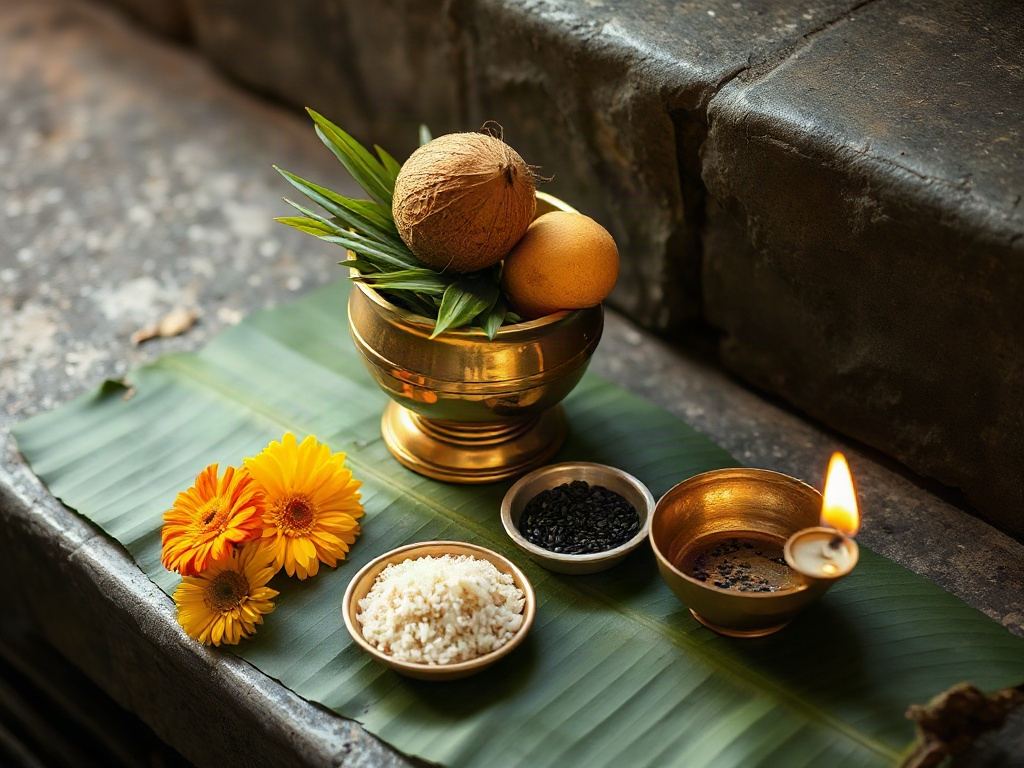
How Narayan Bali differs from pind daan and Tripindi Shraddh
Three ancestral rites get confused more than any others, because families often hear all three names from the same pandit in the same conversation.
| Rite | What it is for | When it is done |
|---|---|---|
| Pind daan | The ordinary offering of food to ancestors, by name | At death, on the annual tithi, during Pitru Paksha |
| Narayan Bali | A family member who died an untimely or unnatural death | Once, for that person — often years later |
| Tripindi Shraddh | Ancestors whose shraddh has been missed or neglected for years | When a family realises rites have lapsed |
The simplest way to hold the difference: pind daan is the regular, recurring duty every family has. Narayan Bali is a one-time rite for one specific person, because of how they died. Tripindi Shraddh is a one-time rite for ancestors in general, because of rites that were never done.
A family may need one, two or all three. What it should not need is to be told it needs all three without being told why.
When to perform Narayan Bali
There is no single fixed day. Tradition allows it on suitable dates chosen from the panchang, and at Trimbakeshwar the priests fix those dates through the year. Some families choose to do it in the first year after a death; many do it years later, when they come to know it was not done. Pitru Paksha — this year from 26 September to 10 October — is a fortnight many families use for ancestral rites generally, but Narayan Bali is not limited to it.
Where Narayan Bali puja is performed
Trimbakeshwar, near Nashik in Maharashtra, is by far the best-known place for Narayan Nagbali. The rite is performed by the town's hereditary priests, known as Tamrapatradhari Gurujis. Their association, the Purohit Sangh of Trimbakeshwar, describes itself as a body of around 300 registered priests whose right to perform the temple's rituals is hereditary, and says the pujas are performed at set places near the temple.
Two things are worth knowing if you plan to go:
- Trimbakeshwar is crowded with agents. Many websites use the temple's name and sell the puja at a fixed price. The priests' association itself does not publish prices. Speak to the priest who will actually perform the rite, and agree the cost directly.
- MargKGB does not operate in Nashik. Our Buddy and verified-contacts directory work in Varanasi, Ayodhya, Prayagraj, Vrindavan and Ujjain. We would rather say that plainly than imply support we do not have there.
The rite is also performed in other tirthas. Families sometimes ask for it in Varanasi or Prayagraj, where they are already performing other ancestral rites — our Pind Daan in Varanasi guide covers the ghats and kunds used for those. Where your family performs it is a matter of family tradition and the advice of the pandit you trust.
Key insight
"Only possible at Trimbakeshwar" and "can be done anywhere" are both things you will be told, often by someone selling one or the other. Trimbakeshwar is the rite's best-known home; that is not the same as it being the only one. Your family's tradition is a better guide than either sales pitch.
What to settle before you arrange it
Grief makes people agreeable, and Narayan Bali is often arranged in grief. Settle these calmly, in advance:
| Settle this | Why it matters |
|---|---|
| Why the rite is being recommended | A good pandit explains which death it is for, and why |
| Who will perform it, by name | So you are not handed from one agent to another on the day |
| The dates | There is no public calendar; the pandit fixes them from the panchang |
| The full cost, in writing | Including samagri, dakshina, and any stay or meals |
| How many days you must stay | At Trimbakeshwar the combined rite takes three days |
| Who from the family must be present | Usually the person who performs the family's ancestral rites |
Keep the names of the person who died, their relationship to you, the date of death if known, and your family's gotra written down before you speak to anyone. The pandit will ask for all four.
If you cannot travel
Many families cannot spend three days in another state — because of work, health, age or distance. The duty is not cancelled by that.
A verified pandit can perform Narayan Bali in your family's name, at the place your family prefers, with your gotra and the details of the person who died. You are told when it will be done and by whom. If that is what your family needs, contact us with the details and the place you would prefer, and we will arrange a pandit who performs that specific rite. Our puja and darshan services page lists the other rites we arrange the same way.
What to do next
Start by writing down what you know: who died, how, when, and your gotra. Then speak to a pandit who will explain, in plain words, whether Narayan Bali puja is the right rite for your family and why. Agree the dates and the cost before you travel, not after you arrive.
A sudden death leaves a family with questions nobody can fully answer. Narayan Bali does not answer them either. What it offers is a way to complete what was left undone, and to let the family grieve without that weight.
Frequently asked questions
What is the purpose of Narayan Bali pooja?
Narayan Bali is performed for a family member who died an untimely or unnatural death — an accident, drowning, suicide, snakebite and similar causes. Tradition holds that such a soul cannot receive the ordinary last rites, and the puja is done so that it can.
Who can do Narayana Bali pooja?
The family of the person who died arranges it, usually through the eldest son or whoever performs the family's ancestral rites. At Trimbakeshwar, the rite itself is performed only by the town's hereditary Tamrapatradhari priests.
Can Narayan Bali Puja be done at home?
Tradition places it at a tirtha, most famously Trimbakeshwar, and the priests there perform it at set places near the temple. It is not a home ritual. If you cannot travel, a pandit can perform it in your family's name.
What is the cost of Narayan Bali Puja?
No official price is published. The Trimbakeshwar priests' association does not list one, and every figure you see online comes from someone selling the service. Ask the pandit for the full cost, including samagri and stay, before you agree.
What are the Narayan Bali Puja dates for 2026?
There is no public official calendar. The priests fix suitable dates from the panchang, and they vary through the year. Ask the pandit performing it for the dates open to your family.
When to do narayan bali pooja?
There is no single fixed day. The priests choose suitable dates from the panchang through the year. Many families do it in the first year after a death, others years later when they learn it was not done.
Is Narayan Bali the same as Narayan Nagbali?
They are usually performed together. Narayan Bali is for an untimely death; Nag Bali is for the sin of killing a cobra. At Trimbakeshwar the combined rite runs over three days.