Pind Daan in Varanasi: Where It Is Done and How to Arrange It
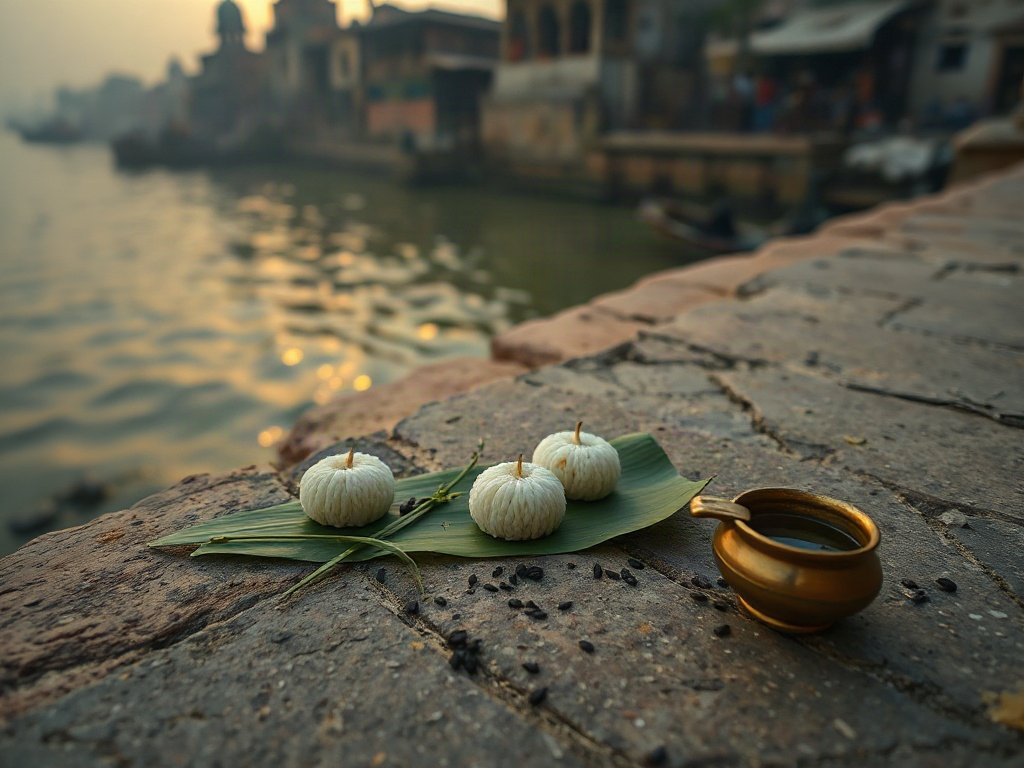
Pind daan is the offering of rice balls, called pindas, to your ancestors, made by name. Varanasi is one of the places Hindu families go to perform it, on the ghats beside the Ganga. This guide explains what the rite is, where it is done in Kashi, how it compares with Gaya and Prayagraj, and what to settle before the day.
Key takeaways
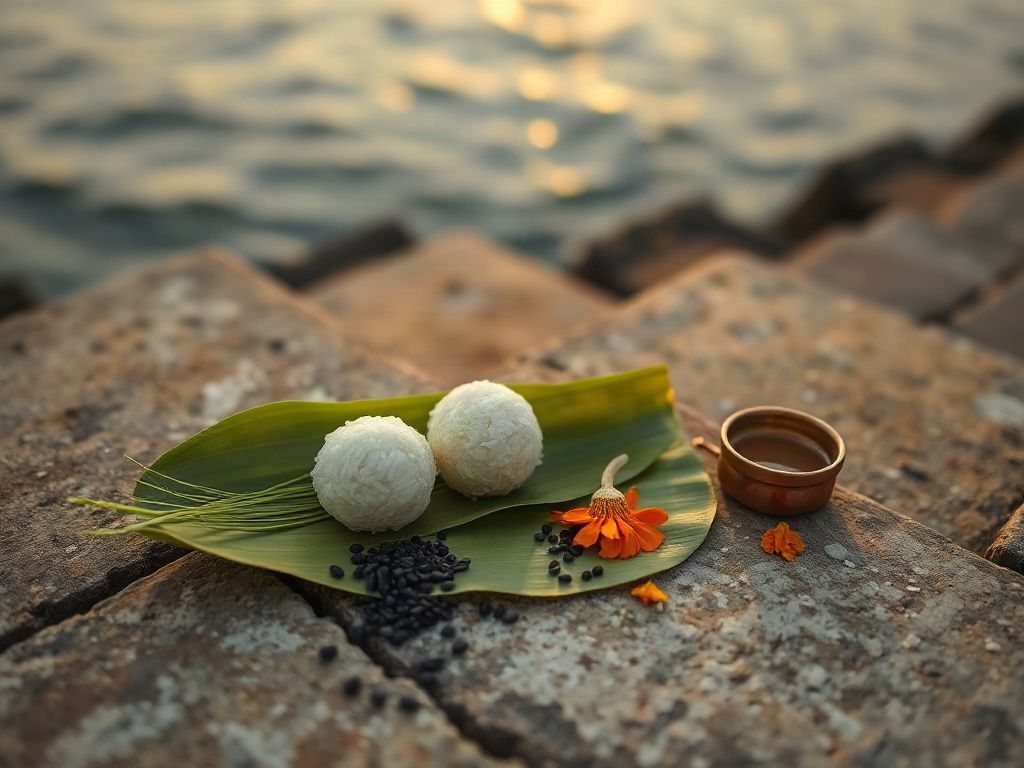
- Pind daan means offering pindas, balls of rice, to your ancestors by name. It sits inside the larger rite of shraddh.
- In Varanasi the rite is performed on the ghats and sacred kunds with a pandit leading the steps.
- Gaya is the best-known place for pind daan; Varanasi and Prayagraj are also places families go.
- No official samagri list, fixed duration or fixed price exists — your pandit decides these, so agree them before the day.
- Write down the names and gotra of the ancestors before you travel. The pandit needs them.
- If you cannot travel, a verified pandit can perform pind daan in your name.
On this page
What pind daan means
Pinda is an old word for a ball or lump of food. Monier-Williams' Sanskrit dictionary, quoted on Wisdom Library, defines it as a ball or lump of rice offered to the ancestors at shraddh ceremonies. Daan means giving. So the name says exactly what it is: giving food to the ancestors.
It is one part of a bigger rite. Shraddh is the whole ceremony done in honour of the ancestors. Inside it, tarpan is the offering of water and the pinda is the offering of food. Our Pitru Paksha 2026 guide explains how the three fit together and how your family's day in the fortnight is chosen.
Families perform the rite at different times:
- After a death, as part of the last rites in the days that follow.
- On the death anniversary, by the lunar calendar.
- During Pitru Paksha, the fortnight for the ancestors. In 2026 it runs from 26 September to 10 October.
- At a tirtha, a sacred place, when a family travels there specially to honour its ancestors.
Key insight
A family does not make this offering to "the ancestors" in general. Each pinda is offered to a person, by name — usually three generations on the father's side, and the same on the mother's. That is why the most useful thing you can do before you go is sit with the eldest person in the family and write those names down.
Where pind daan is done in Varanasi
Kashi is a city of ghats, and several of them are used for rites for the dead. Here is what we can say with confidence, and what rests on local tradition.
| Place | What it is known for | How sure we are |
|---|---|---|
| Manikarnika Ghat | The Varanasi district administration describes it as a site where cremations take place around the clock, as per Hindu funeral traditions | Official source |
| Pishach Mochan Kund | Associated by long local tradition with pind daan and Tripindi Shraddh, especially during Pitru Paksha | Local tradition — no official source found |
| Other Ganga ghats | Pandits perform shraddh and tarpan on many ghats along the river | Common practice; the exact ghat depends on your pandit |
Manikarnika is the ghat most associated with death and the last rites in Kashi. Families who come for the rite often want to be near it for that reason.
Pishach Mochan is a kund, a sacred tank, inland from the river ghats. Pandits and families in Varanasi associate it with the pinda offering and with Tripindi Shraddh, a rite for ancestors whose shraddh has been missed for years or whose spirits are believed to be unsettled. We looked for an official temple, district or government source that documents these rites at Pishach Mochan and did not find one. So we pass on what is widely practised, and suggest you ask your pandit to explain the specific rite and why it is being recommended for your family.
Tripindi Shraddh: ask before you agree
Tripindi Shraddh comes up often, and sometimes it is presented to families as something they must do. It is a real rite with a long tradition. But it is recommended for particular situations, not for everyone. If a pandit suggests it, ask two simple questions: why this rite for our family? and what does it include? A good pandit will answer both calmly.
Varanasi, Gaya or Prayagraj?
Families often ask which place is "best" for the rite. There is no single answer — it depends on your family's tradition, and many families follow the place their elders went to.
| Varanasi | Prayagraj | Gaya | |
|---|---|---|---|
| Known for | Ghats on the Ganga, Manikarnika, Pishach Mochan | The Triveni Sangam, and asthi visarjan | The best-known place for pind daan in India, and the Pitru Paksha mela |
| MARG Buddy and verified contacts | Yes | Yes | No |
| The rite performed by a verified pandit in your name | Yes | Yes | Yes, on request — contact us |
Gaya in Bihar has the strongest tradition of all, and if your family has always gone to Gaya, go with that. Our Buddy and verified-contacts directory are not in Gaya, but the rite can still be performed in your name there if you prefer.
Prayagraj draws families to the Sangam, where the Ganga and Yamuna meet, for tarpan and for immersing ashes.
Varanasi suits families who want to combine the rite with darshan at Kashi Vishwanath, or whose elders have always performed their family rites in Kashi.
How to arrange pind daan in Varanasi
Here is the order that makes the day go smoothly.
- Fix the date. For an anniversary, it is the tithi on which the person died. During Pitru Paksha, it is the same tithi within the fortnight — or Sarva Pitru Amavasya, 10 October 2026, if the tithi is not known. Muhurat timings differ by city, so ask the pandit for the Varanasi timing on your date.
- Choose who performs it. Settle this before you travel. Arriving and looking for a pandit on the ghat is where most confusion and pressure comes from.
- Send the details ahead. The names of the ancestors, their relationship to you, and your gotra.
- Agree what is included, and the total, in advance. The pandit will tell you what to bring. There is no official samagri list — the lists you find online are mostly from people selling samagri.
- Plan the last kilometre. Ghat lanes are narrow and crowded, and vehicles stop far away. Know how you will reach the ghat, especially with elderly parents.
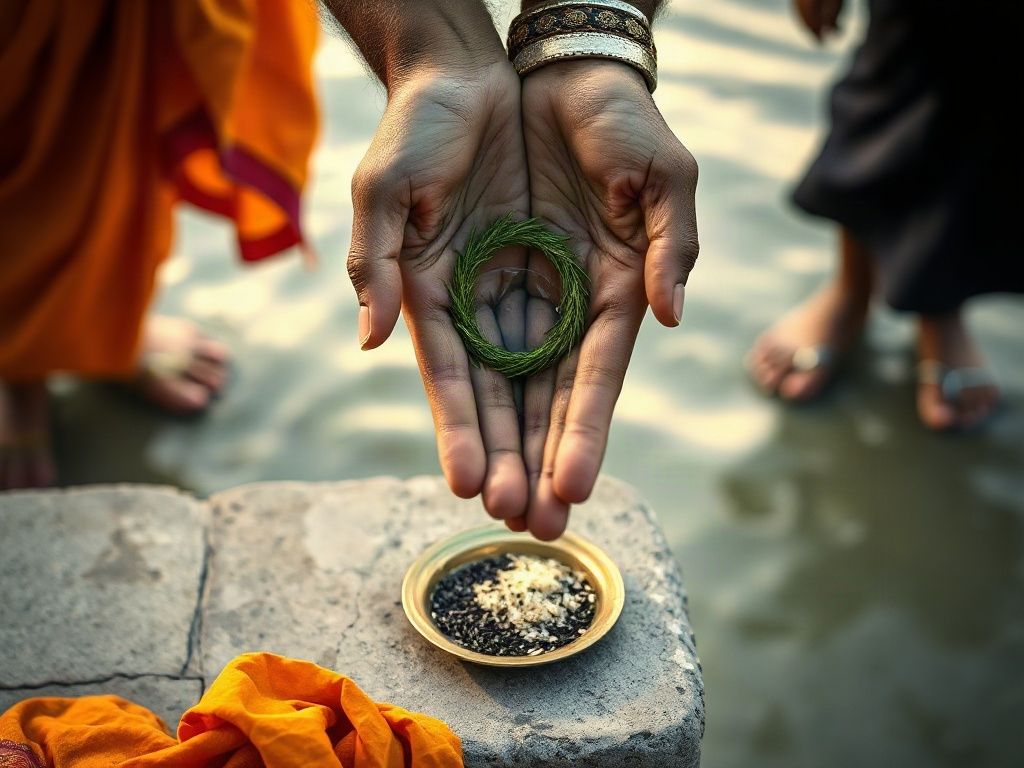
For step 2, our verified contacts include pandits in Varanasi who have passed document checks and manual approval, and our pind daan page explains how the rite can be arranged with one. For step 5, a MARG Buddy can stay with your family from arrival to the end of the rite.
Key insight
Grief makes people agreeable. Families who agree the price and the contents of the rite in advance almost never have a bad experience on the day. Families who try to decide on the ghat often do. The rite is the same either way — the difference is entirely in the planning.
What to settle before the day
| Settle this | Why it matters |
|---|---|
| The ancestors' names and your gotra | The pandit says them at the sankalp, the formal statement of intent |
| The date, by tithi, and the Varanasi muhurat | The lunar day, not the English date, decides it |
| Who is performing the rite, and their phone number | So nobody is searching on the ghat |
| What the rite includes, and the total cost | Agreed calmly, not in the middle of grief |
| Where you are staying and how you reach the ghat | Ghat lanes are crowded and vehicles stop far away |
| Whether you will also visit Kashi Vishwanath | Temple timings and queues change the plan for the day — see our Kashi Vishwanath timings guide |
If you cannot travel
Many families simply cannot be there — work, health, a visa, a child at home, or elderly parents who cannot manage the journey. The duty does not go away, and people carry real guilt about it.
A verified pandit can perform the rite in Varanasi in your name, using your gotra and the names of your ancestors. You are told when it will be done and by whom. This is what "online pind daan" usually means: the rite itself is performed in person, at the sacred place, by a pandit, on your behalf.
If this is what your family needs this Pitru Paksha, tell us the city, the tithi and the names, and we will arrange a pandit who performs that specific rite. There is no pressure to add anything else.
The verse behind the offering
The best-known pinda offering in Hindu memory is Lord Rama's. In the Ayodhya Kanda of the Valmiki Ramayana, Rama learns in the forest that his father Dasharatha has died. He has no rice, no ghee, nothing a palace would offer. So he takes the pulp of the ingudi fruit, mixes it with jujube, places it on kusha grass and, weeping, speaks to his father (2.103.29–30):
इदम्भुङ्क्ष्व महाराज प्रीतो यदशना वयम् । यदन्नः पुरुषो भवति तदन्ना स्तस्य देवताः ॥
idam bhuṅkṣva mahārāja prīto yadaśanā vayam yadannaḥ puruṣo bhavati tadannā stasya devatāḥ
O great king, be pleased to partake of this, which we eat — for that which a man eats is also eaten by his gods.
It is worth remembering when the rite starts to feel like a list of expensive things to get right. Rama offered what he himself was eating in the forest. The offering is the family's own food, given with love, by name.
What to do next
Start with the names. Ask the eldest person in the family for three generations on each side, and the gotra, and write them down. Then fix the tithi, decide who will perform the rite, and agree what it includes before the day.
Pind daan in Varanasi is a short ceremony. With the details settled in advance, the day can be about your ancestors — which is what it is for.
Frequently asked questions
What is the importance of Pind Daan?
Pind daan is the family's offering of food to the ancestors, made by name. Tradition holds that it nourishes and honours them. For most families it is also the moment they say the names of their parents and grandparents aloud together, which is its own kind of healing.
What happens if Pind Daan is not done?
Scripture describes the offerings of food and water as what sustains the ancestors, so families take the duty seriously. But no temple or authority imposes a penalty. If a day was missed, the rite can be performed on Sarva Pitru Amavasya, the day set aside for every ancestor.
How to do Pind Daan at home?
The full rite has a sankalp, names, gotra and a set order that a pandit leads, which is why most families perform it at a tirtha. At home, many families offer water and food in remembrance on the tithi. If you want the full pind daan done correctly without travelling, a verified pandit can perform it in your name.
Which place is famous for Pind Daan in India?
Gaya in Bihar is the best known. Varanasi and the Sangam at Prayagraj are also places families go for pind daan and shraddh, each with its own ghats and traditions.
Who can perform Pind Daan?
By custom the eldest son performs it, but families follow their own tradition, and today many pandits perform the rite for whichever family member carries the duty. Ask your pandit what your family's custom allows.
Can Pind Daan be done online?
The rite itself is performed in person by a pandit at the sacred place. What families abroad or unable to travel arrange is for a verified pandit to perform it in their name, with their gotra and the ancestors' names, and to tell them when it was done.