Navratri 2026: Sharad Navratri Dates, Day-by-Day, and Where to Go
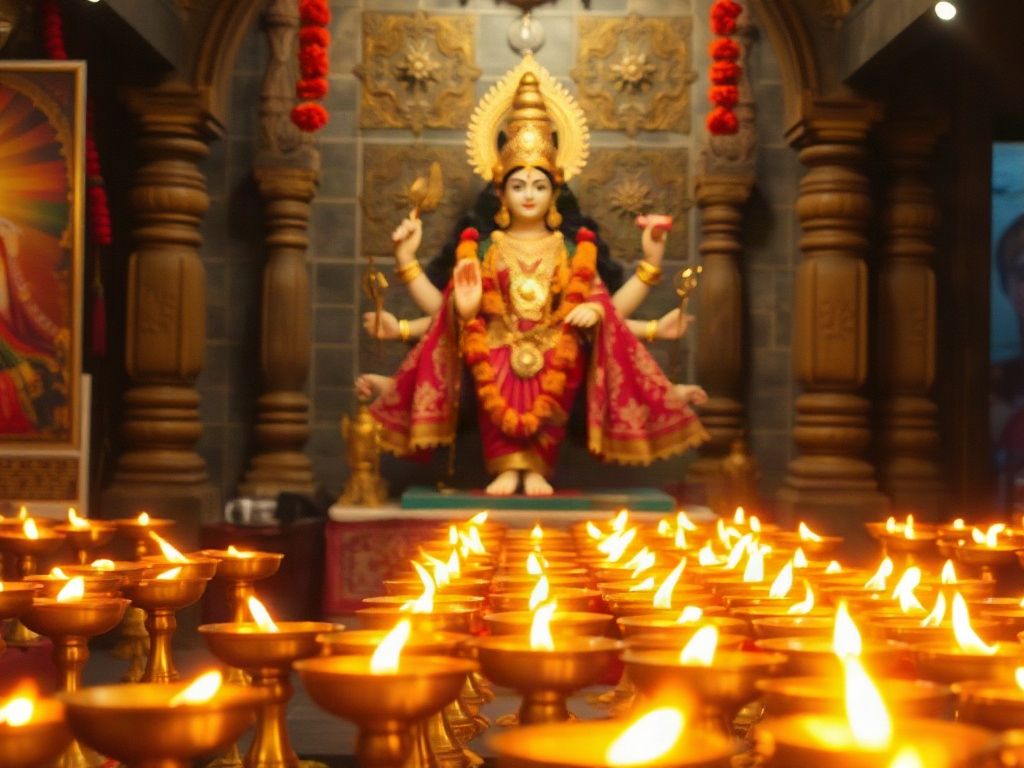
Navratri 2026 — Sharad Navratri — begins with Ghatasthapana on Sunday 11 October and ends with Vijayadashami on Tuesday 20 October. This year the calendar has a twist: Saptami falls on two days, so Durga Ashtami and Maha Navami both fall on Monday 19 October. Here is the full day-by-day calendar, the muhurat for your city, and the Devi temples worth visiting in Varanasi and Ujjain.
Key takeaways
- Navratri 2026 begins on Sunday 11 October with Ghatasthapana and Shailputri Puja.
- Durga Ashtami and Maha Navami are both on Monday 19 October, because Saptami repeats on 17 and 18 October.
- Dussehra (Vijayadashami) is on Tuesday 20 October, with Durga Visarjan.
- Ghatasthapana muhurat: 5:54–9:48 AM in Varanasi, 6:22–10:16 AM in Ujjain. Timings differ by city.
- Navratri begins the day after Pitru Paksha ends on 10 October.
- In MargKGB's cities, Durga Kund in Varanasi and Harsiddhi in Ujjain are the Devi temples to plan around.
On this page
Navratri 2026 dates, day by day
This is the calendar for Varanasi from Drik Panchang, which matches the dates we verify city by city for MargKGB. The colours are the ones widely worn for each day; they follow the weekday.
| Day | Date | Tithi | Puja | Colour |
|---|---|---|---|---|
| 1 | Sun 11 Oct | Pratipada | Ghatasthapana, Shailputri | Orange |
| 2 | Mon 12 Oct | Dwitiya | Brahmacharini | White |
| 3 | Tue 13 Oct | Tritiya | Chandraghanta | Red |
| 4 | Wed 14 Oct | Chaturthi | Kushmanda | Royal blue |
| 5 | Thu 15 Oct | Panchami | Skandamata | Yellow |
| 6 | Fri 16 Oct | Shashthi | Katyayani | Green |
| 7 | Sat 17 Oct | Saptami | Kalaratri | Grey |
| 8 | Sun 18 Oct | Saptami (continues) | — | Purple |
| 9 | Mon 19 Oct | Ashtami → Navami | Durga Ashtami, Mahagauri, Sandhi Puja, Maha Navami | Peacock green |
| 10 | Tue 20 Oct | Dashami | Vijayadashami (Dussehra), Durga Visarjan | — |
If you have seen a list online that puts Durga Ashtami on 18 October, it has not accounted for the repeated Saptami. Durga Ashtami in 2026 is Monday 19 October.
Key insight
Navratri follows the moon, not the calendar. A tithi can span two sunrises, or none, and when that happens the festival shifts. That is exactly what happens this year — and why a plan built on "Day 8 is Ashtami" will be a day off.
Why Ashtami and Navami fall on one day in Navratri 2026
In the Hindu calendar, a day takes its tithi from the lunar day that is current at sunrise. In 2026, the Saptami tithi is current at sunrise on both 17 and 18 October, so Saptami is counted twice.
That pushes Ashtami to Monday 19 October. On that same morning Ashtami ends and Navami begins, so the Sandhi Puja — performed at the exact junction of the two tithis — falls on 19 October too. In Varanasi, Drik Panchang gives the Sandhi Puja window as 10:27 to 11:15 AM. Because the transition happens on the same day, Maha Navami is observed on 19 October as well, and Vijayadashami follows on Tuesday 20 October.
For families, the practical result is simple: the big Ashtami and Navami pujas, kanya pujan and the Sandhi Puja all fall on one Monday.
Ghatasthapana muhurat by city
Ghatasthapana, the installation of the kalash that begins Navratri, is done in a morning muhurat on 11 October. The window differs by city, because sunrise differs:
| City | Ghatasthapana muhurat, Sun 11 Oct |
|---|---|
| Varanasi | 5:54 – 9:48 AM |
| Ujjain | 6:22 – 10:16 AM |
These are the times we verified for each city. For any other city, check a panchang set to your own location — or our daily panchang — rather than using a national time. A difference of half an hour is normal between the east and west of the country.
Kanya pujan and breaking the fast
Two family rituals move with the calendar this year, and people often get them wrong.
Kanya pujan. Many families honour young girls as forms of the Goddess on Ashtami or Navami — washing their feet, offering them a meal of puri, chana and halwa, and giving them small gifts. Whichever of the two days your family follows, in 2026 both fall on Monday 19 October. If your family traditionally does kanya pujan on Ashtami, do it on the morning of the 19th; if on Navami, later the same day is fine.
Breaking the Navratri fast. Families who keep the full Navratri fast break it with the Navratri Parana, which Drik Panchang places on Tuesday 20 October, Vijayadashami. If your family fasts only on the first and last days, the last day is also the 19th this year, with the parana on the 20th.
| Ritual | 2026 date | Note |
|---|---|---|
| Ghatasthapana | Sun 11 Oct | Morning muhurat, varies by city |
| Kanya pujan | Mon 19 Oct | Ashtami and Navami fall on the same day |
| Sandhi Puja | Mon 19 Oct | 10:27–11:15 AM in Varanasi |
| Navratri Parana | Tue 20 Oct | The day of Vijayadashami |
| Durga Visarjan | Tue 20 Oct | Immersion of the Durga idol |
A note on fasting
Fasting practices vary widely between families and regions — some eat once a day, some take only fruit and milk, some avoid grains and onion and garlic for the nine days. There is no single correct rule, and elderly or unwell family members should not fast in a way that harms their health. Follow your own family's practice, and ask your family pandit if you are unsure.
The nine goddesses
Each day of Navratri is dedicated to one form of the Goddess, the Navdurga:
- Shailputri — daughter of the mountain; the first form, worshipped at Ghatasthapana.
- Brahmacharini — the ascetic, devoted to penance.
- Chandraghanta — wearing the crescent moon like a bell on her forehead.
- Kushmanda — believed in tradition to have created the universe with her smile.
- Skandamata — mother of Skanda, Kartikeya.
- Katyayani — the warrior form who slew Mahishasura.
- Kalaratri — the fierce form that destroys darkness.
- Mahagauri — the radiant, peaceful form.
- Siddhidatri — the giver of spiritual powers, worshipped on Navami.
This year Mahagauri and Siddhidatri are both worshipped on Monday 19 October, the day Ashtami gives way to Navami.
Devi temples to visit in Varanasi and Ujjain
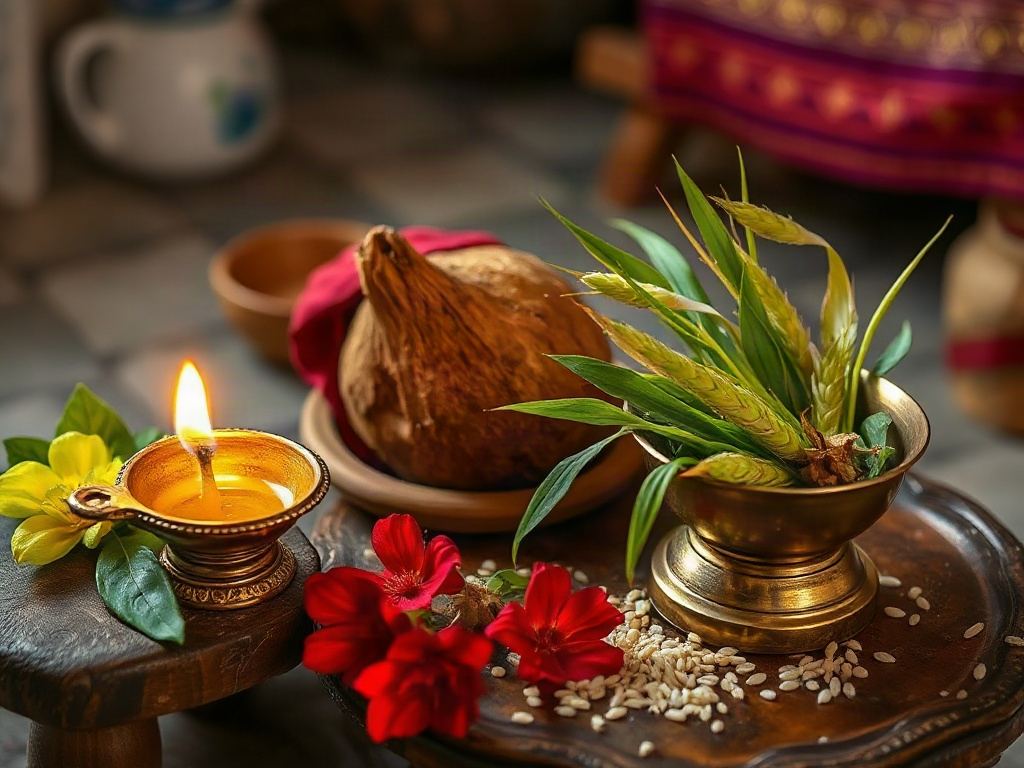
Durga Kund Mandir, Varanasi. The Kashi official portal describes it as one of the most revered temples of Varanasi, believed to date from the 18th century, and built around a sacred pond, the Durga Kund, where devotees often bathe before entering. It notes that the temple is decorated with lights and flowers at Navratri, when devotees gather in large numbers. Expect long queues on Ashtami and Navami — this year, both on 19 October.
Harsiddhi, Ujjain. One of Ujjain's most important Devi temples, and a short walk from Mahakaleshwar. The Ujjain district administration notes that, according to the Shiva Purana, Sati's elbow fell here, that the Sri Yantra is enshrined in the temple, and that its two tall Maratha-period pillars of lamps are lit during Navratri. If you are in Ujjain for Navratri, an evening visit to see the lamps is worth planning for. Our guide to places to visit in Ujjain fits Harsiddhi into a two-day plan.
In Vrindavan, Ayodhya and Prayagraj, the local Devi temples are equally busy through the nine nights. Ask your stay or your pandit which ones your family should visit, and when the crowds are thinnest.
Key insight
The busiest days at any Devi temple are Ashtami and Navami. This year they fall on the same Monday, so every temple will see both crowds at once. If you can, visit on the first few days instead, and keep 19 October for your own puja at home or at a quieter temple.
Planning a pilgrimage during Navratri
Navratri begins the day after Pitru Paksha ends on 10 October — our Pitru Paksha 2026 guide explains that fortnight. Many families travel in the gap between the two, and the Devi temples fill up from the first morning.
| Plan for | Why it matters |
|---|---|
| Stays booked early | Varanasi and Ujjain fill up for the festival and for Dussehra |
| Darshan early in the day | Queues build from mid-morning, especially on the weekend of 17–18 October |
| A quieter day than 19 October | Ashtami and Navami crowds arrive together this year |
| City-specific muhurat | Ghatasthapana times differ between Varanasi and Ujjain |
| Help for elderly parents | Temple queues during Navratri are long and slow |
If you would like a puja performed in your family's name during Navratri — a Durga Saptashati path or a Navratri havan — our puja and darshan services page explains how we arrange a verified pandit. For parents travelling to Varanasi or Ujjain for the festival, a MargKGB Buddy can stay with them through the queues.
What to do next
Mark three dates: Sunday 11 October for Ghatasthapana, Monday 19 October for Ashtami and Navami, and Tuesday 20 October for Dussehra. Check the muhurat for your own city, and if you are travelling, book your stay now and plan darshan for the early days of Navratri 2026 rather than the last. Nine nights is a long festival — there is no need to spend its busiest morning in its longest queue.
Frequently asked questions
What are the 9 days of Navratri in 2026?
Sharad Navratri 2026 runs from Sunday 11 October (Ghatasthapana and Shailputri Puja) to Monday 19 October (Durga Ashtami and Maha Navami), with Vijayadashami on Tuesday 20 October. Saptami falls on both 17 and 18 October this year, which is why Ashtami and Navami share one day.
What date is Navratri in October?
Sharad Navratri 2026 begins on Sunday 11 October with Ghatasthapana. The Ghatasthapana muhurat is 5:54 to 9:48 AM in Varanasi and 6:22 to 10:16 AM in Ujjain.
What is the real date of Dussehra in 2026?
Dussehra, or Vijayadashami, falls on Tuesday 20 October 2026. It is the day after Maha Navami and the day of Durga Visarjan.
How many Navratris are there in 2026?
Like every year, four: Chaitra Navratri in spring, Sharad Navratri in autumn, and two Gupt Navratris that are observed more quietly. Sharad Navratri, in October this year, is the most widely celebrated of them.
When is kanya pujan in Navratri 2026?
On Monday 19 October. Families who do kanya pujan on Ashtami and those who do it on Navami both mark it on the 19th this year, because Ashtami and Navami fall on the same day.
Why are Durga Ashtami and Maha Navami on the same day in 2026?
Because the Saptami tithi is current at sunrise on both 17 and 18 October, the calendar shifts by a day. Ashtami is current at sunrise on 19 October and gives way to Navami later that morning, so both are observed on Monday 19 October.