Manikarnika Ghat, Varanasi: Meaning, Etiquette and Last Rites
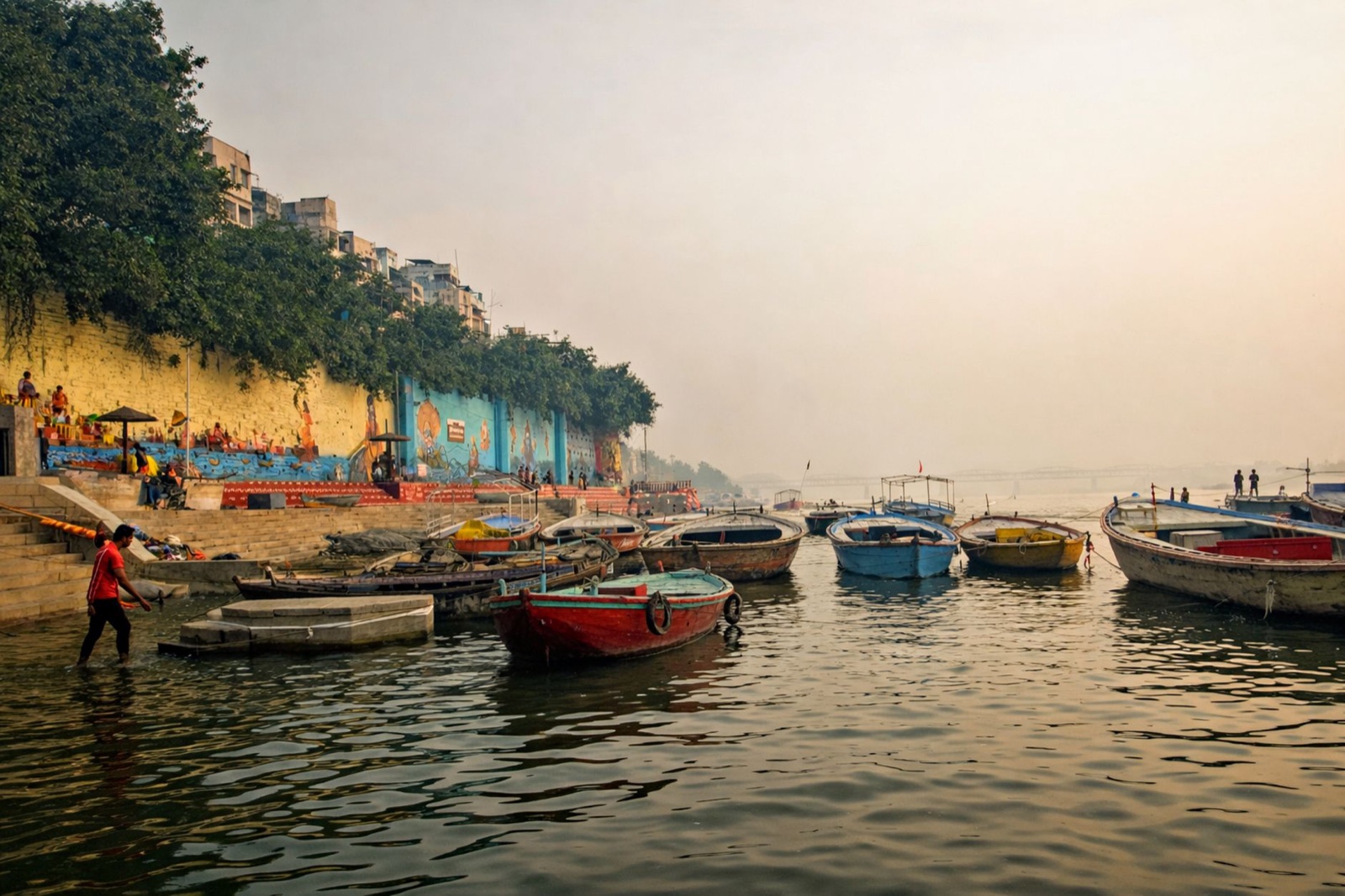
Every family that comes to Varanasi eventually walks past it, or sees it from a boat: the steps where the fires never go out. Manikarnika Ghat is the oldest and most revered cremation ground in Kashi, and for many Hindus it is where a life is meant to end well. It is also a working place of grief, where families are saying goodbye to someone they love. This guide explains what Manikarnika Ghat means, how to visit it with dignity, how families arrange last rites here, and what to say no to.
Key takeaways
- Manikarnika Ghat is both a tirth (a sacred bathing place) and Varanasi's principal cremation ground, or mahashmashan.
- It takes its name from the Manikarnika Kund, the well that tradition says Vishnu dug and into which an earring (mani) fell.
- UP Tourism describes photography of the cremations as strictly taboo. Keep cameras and phones down.
- Nobody at the ghat needs a visitor's money for "wood for the poor". Decline such requests politely and walk on.
- Families arranging last rites deal with the Dom attendants for the fire and wood, and with a pandit for the rites that follow, such as asthi visarjan and pind daan.
- On Vaikuntha Chaturdashi, Monday 23 November 2026, devotees take the Manikarnika Snan at dawn, per Drik Panchang.
On this page
What Manikarnika Ghat is
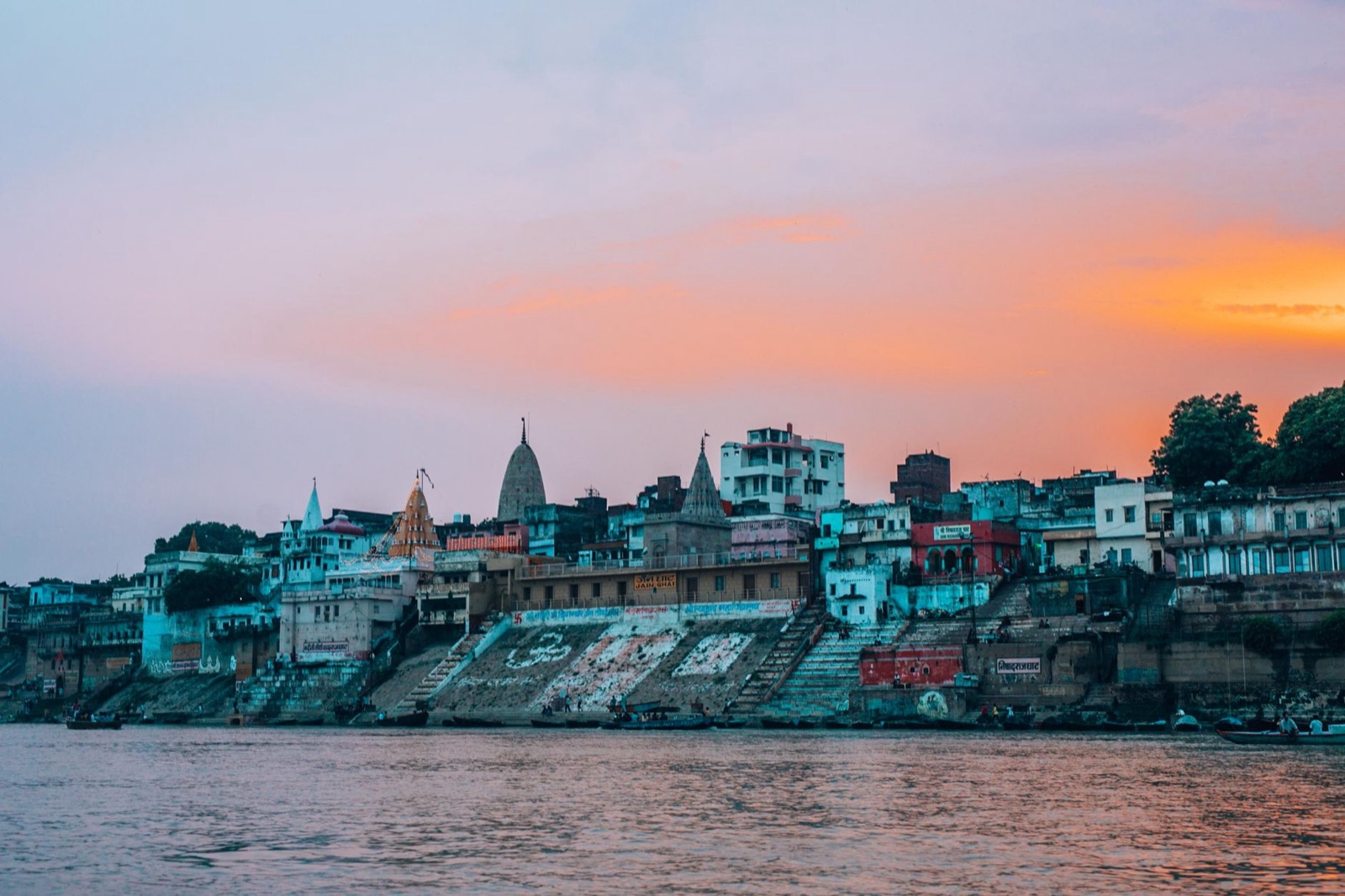
Manikarnika sits roughly in the middle of Varanasi's riverfront, just north of Lalita Ghat, with Dashashwamedh Ghat to its south and Panchganga Ghat to its north. Unlike most Indian cities, which keep their cremation grounds at the edge of town, Kashi keeps this one at its centre.
The UP Tourism page on Manikarnika Ghat explains why. The whole city of Shiva is regarded as Mahashmashana, the great cremation ground, so a cremation ground at its heart is not a contradiction. The same page calls Manikarnika one of the five major and oldest tirthas of Kashi, and notes that it is famous both as a pilgrimage site and as a cremation ground.
| What you will find | What it is |
|---|---|
| Manikarnika Kund | The sacred well, also called Chakra Pushkarini, said to have been dug by Vishnu |
| Vishnu Paduka | Footprints of Vishnu set in marble on the embankment |
| Tarakeshwar | Shiva as the lord of the Taraka mantra, the "prayer of the crossing" said at death |
| The cremation ground | The busy area of pyres, tended by the Dom community, where cremations continue day and night |
Two things are true at once here, and visitors should hold both. It is a holy bathing place where pilgrims come for snan on festival days. It is also where families are cremating a parent, a child or a spouse at that very moment.
The story behind the ghat
The name Manikarnika means "jewel of the ear". There are two well-known versions of how it came about, and both centre on the kund.
The account summarised on Wikipedia, drawing on the Kashi Khand of the Skanda Purana, says Vishnu dug a well with his Sudarshana Chakra and filled it with the sweat of his long austerities. When Shiva and Parvati came to see it, Shiva's earring fell into the well. Pleased with Vishnu, Shiva granted him a boon, and Vishnu asked that the place grant mukti, liberation, to all. UP Tourism tells the related version in which Parvati's ear-jewel fell into the pool, giving the kund and the ghat their name.
From this comes the belief that matters most to the families who come here: that a person cremated in Kashi is released from the cycle of rebirth. Manikarnika is where that belief is lived every day.
The fire that does not go out
Manikarnika is often described as the ghat where the fire never goes out. The Wikipedia account explains the ritual meaning behind the phrase. The Dom attendant gives the chief mourner fire from the ghat's never-extinguishing flame to light the pyre, and some hold that liberation depends on that fire. In a practical sense too the flames never cool, because cremations continue round the clock.
The same account records that Manikarnika was the first stone ghat in the city, built in 1372, with later reconstructions supported by Bajirao Peshwa and Ahilyabai Holkar. UP Tourism notes that the dark, smoke-stained temple over the cremation area was built by Queen Ahilyabai Holkar of Indore in the eighteenth century.
Key insight
For a visitor, Manikarnika is a sight. For a family, it is the most important hour of a parent's last journey. Every rule of conduct below follows from remembering the second.
Visiting Manikarnika Ghat with respect
Anyone may walk along the ghats, and many pilgrims pass Manikarnika on their way to the Kashi Vishwanath temple or the river. What matters is how you conduct yourself while there.
| Do | Do not |
|---|---|
| Dress modestly, as you would for a temple | Photograph or film the pyres or the mourners |
| Stand back from the pyres and the paths used to carry bodies | Block the steps when a funeral party is coming through |
| Keep your voice low and children close | Laugh, take selfies or treat the ghat as a viewpoint |
| Make way for the Dom attendants and the wood carriers | Follow anyone offering a "special" view from a building |
| Watch your step: the ground near the pyres is hot and uneven | Hand money to strangers who say it is for the dead |
Photography
This is the rule most visitors get wrong. UP Tourism states plainly that photography at the cremation ground is strictly taboo. It is not only a matter of law or of the attendants objecting; it is a matter of the family in front of you. If you would not want a stranger filming your mother's cremation, do not film theirs. A photograph of the river or the ghat steps from a distance, with no pyre or mourner in it, is a different thing, but when in doubt, keep the phone in your pocket.
Bringing children and elderly parents
Young children can find the ghat frightening, and the smoke, heat and steps are hard on older bodies. Many families choose to see Manikarnika from a boat instead, which is calmer and keeps a respectful distance. If you are travelling with elderly parents, a MargKGB Buddy can walk with them through the lanes and ghats, keep the pace gentle and keep touts away.
Touts and "wood money"
Travellers to Varanasi have reported the same approach at Manikarnika for many years. A friendly man introduces himself as a volunteer or a worker at the ghat, explains the rituals, offers to take you to a hospice or an upper floor for a better view, and then asks for a donation for wood for poor families who cannot afford a cremation. The amount is often large, and it is quoted per kilogram of wood.
You do not owe anyone at the ghat money for watching, walking or standing there. If you wish to help a family in need, give through a known institution, not to a stranger on the steps. A polite "no, thank you" and walking on is enough. Do not argue; this is a place of mourning.
- Nobody needs to "guide" you to see the ghat. It is open, and the best view is from the river.
- Do not enter buildings with someone you have just met.
- Agree any boat fare before you step into the boat.
Arranging last rites at Manikarnika Ghat
Some families bring a loved one to Varanasi for antim sanskar (the last rites, cremation). Others come later, carrying the ashes. The two journeys are different, and it helps to know which you are planning.
If the cremation is to take place here
- The body is brought to the ghat by the family, usually on a bier, and dipped in the Ganga before the pyre.
- The Dom attendants arrange the pyre and the wood. They are the traditional custodians of the cremation ground, and the sacred fire for lighting the pyre comes from them. Fees for wood and services are settled with them on the spot; ask the price clearly before anything begins, and have one calm family member handle it.
- The chief mourner, traditionally the eldest son or nearest relative, performs the rites and lights the pyre.
- Afterwards, the family collects the asthi (bone remains and ashes) for immersion, and the rites of the following days begin.
If you are coming with the ashes
Many families cremate at home and come to Kashi for asthi visarjan (immersion of the ashes in the Ganga), followed by pind daan and shraddh. These rites are performed with a pandit, not at the cremation ground itself. Our guide to pind daan in Varanasi explains the ritual, the samagri and how long it takes. If you need a verified Pandit Ji for asthi visarjan or pind daan, MargKGB can assign and confirm one through our puja booking, so the family is not negotiating with strangers at the ghat during a difficult week.
Key insight
Grief makes families easy to pressure. Decide in advance who in the family will speak to the attendants and the pandit, and agree the fee before the rite, not after.
Seeing the ghat from a boat
For most visiting families, the right way to see Manikarnika is from the river. A boat from Dashashwamedh heading north passes the ghat within a short ride, and from the water you see the whole riverfront, the kund steps, the temples and the smoke rising above them, without standing among the mourners. Morning rides are quieter; evening rides are often combined with the aarti. Our Ganga Aarti timings guide can help you plan the evening.
Ask the boatman not to stop directly in front of the pyres, and keep cameras pointed elsewhere as you pass.
Festival days at Manikarnika
Manikarnika is also a bathing ghat. UP Tourism lists eclipses, Prabodhini and Nirjala Ekadashi, Makar Sankranti, Ganga Dussehra and Chhath among the days of special importance for snan here. One of the most significant falls this month. Drik Panchang's Vaikuntha Chaturdashi page for Varanasi gives the date as Monday 23 November 2026, and explains that for devotees of Shiva the dawn bath at Manikarnika Ghat that morning, the Manikarnika Snan, is especially significant. Expect the ghat to be crowded at dawn that day.
You may also hear of Masan Holi, the Holi played with ash at Manikarnika the day after Rangbhari Ekadashi in spring. It is a tradition of sadhus and local devotees at a cremation ground. It is not a festival spectacle, and it is not a sensible outing for visiting families with children or elderly parents.
Note that redevelopment work has been under way at Manikarnika through 2026. In January 2026 the state government said the work was to add basic amenities and that idols and artefacts had been preserved for reinstallation. Parts of the ghat may be fenced or rerouted when you visit, so allow extra time.
Manikarnika and the five tirthas of Kashi
UP Tourism describes Manikarnika as lying at the centre of the five tirthas of Kashi. In the traditional Panchatirthi, pilgrims bathe at five ghats in one day:
| Ghat | Why it matters |
|---|---|
| Assi Ghat | Where the Assi stream meets the Ganga, at the southern end of the old city |
| Dashashwamedh Ghat | The central ghat, known for the evening Ganga Aarti |
| Manikarnika Ghat | The kund and the mahashmashan, at the centre of the five |
| Panchganga Ghat | Named for the meeting of five rivers in tradition |
| Adi Keshava Ghat | Where the Varuna meets the Ganga, at the northern end |
Lists vary slightly between sources, but these five are the ones most often named. If you are planning darshan at the Kashi Vishwanath temple on the same day, our Kashi Vishwanath timings guide sets out the current schedule.
How many cremations happen here?
No official daily count is published, and figures quoted online vary widely. In May 2024, during a heatwave, the Free Press Journal reported, citing records, that between 88 and 169 bodies a day had arrived over the previous week, and more than 400 on a single day, and that the ghat can manage 25 to 30 cremations at a time. Treat any number you hear from a guide as an estimate.
What to do next
If you are visiting Varanasi on pilgrimage, see Manikarnika Ghat from a boat, walk past it quietly if your route takes you there, and keep your camera away from the pyres. If you are coming for a loved one's last rites or asthi visarjan, decide who will speak for the family, and book a verified Pandit Ji in advance through MargKGB puja booking. Timings, access and fees at the ghat change, especially during the ongoing works, so check locally the week you travel.
Frequently asked questions
What is the story behind the Manikarnika Ghat?
According to the Kashi Khand of the Skanda Purana, Vishnu dug a well here with his chakra during long austerities, and an earring fell into it when Shiva and Parvati came to see it. Vishnu asked that the place grant liberation to all. Some versions say the earring was Parvati's. The well, Manikarnika Kund, gave the ghat its name, which means jewel of the ear.
Can a girl visit Manikarnika Ghat?
Yes. Manikarnika is part of Varanasi's public riverfront, and women and girls walk past it and see it from boats every day. Whether women accompany a body to the cremation itself is a matter of family and community custom, which differs between families. Visitors of any age should dress modestly, stay back from the pyres, avoid photography and follow the wishes of grieving families.
What are the five most famous ghats in Varanasi?
The five ghats of the traditional Panchatirthi are Assi, Dashashwamedh, Manikarnika, Panchganga and Adi Keshava. Pilgrims traditionally bathe at all five in one day. UP Tourism describes Manikarnika as lying at the centre of these five tirthas. Some lists differ slightly, but these five are the ones most often named.
How many bodies are cremated at Manikarnika Ghat?
No official daily figure is published, and estimates vary widely. In May 2024 the Free Press Journal, citing records, reported between 88 and 169 bodies a day over one week, and more than 400 on one heatwave day, and said the ghat can handle 25 to 30 cremations at once. Treat other numbers as estimates.
Can you take photos at Manikarnika Ghat?
Do not photograph or film the cremations or the mourners. UP Tourism describes photography at the cremation ground as strictly taboo, and families and attendants object to it. If you want a picture of the riverfront, take it from a distance with no pyre or person in the frame, or simply keep the phone away while you pass.