Assi Ghat Varanasi: Subah-e-Banaras, Aarti and How to Visit
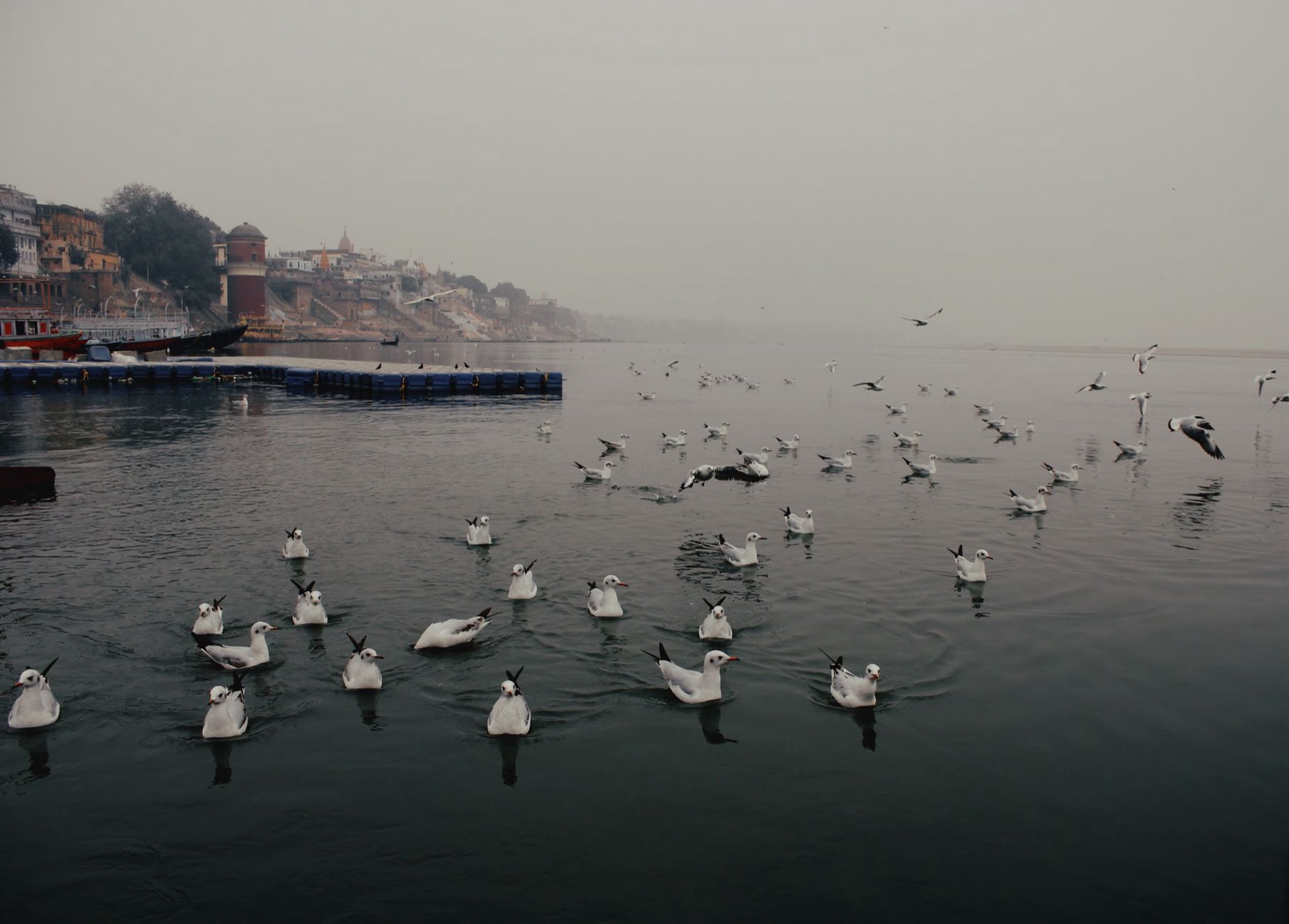
Assi Ghat is where many families end up loving Varanasi. It sits at the southern end of the city's riverfront, where the small Assi stream meets the Ganga, and it holds two of the calmest experiences in Kashi: Subah-e-Banaras, the sunrise programme of chants, music and yoga, and an evening Ganga Aarti that is gentler than the one at Dashashwamedh. This guide to Assi Ghat covers what happens there and when, how it compares with Dashashwamedh, how to get there from the stations, what is close by, and how to plan a winter morning with elderly parents.
Key takeaways
- Assi Ghat is at the confluence of the Assi and the Ganga, traditionally counted as the southern end of Varanasi's ghats.
- Subah-e-Banaras is held at sunrise: Vedic hymns, classical music, yoga and prayers to the sun and the river. It is free.
- An evening Ganga Aarti is held at Assi around sunset, similar to Dashashwamedh's but quieter. No official body publishes a fixed start time.
- On 23 November 2026, sunrise in Varanasi is at 6:21 AM and sunset at 5:08 PM, per Drik Panchang.
- Banaras station (formerly Manduadih) is the nearest major railway station; Varanasi Junction is a little further.
- Tulsi Ghat, Lolark Kund, Sankat Mochan temple and BHU are all close to Assi.
On this page
- Assi Ghat at a glance
- Where Assi Ghat is, and why it is sacred
- Subah-e-Banaras: the sunrise programme
- The evening aarti at Assi
- Assi or Dashashwamedh: which is better?
- Boats from Assi Ghat
- Places near Assi Ghat
- Getting to Assi Ghat
- Staying and eating around Assi
- Winter mornings at Assi
- What to do next
- Frequently asked questions
Assi Ghat at a glance
| What | Details |
|---|---|
| Where | Southern end of the Varanasi riverfront, where the Assi meets the Ganga (address: Nagwa Road, Shivala, Varanasi 221005) |
| Morning | Subah-e-Banaras, around sunrise: hymns, music, yoga |
| Evening | Ganga Aarti around sunset, smaller and calmer than Dashashwamedh |
| Entry | The ghat is a public riverfront; watching the morning and evening programmes is free |
| Close by | Tulsi Ghat, Lolark Kund, Sankat Mochan temple, Banaras Hindu University |
| Nearest major station | Banaras (formerly Manduadih); Varanasi Junction is the other main option |
| Best for | A quieter aarti, sunrise, a slower pace with elderly parents |
The ghat is a riverfront, not a temple, so there are no opening hours as such. What has a time is the programme: the morning one at sunrise and the evening aarti at sunset, both of which move with the season.
Where Assi Ghat is, and why it is sacred
The UP Tourism page on Assi Ghat describes it as the southernmost ghat, at the confluence of the Assi and the Ganga, and records the legend behind the name: after slaying the demons Shumbha and Nishumbha, the goddess Durga threw away her weapon, and where it fell a stream rose from the earth. That stream is the Assi, and its meeting with the Ganga gave the ghat its name.
Two shrines are part of the visit. A large Shivling stands under a peepal tree on the ghat, and many pilgrims bathe and then offer water there. Just off the ghat is a small marble temple to Asisangameshvara, the Lord of the Confluence of the Assi.
The Kashi official portal notes that the ghat finds mention in the Puranas and has long been valued by pilgrims and saints. It also notes something you will see for yourself: because Banaras Hindu University is close, Assi is full of students, scholars and long-stay visitors, and the lanes behind it are lined with cafés, ashrams and guesthouses. It feels different from the old-city ghats further north, and for many families that is the appeal.
Subah-e-Banaras: the sunrise programme
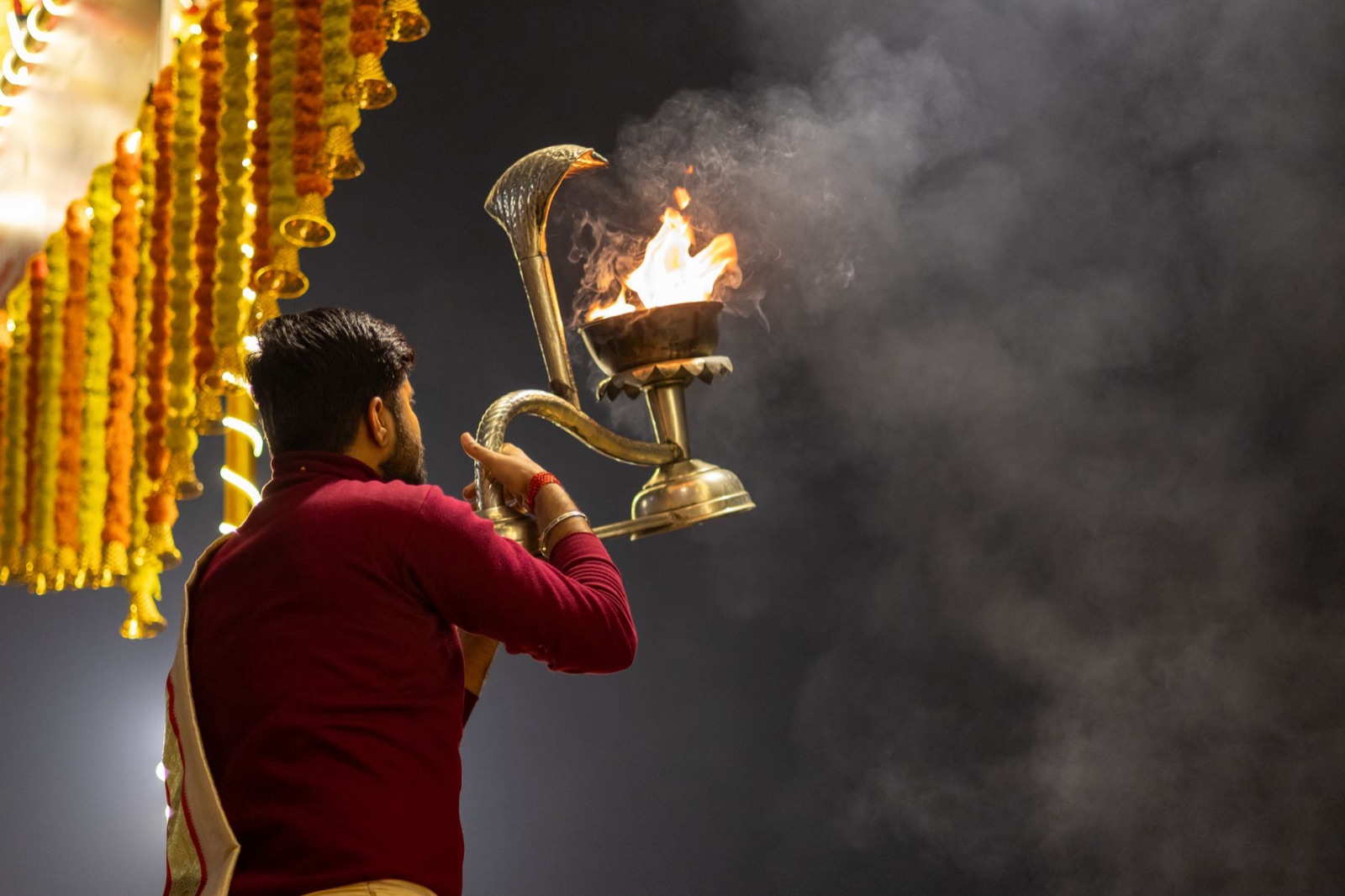
Subah-e-Banaras means "the morning of Banaras". It is the reason many visitors come to Assi Ghat at all. The Kashi portal describes it as a sunrise programme that opens with Vedic hymns and goes on to classical music, yoga and prayers offered to the rising sun and the river.
What families usually find is a sequence: the morning aarti and chanting first, then a short session of classical music, then yoga on the ghat. You can watch from the steps or join the yoga. There is no ticket.
What time does it start?
No official source publishes a fixed clock time; the programme is tied to sunrise. Visitor accounts put the start at roughly 5 AM in summer and closer to 5:30 or 5:45 AM in winter, and these accounts disagree with each other by up to half an hour. For planning, use the sunrise time for your date. According to Drik Panchang for Varanasi, sunrise on 23 November 2026 is at 6:21 AM, and it keeps getting later through December. Arriving about 45 minutes before sunrise puts you there for the opening chants.
Ask your host the evening before. In Assi, guesthouse owners and boatmen know the current start time, and a five-minute question saves you an hour in the cold.
Key insight
Subah-e-Banaras is the easiest way to experience a Ganga ritual without a crowd. If your parents find evening crowds tiring, a morning at Assi may give them more than any evening aarti.
The evening aarti at Assi
An evening Ganga Aarti is held at Assi Ghat around sunset. The Kashi portal calls it similar to the Dashashwamedh aarti but in a quieter setting, and that is a fair description: priests with large brass lamps, conch shells, bells and the river, on a smaller scale and with far more space to sit.
Like the Dashashwamedh aarti, it has no officially published start time. It follows sunset, which on 23 November 2026 is at 5:08 PM in Varanasi. Our guide to Ganga Aarti timings in Varanasi has the sunset time for every month of 2026, which is the best way to plan either aarti.
How long does the Assi Ghat aarti last?
Most visitor accounts put the evening aarti at around 45 minutes to an hour, but no temple or government body publishes an official duration, and it runs longer on festival nights. Plan for about an hour on the ghat, plus time to arrive early and to leave once the crowd thins.
Dev Deepawali falls on Tuesday 24 November 2026, on Kartik Purnima. On that night every ghat from Assi northwards is lit with lamps and the whole riverfront changes; our Dev Deepawali 2026 guide explains the muhurat and how to plan for the crowd.
Assi or Dashashwamedh: which is better?
It depends on what you want from the evening. Dashashwamedh is the most famous ghat of Varanasi for the aarti; the Kashi official portal calls it world-famous for its grand Ganga Aarti. Assi is where people go for a calmer version.
| Assi Ghat | Dashashwamedh Ghat | |
|---|---|---|
| The aarti | Similar ritual, smaller scale | The grandest, best-known evening aarti |
| Crowd | Noticeably calmer | Very large, every evening |
| Morning | Subah-e-Banaras at sunrise | No equivalent programme |
| Nearby | BHU, Tulsi Ghat, Sankat Mochan, cafés | Kashi Vishwanath, the old city lanes |
| Space to sit | Usually easy to find | Hard to find without arriving early |
| Best for | Elderly parents, a second evening, sunrise | Seeing the full spectacle once |
If you have only one evening in Varanasi, see the Dashashwamedh aarti. If you have two, give the second to Assi Ghat and come back the next morning for Subah-e-Banaras. With elderly parents, many families do it the other way round and are glad they did.
Boats from Assi Ghat
Assi is one of the easiest places to take a boat. Rowing boats and motorboats wait along the ghat, and a common choice is a ride north along the riverfront, past the ghats towards Dashashwamedh, at sunrise or just before the evening aarti.
- Agree the fare first. No official body publishes boat fares. Agree the price, the route, and how long the boat will wait before anyone steps in.
- Check the steps. The steps down to the water are steep and often wet. With older parents, look at where the boat is tied up before agreeing.
- Dress warmly. On a winter morning it is much colder on the water than on the ghat.
- Pass by with respect. A riverfront ride passes Manikarnika, the cremation ghat. Photography there is not appropriate; our Manikarnika Ghat guide explains why, and how families observe it.
Places near Assi Ghat
Assi Ghat is the anchor for a whole southern corner of Varanasi. These are within easy reach:
| Place | What it is | From Assi |
|---|---|---|
| Tulsi Ghat | Named after the poet-saint Tulsidas, who lived nearby in the sixteenth century; originally called Lolarka Ghat | The next ghat north, a few minutes' walk |
| Lolark Kund | An ancient sun-worship tank about fifteen metres below ground, reached by steep steps | Short walk |
| Sankat Mochan temple | One of Varanasi's most loved Hanuman temples, by tradition founded by Tulsidas | Roughly 2 km by road |
| Banaras Hindu University | The campus, with its own Vishwanath temple | Main gate roughly 2 km by road |
| Dashashwamedh Ghat | The main evening aarti | Roughly 3 to 4 km by road, or a boat ride along the river |
UP Tourism notes that Lolark Kund is one of only two remaining sun sites linked with the origins of Hinduism, and the steps are steep, so older visitors should take them slowly or view the tank from the top. Sankat Mochan's timings are set by the temple and vary with the season; check locally before you go, and expect it to be busiest on Tuesdays and Saturdays.
Distances on this page are approximate road distances from map routing, not official figures. The old-city lanes are slow, so time matters more than kilometres.
Getting to Assi Ghat
Which station is near to Assi Ghat?
Banaras railway station, which was called Manduadih until it was renamed in 2021, is the nearest major station to Assi Ghat, roughly 4 km away as the crow flies. Varanasi Junction, the city's main station (also called Varanasi Cantt), is a little further, roughly 5 km in a straight line. By road, expect somewhat more than that from either station, and allow 20 to 40 minutes depending on traffic.
| Arriving at | Distance to Assi (approx.) | Notes |
|---|---|---|
| Banaras station (BSBS) | About 4 km straight line | Nearest major station |
| Varanasi Junction (BSB) | About 5 km straight line | Most trains stop here |
| Lal Bahadur Shastri Airport, Babatpur | About 22 km from Varanasi city, per the district administration | Allow an hour or more to Assi |
The Varanasi district administration advises agreeing fares for autos and rickshaws before you travel, and notes that some old-city routes are one-way or closed to larger vehicles. Assi is easier than the old city here: autos and cars can reach close to the top of the ghat, which matters if someone in your group cannot walk far.
Staying and eating around Assi
The lanes behind Assi Ghat have a wide spread of guesthouses, homestays and small hotels, many with a view of the river, and a long row of cafés serving everything from thali to filter coffee. It is a comfortable base: calmer than the old city, with easy access to the ghats and BHU.
The trade-off is distance from Kashi Vishwanath. If darshan at the temple is the centre of your trip, especially early-morning darshan with older parents, a stay closer to the temple may suit you better. Our guide to where to stay near Kashi Vishwanath sets out the options area by area. Many families split it: one night near the temple, one night at Assi.
For food, sattvic and pure-vegetarian options are easy to find around Assi. If anyone in the family keeps a strict fast or a no-onion-no-garlic diet, ask before ordering; a "veg" menu does not always mean that.
Winter mornings at Assi
Late November to January is a lovely time for Assi Ghat, and also the time when mornings are hardest on elderly visitors. The river breeze is cold before sunrise, and fog often covers the water in December and January, sometimes for much of the morning.
- Layers, not one coat. A shawl or jacket, a cap, and socks. It warms up quickly once the sun is out.
- Something to sit on. The stone steps are cold and damp at dawn. A folded shawl or a small cushion helps.
- A warm drink. Tea stalls along the ghat open early.
- Plan for fog. On a foggy morning you may not see the sunrise, and boats may wait for it to lift. Keep the morning flexible.
- Allow for train delays. Winter fog in north India often delays trains, so avoid planning Subah-e-Banaras for the morning you arrive.
Key insight
For older parents, the best plan is often a room within a short walk of the ghat. Then a 5:30 AM start is a slow walk down the lane, not a cold auto ride across the city.
If your parents are going without you, or you would simply like someone local with them, a MargKGB Buddy can stay with them at the ghat in the dark before sunrise, help them down the steps and into a boat, and keep touts away. A Buddy does not sell passes or special access; there is nothing at Assi that needs one.
What to do next
Check the sunrise and sunset times for your dates, decide which evening goes to Dashashwamedh and which to Assi Ghat, and book a stay that makes the early morning easy. Ask your host the night before what time Subah-e-Banaras is starting. Then give yourself one unhurried morning on the steps at Assi, watching the light come up over the Ganga.
Frequently asked questions
Which is the most famous ghat of Varanasi?
Dashashwamedh Ghat is the most famous ghat of Varanasi, known for its grand evening Ganga Aarti and its closeness to Kashi Vishwanath temple. Manikarnika is the most sacred cremation ghat, and Assi Ghat is the best known in the south of the city, for its calmer evening aarti and the Subah-e-Banaras programme at sunrise.
Which station is near to Assi Ghat?
Banaras railway station, formerly called Manduadih, is the nearest major station to Assi Ghat, roughly 4 km away in a straight line. Varanasi Junction, also called Varanasi Cantt, is a little further, roughly 5 km in a straight line. By road, allow 20 to 40 minutes from either station depending on traffic.
How long does Assi Ghat aarti last?
The evening Ganga Aarti at Assi Ghat usually lasts around 45 minutes to an hour, according to most visitor accounts. No temple or government body publishes an official duration, and it can run longer on festival nights. It begins around sunset, so plan to arrive about 30 to 45 minutes before sunset to find a comfortable place to sit.
Which is better, Assi Ghat or Dasaswamedh Ghat?
Dashashwamedh is better for seeing the grand, best-known evening aarti once. Assi Ghat is better for a calmer aarti with space to sit, for the Subah-e-Banaras sunrise programme, and for elderly visitors who find large crowds tiring. If you have two evenings in Varanasi, many families see Dashashwamedh on one and Assi on the other.
What time does Subah-e-Banaras start at Assi Ghat?
Subah-e-Banaras is tied to sunrise rather than a fixed clock time. Visitor accounts put the start at about 5 AM in summer and around 5:30 to 5:45 AM in winter, though accounts differ. On 23 November 2026 sunrise in Varanasi is at 6:21 AM per Drik Panchang. Ask your host the evening before for the current start time.