Mahakaleshwar Temple Timings: Full Aarti Schedule and Sheeghra Darshan
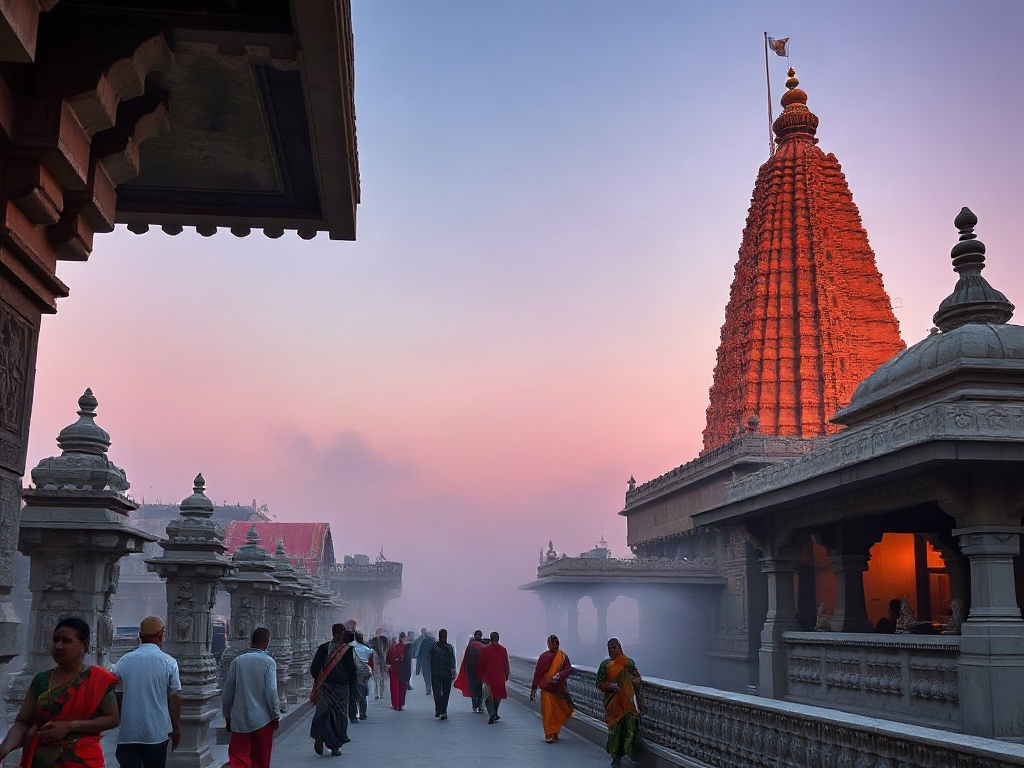
Search for "Mahakaleshwar temple timings" and you'll find a dozen different answers, because the temple does not publish a single "opens at, closes at" line. What it publishes instead is five aartis across the day, each with its own window, and darshan happens around them. This guide sets out that official schedule, what Sheeghra Darshan actually gets you, the temple's three-level structure, and — as plainly as the last two guides in this series — what the temple committee does and does not make public.
Key takeaways
- Mahakaleshwar's day is built around five aartis, from Bhasma Aarti at 4 AM to Shayan Aarti around 11 PM.
- Sheeghra Darshan is the temple's own fast-track pass, separate from Bhasma Aarti. Its price is shown only after login — nowhere on the public site.
- The temple has three levels: Mahakaleshwar (main Jyotirlinga), Omkareshwar above it, and Nagchandreshwar on top, open only on Nag Panchami.
- Touching the Shivling is banned by a 2020 Supreme Court order, not by temple custom.
- The temple committee has not published a dress code or a prohibited-items list — we checked, and say so rather than repeat what other sites claim.
- Mahakal Lok, the corridor leading to the temple, is free to enter, 6 AM to 10 PM.
On this page
Mahakaleshwar temple timings: the official aarti schedule
Mahakaleshwar's own Temple Timings page lists five aartis a day, and the times shift slightly by season — the temple runs one schedule from Chaitra Krishna Pratipada to Ashwin Purnima (roughly April to September) and a second from Kartik Krishna Pratipada to Phalgun Purnima (roughly October to March).
| Aarti | Apr–Sep | Oct–Mar |
|---|---|---|
| Bhasma Aarti | 4:00–6:00 AM | 4:00–6:00 AM |
| Dadyodak Aarti (Bal Bhog) | 7:00–7:45 AM | 7:30–8:15 AM |
| Bhog Aarti | 10:00–10:45 AM | 10:30–11:15 AM |
| Sandhya Aarti | 7:00–7:45 PM | 6:30–7:15 PM |
| Shayan Aarti | 10:30–11:00 PM | 10:30–11:00 PM |
Bhasma Aarti, the first and best-known aarti, is performed at dawn with sacred ash and needs its own booked pass — our Bhasma Aarti booking guide covers that process step by step, so we won't repeat it here. The other four are open darshan windows around the daily rituals, not ticketed events, though the temple can restrict entry at short notice on a crowded day.
Key insight
Most temples state one open-close time and let you plan around it. Mahakaleshwar states five aarti windows instead, which is a more honest description of how the day actually works here — the sanctum's access genuinely changes five times a day, not once.
Sheeghra Darshan: what it is, and what we don't know
Sheeghra Darshan is the temple's own fast-track pass. The official page describes it plainly: "a special pass that allows you to visit the Shri Mahakaleshwar Jyotirlinga quickly... without waiting in long queues." It is a separate booking from Bhasma Aarti — think of it as skipping the general darshan line, not attending the dawn ritual.
Here is where we have to be honest about the limits of what we found. We went to the booking page ourselves, the same way a devotee would, and it asks for a mobile number login before showing anything else — no price is shown until you are signed in.
| What we can confirm | What we cannot |
|---|---|
| Sheeghra Darshan exists as an official fast-track pass | Its price — not shown before login |
| Bhasma Aarti, Sandhya Aarti and Shayan Aarti all take online bookings | Whether every slot is always available same-day |
| Booking is only through shrimahakaleshwar.mp.gov.in | A dress code or list of prohibited items — the temple has not published one |
Several travel sites quote a Sheeghra Darshan price. We checked the same page they would have, and the price is not there — it appears only after you log in with an OTP. We would rather tell you that than repeat a number we could not verify ourselves.
The temple's three levels
The temple's own history page describes Mahakaleshwar as the only south-facing Jyotirlinga among the twelve in India, and lays out the sanctum in three levels, stacked one above the other:
- Mahakaleshwar — the main Jyotirlinga, on the lowest level.
- Omkareshwar — a separate Shivalinga, directly above it.
- Nagchandreshwar — the topmost level, opened to the public only once a year, on Nag Panchami.
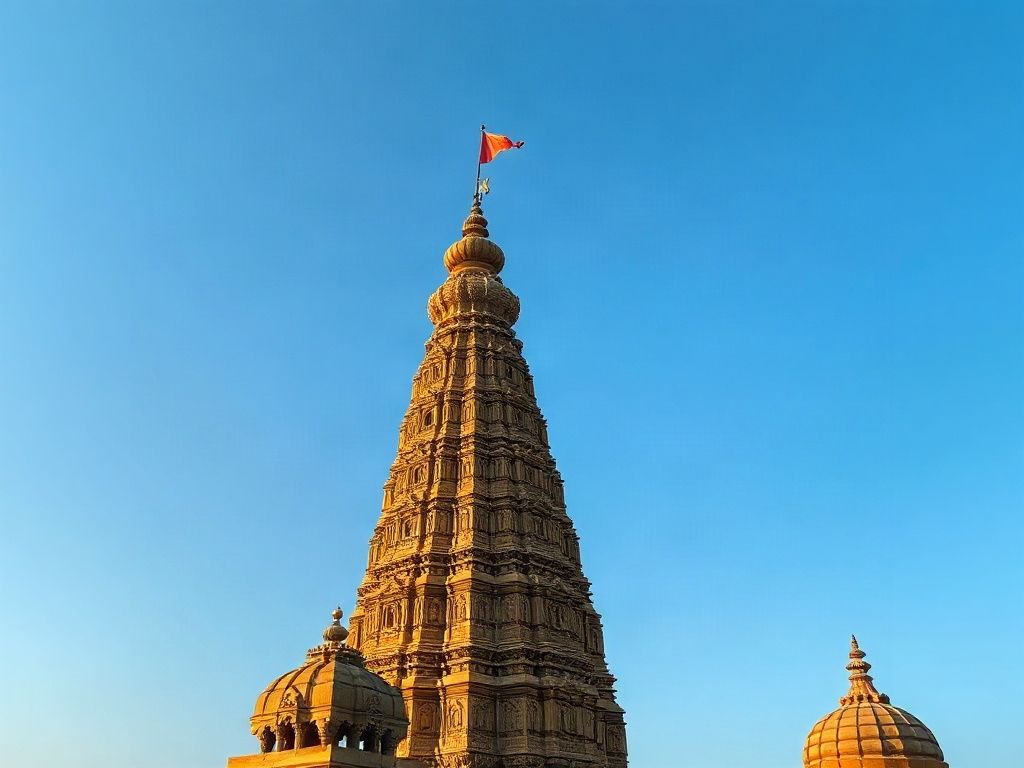
The present structure dates to about 150 years ago, rebuilt by Ramchandra Baba Shenvi under the Scindia administration, blending Bhoomija, Chalukya and Maratha architectural styles — though the temple itself says its true origins go back further than any record shows.
Key insight
If someone tells you Mahakaleshwar and Omkareshwar are the same deity, they're merging two different things: Omkareshwar is also the name of a separate Jyotirlinga temple in another town entirely. Here in Ujjain, "Omkareshwar" is the name of the second Shivalinga sitting one floor above Mahakaleshwar in the same building — related by architecture, not by being the same shrine.
Mahakal Lok: the corridor you walk through first
Before you reach the sanctum, you walk through Mahakal Lok, the corridor built around the temple. According to India's official tourism site, it stretches more than 900 metres and carries 192 statues, 53 murals and 108 stone pillars depicting episodes from Shiva's life. Entry is free, and it is open from 6 AM to 10 PM.
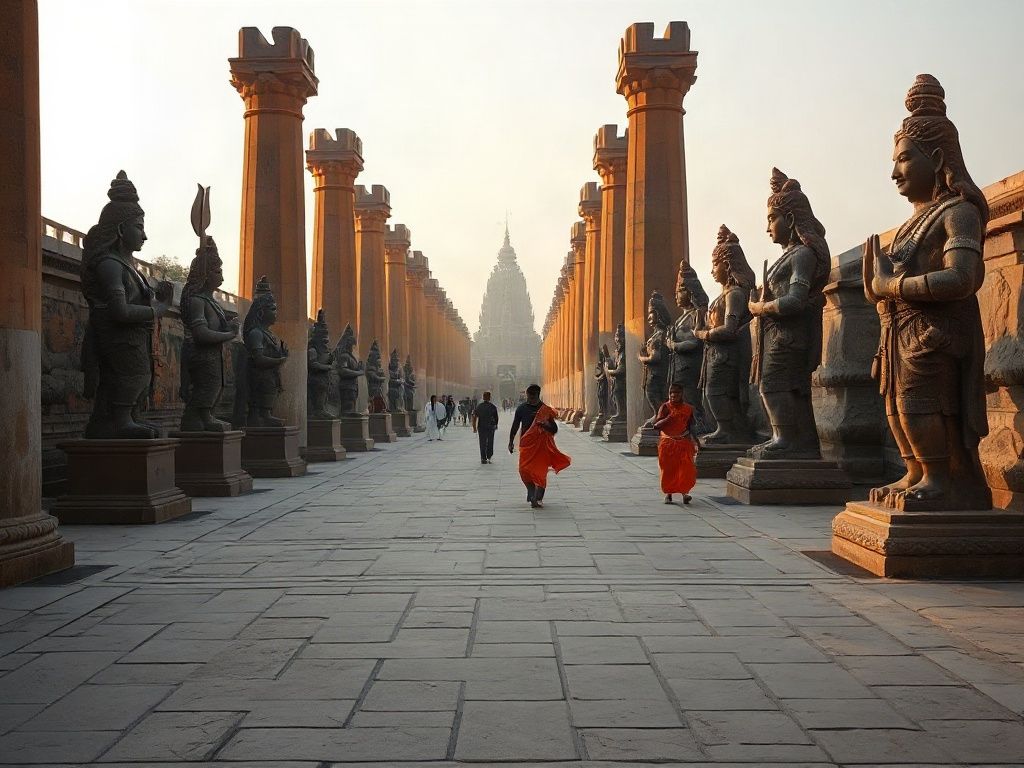
The corridor isn't a separate attraction you choose to visit — it's the entrance. Whichever aarti or darshan you're headed to, you'll walk through it to get there, so build a few extra minutes into your plan to actually look at it rather than hurry past.
What is and isn't allowed
This is the section every other site fills with a dress code and a list of banned items. We looked for that on the temple's own pages — the homepage, the About Temple page, the Services page, the Timings page — and found none of it. No dress code. No published list of what you can and cannot carry in.
What we can tell you, because it is a matter of public record and not a travel blog's guess:
- Touching the Shivling is banned. In September 2020 the Supreme Court ordered that "no rubbing of Shivalingam to be done by anyone except during traditional Puja and Archana performed on behalf of the temple," after the Archaeological Survey of India and Geological Survey of India found the lingam had visibly worn down from decades of devotees touching and rubbing it. Only a limited amount of pure milk, poured by the temple committee, is allowed — not panchamrit, and not by a devotee's own hand.
- Booking has one official channel. shrimahakaleshwar.mp.gov.in is the only site the temple committee operates for Bhasma Aarti, Sheeghra Darshan, Sandhya Aarti, Shayan Aarti, pujan and guest-house bookings. Anything asking you to pay elsewhere is not the temple.
Beyond that, the honest answer is: follow what the priests and staff tell you on the day. That is the only rule we can actually confirm exists, and it is worth more than a dress code copied from a site that never checked.
Crowd days worth planning around
The temple's own festival page names the days when these timings matter most. Every Monday through the month of Shravan, the temple holds a Shravan Sawari, a procession with the deity carried in a silver palanquin, drawing large crowds to the same aarti windows above. Mahashivratri is the one day a year the temple runs an additional afternoon Bhasma Aarti, alongside the usual dawn one. Nag Panchami is the single day Nagchandreshwar, the temple's top level, opens to the public at all.
None of this changes the aarti timings themselves — the table above holds. What changes is how early you need to arrive to get anywhere near the sanctum on those specific days, and whether a MARG Buddy alongside elderly parents is worth arranging in advance rather than on the day.
Planning your visit
| Before you go | Why it matters |
|---|---|
| Pick which aarti or darshan you're going for | The temple's access genuinely changes five times a day — arriving between windows means waiting |
| Book online in advance where you can | Sandhya Aarti, Shayan Aarti and Sheeghra Darshan all take online bookings on the official site |
| Don't pay a third-party site for a "guaranteed" slot | The only booking channel the committee runs is its own site |
| Budget time for Mahakal Lok | It's the walk-in route, not a detour — rushing through misses the point of it |
| Bring elderly parents a plan, not just a ticket | Queues, stairs and crowds are real on Sandhya and Shayan Aarti days |
If you're arranging this for parents who can't manage the queues and walking alone, a MARG Buddy stays with them through the visit. For pujan and Rudrabhishek performed on your behalf, see our puja and darshan services. And for verified drivers, stays and local contacts in Ujjain, our services directory connects you directly — MARG doesn't book on your behalf, but the contact is verified before it reaches you.
What to do next
Decide which aarti fits your trip first — Bhasma Aarti if you can manage a 4 AM start and already have a pass through our booking guide, or one of the four daytime and evening windows if you'd rather not. Book what can be booked on the official site, and leave everything else — the dress, the crowd, the pace of the queue — to the day itself.
Mahakaleshwar's timings look complicated on paper. In practice, they're just five appointments a day. Pick one, and the rest sorts itself out.
Frequently asked questions
What is the cost of VIP darshan in Mahakaleshwar?
The temple committee does not publish a price on its public pages. Sheeghra Darshan, the temple's own fast-track pass, can only be booked after logging in with a mobile number on the official site, and the fee is shown at that stage, not before. Do not trust a number quoted anywhere else.
Can I touch Mahakaleshwar Shivling?
No. The Supreme Court ordered in September 2020 that nobody may rub the Shivalingam except the temple's own priests during the traditional puja, to stop the erosion devotees' touch had caused. Devotees may only offer a small amount of pure milk, poured by the committee, and darshan itself.
What is not allowed in Mahakaleshwar Temple?
The temple committee has not published a public rules or dress-code page, so we cannot state one here. Touching the Shivling is banned by Supreme Court order. For everything else, follow the instructions of the priests and staff on site, since that is the only rule we can confirm exists.
Are Mahakal and Omkareshwar the same?
No, though the names sit in the same building. Mahakaleshwar is the Jyotirlinga on the temple's lowest level. Directly above it is a separate Shivalinga called Omkareshwar. They are two different deities in one three-level sanctum, with Nagchandreshwar on the top level, open only on Nag Panchami.
What is Sheeghra Darshan?
It is the temple's own fast-track pass for a quicker darshan queue, booked on the official website. It is not the same booking as Bhasma Aarti, which is the separate 4 AM ritual with its own pass.
What time does Mahakaleshwar temple open?
The temple's day starts with Bhasma Aarti at 4 AM and its last aarti, Shayan Aarti, ends around 11 PM. The temple publishes its schedule as five aarti windows across the day rather than one open-close time, and darshan is built around them.