Chhath Puja 2026: Dates, Arghya Times and Varanasi Ghats Guide
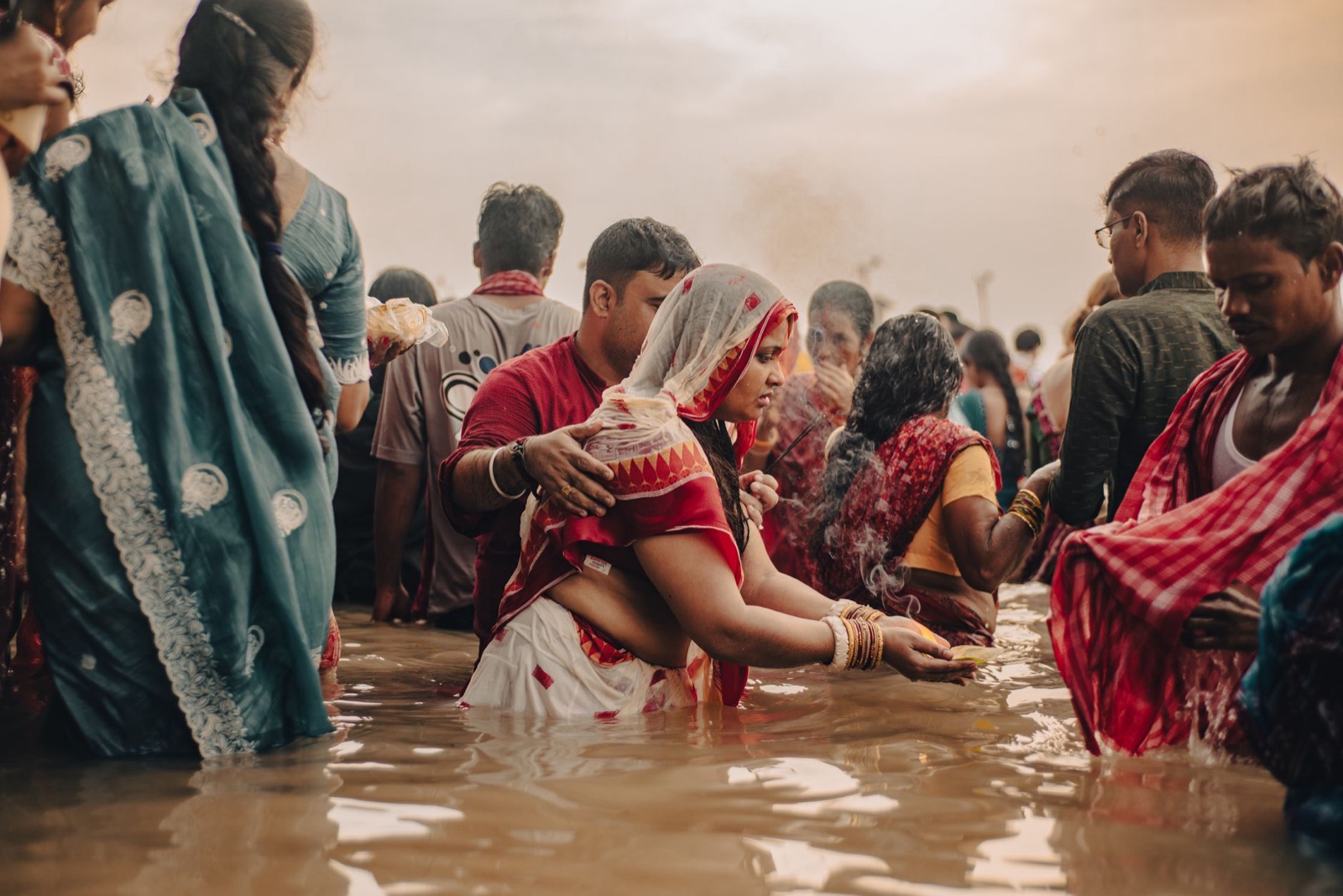
Chhath Puja 2026 begins on Friday, 13 November with Nahay Khay and ends on Monday, 16 November with the arghya (water offering) to the rising sun. The main evening, Sandhya Arghya, falls on Sunday, 15 November. In Varanasi, that means families from Bihar, Purvanchal and across the city will be standing in the Ganga at sunset on the 15th and again before sunrise on the 16th. This guide gives the four dates with Varanasi's sunrise and sunset times, explains what Chhath is and how the vrat (fast) is kept, and offers practical advice for anyone planning to be on the Varanasi ghats for it.
Key takeaways
- Chhath Puja 2026 runs from 13 to 16 November: Nahay Khay (13), Kharna (14), Sandhya Arghya (15) and Usha Arghya with parana (16).
- In Varanasi, Drik Panchang gives sunset on 15 November at 5:10 PM and sunrise on 16 November at 6:16 AM.
- Shashthi tithi begins at 11:23 PM on 14 November and ends at 2:00 AM on 16 November (Varanasi).
- Chhath is dedicated to Surya and Chhathi Maiya; there is no idol worship, and the offering is made standing in water.
- After Kharna, the vrati (person keeping the fast) observes a nirjala fast of about 36 hours, without food or water, until after Usha Arghya.
On this page
Chhath Puja 2026 dates and Varanasi timings
All the times below are from the Drik Panchang Chhath calendar set to Varanasi. Sunrise and sunset shift by a few minutes from city to city, so if your family is offering arghya somewhere else, set Drik Panchang to that city, or use our panchang page.
| Day | Date (2026) | Tithi | Varanasi sunrise / sunset |
|---|---|---|---|
| Day 1 - Nahay Khay | Friday, 13 November | Chaturthi | 6:13 AM / 5:11 PM |
| Day 2 - Lohanda and Kharna | Saturday, 14 November | Panchami | 6:14 AM / 5:10 PM |
| Day 3 - Sandhya Arghya | Sunday, 15 November | Shashthi | 6:15 AM / 5:10 PM |
| Day 4 - Usha Arghya and parana | Monday, 16 November | Saptami | 6:16 AM / 5:10 PM |
The two times that matter most are in bold: sunset on 15 November for the evening arghya, and sunrise on 16 November for the morning arghya. According to the Drik Panchang Chhath Puja page for Varanasi, Shashthi tithi begins at 11:23 PM on 14 November and ends at 2:00 AM on 16 November, so the main day of Chhath Puja 2026 is Sunday, 15 November.
Families usually reach the ghat well before sunset on the third day and well before sunrise on the fourth. In a crowd, "well before" can mean an hour or more, especially if you need a spot at the water's edge.
What is Chhath Puja
Chhath Puja is a four-day festival of worship of Surya, the Sun, and of Chhathi Maiya, revered in folk tradition as the goddess who protects children and blesses families with health and well-being. It is also called Surya Shashthi, Dala Chhath and Pratihar. The main Kartik Chhath falls on Kartik Shukla Shashthi, the sixth day of the bright fortnight of Kartik; a smaller Chaiti Chhath is observed in Chaitra.
What sets Chhath apart is its simplicity. There is no idol and no temple at the centre of it. The devotee stands in a river, pond or tank and offers arghya directly to the setting and the rising sun, with bamboo baskets (soop and daura) holding fruit, sugarcane, coconut and thekua, a sweet fried prasad. It is one of the few occasions in the Hindu year when arghya is offered to the setting sun.
Chhath is most closely associated with Bihar, Jharkhand, eastern Uttar Pradesh and the Terai of Nepal, and it travels wherever families from these regions live. That is why Varanasi, with its long line of ghats and its many families with roots in Bihar and Purvanchal, is one of the places where Chhath is most visible outside Bihar.
Key insight
Chhath is a household festival before it is a public one. The vrati, most often the mother of the family, carries the fast, and everyone else's job is to make her four days possible: clean food, a clear path to the water, a place at the ghat, and a quiet house for Kharna. Plan your Chhath Puja 2026 logistics around her, not around the crowd.
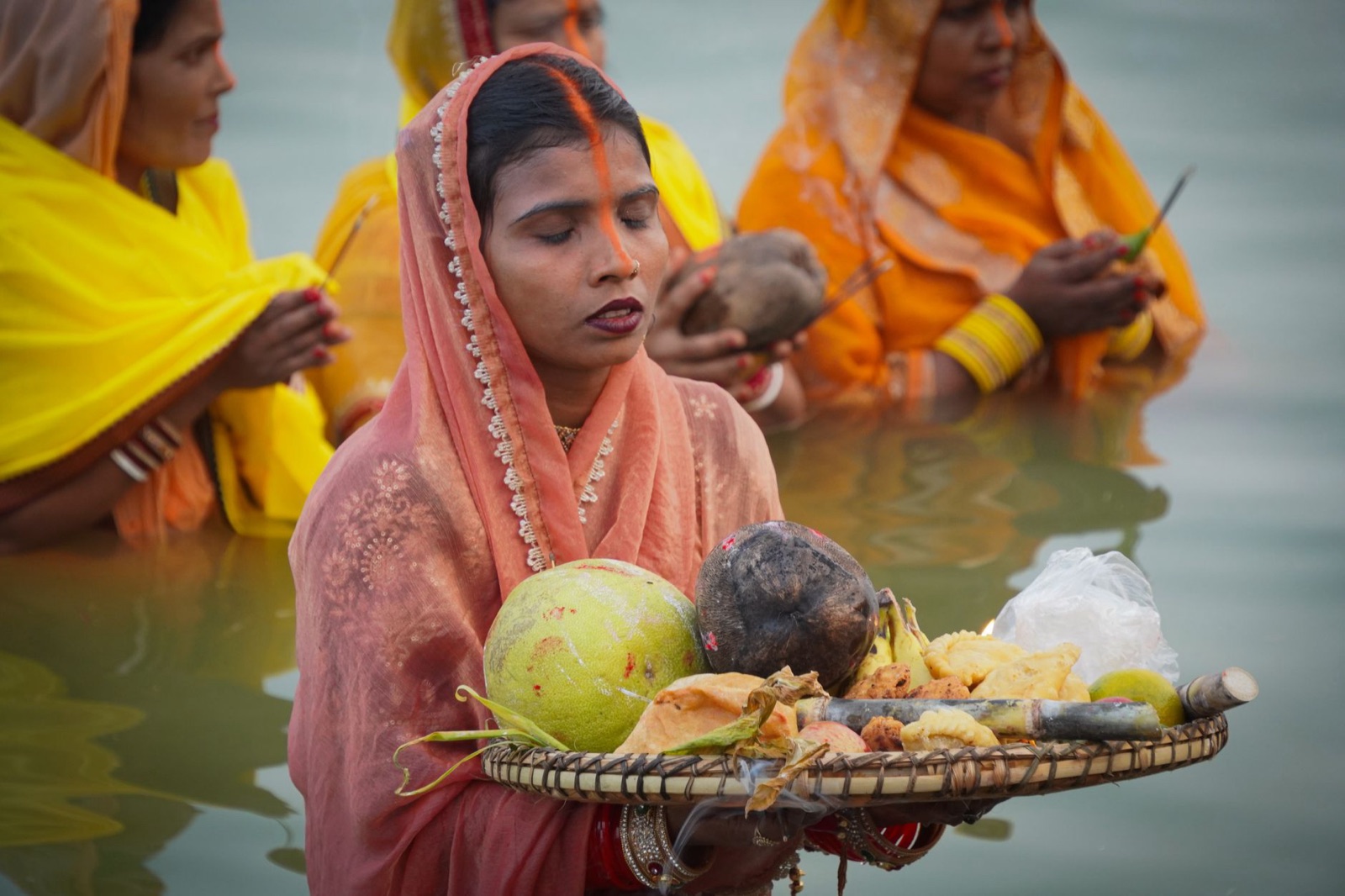
The four days of Chhath
The broad shape of the festival is the same everywhere, though families follow their own traditions in the details. The descriptions below follow the Chhath Puja vidhi published by Drik Panchang.
Day 1: Nahay Khay (13 November)
Nahay Khay means "bathe and eat". The vrati bathes in the Ganga or another holy river or water body, and the house is cleaned. Food is cooked with care for purity and taken once in the day. In many families the meal is pumpkin or bottle-gourd curry with chana dal and rice, often without ordinary salt, and in many households it is cooked on an earthen stove with mango wood.
Day 2: Lohanda and Kharna (14 November)
On Kharna, the vrati fasts without water from sunrise until sunset. In the evening, kheer made with jaggery or sugarcane juice and roti are offered to Surya and Chhathi Maiya, and the vrati eats the prasad alone, in silence. The kheer and roti are then shared with family and neighbours. With this meal, the main nirjala fast begins. Late that night, many families prepare thekua for the next day's baskets.
Day 3: Sandhya Arghya (15 November)
This is the main day. The vrati keeps the full fast, and in the afternoon the family carries the decorated baskets to the ghat. Standing in the water, the vrati offers arghya to the setting sun as songs are sung around her. In Varanasi, sunset on Chhath Puja day is at 5:10 PM.
Day 4: Usha Arghya and parana (16 November)
Before dawn, families return to the water. The vrati offers arghya to the rising sun, sunrise in Varanasi being at 6:16 AM, and then breaks the fast of about 36 hours, usually with prasad and water. This is the parana. Prasad is shared with everyone at the ghat and later at home.
The rules of the Chhath vrat
Chhath is known as one of the most demanding fasts in the Hindu calendar, and its rules are about purity, restraint and care. Families differ in detail, but the commonly followed rules are:
- Purity of food. Prasad and the vrati's meals are cooked fresh, often in new or specially cleaned vessels, without onion or garlic, and traditionally on an earthen stove.
- One meal on Nahay Khay. The vrati eats once on the first day.
- Nirjala fast. On Kharna the vrati takes no water until the evening offering, and from the Kharna prasad until after Usha Arghya, she takes neither food nor water.
- Sattvic conduct. No meat, alcohol or tamasic food in the house during the festival; many families also avoid it for the whole household.
- Silence at Kharna. The vrati eats the Kharna prasad alone, and the house stays quiet while she does.
- Arghya in water. The offering to the sun is made standing in water, both at sunset and at sunrise.
A practical note that every family should take seriously: a 36-hour fast without water is hard on the body, particularly for older women and for anyone with diabetes, blood-pressure problems or a recent illness. Talk to a doctor before the festival, keep a family member beside the vrati at the ghat, and do not hesitate to step out of the cold water if she feels faint.
The story of the Chhath vrat
Chhath draws on very old traditions of sun worship. Drik Panchang notes that the Rigveda praises Surya and Usha, the goddess of dawn, and that the epics carry several references to sun worship. Two stories are told most often:
- Karna and the Sun. In the Mahabharata, Karna, the son of Surya, offered arghya to the rising sun every day while standing in water. Many see in him the first image of a Chhath vrati.
- Sita in Ayodhya. A tradition holds that Sita worshipped Surya on Kartik Shukla Shashthi after returning to Ayodhya from exile.
The formal Chhath vrat katha, as published in the Drik Panchang vrat katha, is the story of Sukanya and a Naga Kanya, narrated to Draupadi by the sage Dhaumya during the Pandavas' exile. Draupadi asks for a vrat that will end her family's suffering, and Dhaumya tells her of the Ravi Shashthi vrat, which Sukanya once observed on a Naga Kanya's instruction. The katha is recited or heard on Chhath. Its message is the one the festival lives by: steadfast, simple devotion offered with a pure heart restores what has been lost.
Chhath on the Varanasi ghats
If you are in Varanasi on 15 and 16 November, expect the ghats to look very different from an ordinary evening. Families arrive with baskets, sugarcane stalks and lamps; many mark out a small patch of ghat in advance; and the steps are filled from the water's edge upwards. The scale makes it moving to see and difficult to move through. These suggestions hold for any big festival day on the ghats:
- Arrive early and stay put. For Sandhya Arghya, be at your ghat by mid-afternoon. For Usha Arghya, plan to be there in the dark, well before 6 AM.
- Choose a ghat you can reach on foot. Lanes behind the main ghats are closed to vehicles or jammed on Chhath evenings. Know your walking route from your hotel.
- Respect the barricades. The administration usually marks deep water and slippery stretches. Do not let children or older family members wade past them.
- The steps will be wet. Ghat steps get slippery with water, flowers and wax. Hold the hand of anyone unsteady on both the way down and the way up.
- Be careful with boats. If you want to watch from the river, use a registered boatman, do not board an overloaded boat, and follow any instructions from the police or the boatmen about where boats may go on Chhath evenings.
- Give the vratis space. If you are there as an observer, stand back from the water's edge, ask before photographing anyone, and never step on the offerings laid out on the ghat.
- Agree on a meeting point for your group, as phone networks are often slow in dense crowds.
On Chhath evenings the area around the larger ghats will be at its fullest. If you are coming to Varanasi mainly for the evening Ganga aarti rather than for Chhath, our Ganga aarti timings guide explains which ghats hold it and when; consider shifting your aarti evening away from 15 November.
Travelling to Varanasi for Chhath
Many families travel to Varanasi so that an older vrati can offer arghya in the Ganga itself. If that is your plan, a few things help:
- Stay close to a ghat. A room within a short, flat walk of the river matters more than anything else on Chhath, because you will make the trip twice in under 15 hours, once in the dark. Our guide to where to stay near Kashi Vishwanath walks through the areas closest to the ghats.
- Book early. Rooms near the river fill quickly in November, and Dev Deepawali at Kartik Purnima follows soon after Chhath.
- Plan the vrati's comfort. A folding stool, a dry change of clothes, a shawl for the pre-dawn cold and a towel make the long wait at the ghat much easier.
- Do not let her go alone. If no family member can be at the ghat with an elderly vrati, a verified person can be. A MargKGB Buddy in Varanasi can stay with her through the crowd, help on the steps, carry the basket and get her back to the room. A Buddy is a companion, not a priest, and cannot reserve a spot on any ghat.
What to do next
Note the four dates, 13 to 16 November 2026, and the two Varanasi times that matter: sunset at 5:10 PM on the 15th and sunrise at 6:16 AM on the 16th. Book your room near the ghats, plan the walking route, and re-check the timings for your exact city on Drik Panchang the week before. May Chhathi Maiya bless your family.
Frequently asked questions
When is Chhath Puja in 2026?
Chhath Puja 2026 runs over four days: Nahay Khay on Friday 13 November, Kharna on Saturday 14 November, Sandhya Arghya on Sunday 15 November and Usha Arghya with parana on Monday 16 November. Sunday 15 November, Kartik Shukla Shashthi, is the main day of Chhath Puja, according to Drik Panchang.
What is Chhath Puja?
Chhath Puja is a four-day Hindu festival dedicated to Surya, the Sun, and Chhathi Maiya, the goddess who protects children. There is no idol worship; devotees stand in a river or pond and offer arghya to the setting and rising sun. It is observed mainly in Bihar, Jharkhand, eastern Uttar Pradesh and Nepal's Terai, and by families from these regions everywhere.
What is the story of the Chhath vrat?
The Chhath vrat katha tells how the sage Dhaumya, during the Pandavas' exile, taught Draupadi the Ravi Shashthi vrat, which Sukanya had once observed on a Naga Kanya's advice. Other traditions link Chhath to Karna, who offered arghya to the sun standing in water, and to Sita, who is said to have worshipped Surya on Kartik Shukla Shashthi in Ayodhya.
What are the rules of Chhath Puja?
The vrati takes one pure, sattvic meal on Nahay Khay, fasts without water until evening on Kharna, then keeps a nirjala fast of about 36 hours until after the arghya to the rising sun. Food is cooked with strict purity, without onion or garlic, the house stays sattvic, and both arghyas are offered standing in water. Family traditions vary in the details.
What time is Sandhya Arghya in Varanasi on 15 November 2026?
Drik Panchang gives sunset in Varanasi on Sunday, 15 November 2026 at 5:10 PM, which is the time for Sandhya Arghya. Usha Arghya the next morning is at sunrise, 6:16 AM on Monday, 16 November. Reach the ghat well ahead of both times, because the steps fill early and the walk through the crowd is slow.