Bhai Dooj 2026: Date, Tilak Muhurat and Vishram Ghat, Mathura
Bhai Dooj closes the Diwali week with a festival for brothers and sisters. The sister applies a tilak, prays for her brother's long life and feeds him, and the brother gives her a gift and his promise of support. Bhai Dooj 2026 falls on Wednesday, 11 November. According to Drik Panchang set to Mathura, the aparahna (early afternoon) tilak muhurat runs from 01:08 PM to 03:19 PM. The day is also Yama Dwitiya, and in Mathura that has a special meaning: brothers and sisters go to Vishram Ghat to bathe together in the Yamuna. This guide covers the date and muhurat by city, the story of Yamuna and Yamraj, how Bhai Dooj differs from Raksha Bandhan, and practical tips for the day at Vishram Ghat.
Key takeaways
- Bhai Dooj 2026 is on Wednesday, 11 November in Mathura, Delhi, Varanasi, Prayagraj and Ujjain, per Drik Panchang.
- The Dwitiya tithi runs from 02:00 PM on 10 November to 03:53 PM on 11 November (Mathura).
- The tilak muhurat (aparahna) in Mathura is 01:08 PM to 03:19 PM. Drik Panchang suggests a Yamuna bath in the morning, before the afternoon puja.
- The Banke Bihari temple says the main Yama Dwitiya celebrations are held at Vishram Ghat in Mathura, where siblings bathe hand in hand.
- In 2025, around 1.25 lakh devotees gathered at Vishram Ghat for the dip, so plan for a very large crowd.
On this page
Bhai Dooj 2026 date and tilak muhurat
Bhai Dooj is observed on Dwitiya, the second lunar day of the bright fortnight of Kartik, usually two days after Diwali. In 2026 Diwali is on Sunday, 8 November, Govardhan Puja is on Tuesday, 10 November (Mathura), and Bhai Dooj follows on Wednesday, 11 November. Drik Panchang treats the aparahna, the early afternoon portion of the day, as the right time for the tilak and the Yama Dwitiya puja. Here is that window for the cities our pilgrims travel to most:
| City (Drik Panchang setting) | Date | Aparahna tilak muhurat |
|---|---|---|
| Mathura (also used for Vrindavan) | Wednesday, 11 November 2026 | 01:08 PM to 03:19 PM |
| New Delhi | Wednesday, 11 November 2026 | 01:10 PM to 03:20 PM |
| Varanasi | Wednesday, 11 November 2026 | 12:48 PM to 03:00 PM |
| Prayagraj | Wednesday, 11 November 2026 | 12:52 PM to 03:04 PM |
| Ujjain | Wednesday, 11 November 2026 | 01:17 PM to 03:31 PM |
The Dwitiya tithi begins at 02:00 PM on Tuesday, 10 November and ends at 03:53 PM on Wednesday, 11 November. Many families do the tilak in the morning anyway, after the brother arrives and before the meal. That is a matter of family custom. If you want to follow the panchang closely, use the afternoon window for your city. Panchang pages are sometimes revised, so recheck yours the week of the festival. The Banke Bihari temple's Yam Dwitiya festival page gives the same date, Wednesday, 11 November 2026.
The story of Yamuna and Yamraj
Bhai Dooj is also called Yama Dwitiya, after Yamraj, the god of death. Yamraj and the river goddess Yamuna are brother and sister, both children of Surya, the sun god. Yamuna kept inviting her brother to her home, and his duties kept him away. On Kartik Shukla Dwitiya he finally came. She welcomed him with great affection and fed him with her own hands.
Pleased by her love, Yamraj granted a boon. As Drik Panchang's Yama Dwitiya page puts it, a brother who eats at his sister's home on this day is blessed with long life, and a sister who feeds her brother is blessed with good fortune. That is why sisters cook for their brothers on Bhai Dooj and why the brother is expected to travel to his sister, not the other way round.
The same page notes that bathing in the Yamuna holds special significance on this day, and that Yamraj is worshipped along with Chitragupta, his record-keeper. Drik Panchang's Diwali calendar lists Chitragupta Puja on the same day, 11 November 2026.
How Bhai Dooj differs from Raksha Bandhan
Both festivals celebrate the bond between brother and sister, and the two are often confused. The differences are worth knowing:
| Raksha Bandhan | Bhai Dooj | |
|---|---|---|
| When | Shravan Purnima (full moon, July or August) | Kartik Shukla Dwitiya, two days after Diwali |
| Central ritual | Sister ties a rakhi on the brother's wrist | Sister applies a tilak, does aarti and feeds the brother |
| Who travels | Either; often the sister | Traditionally the brother visits the sister's home |
| Story behind it | Several, linked to protection | Yamuna feeding her brother Yamraj |
| Prayer | The brother's promise to protect his sister | The sister's prayer for her brother's long life |
Some families also tie a sacred thread on Bhai Dooj after the tilak, which Drik Panchang mentions as part of the rite.
Vishram Ghat, Mathura on Yama Dwitiya
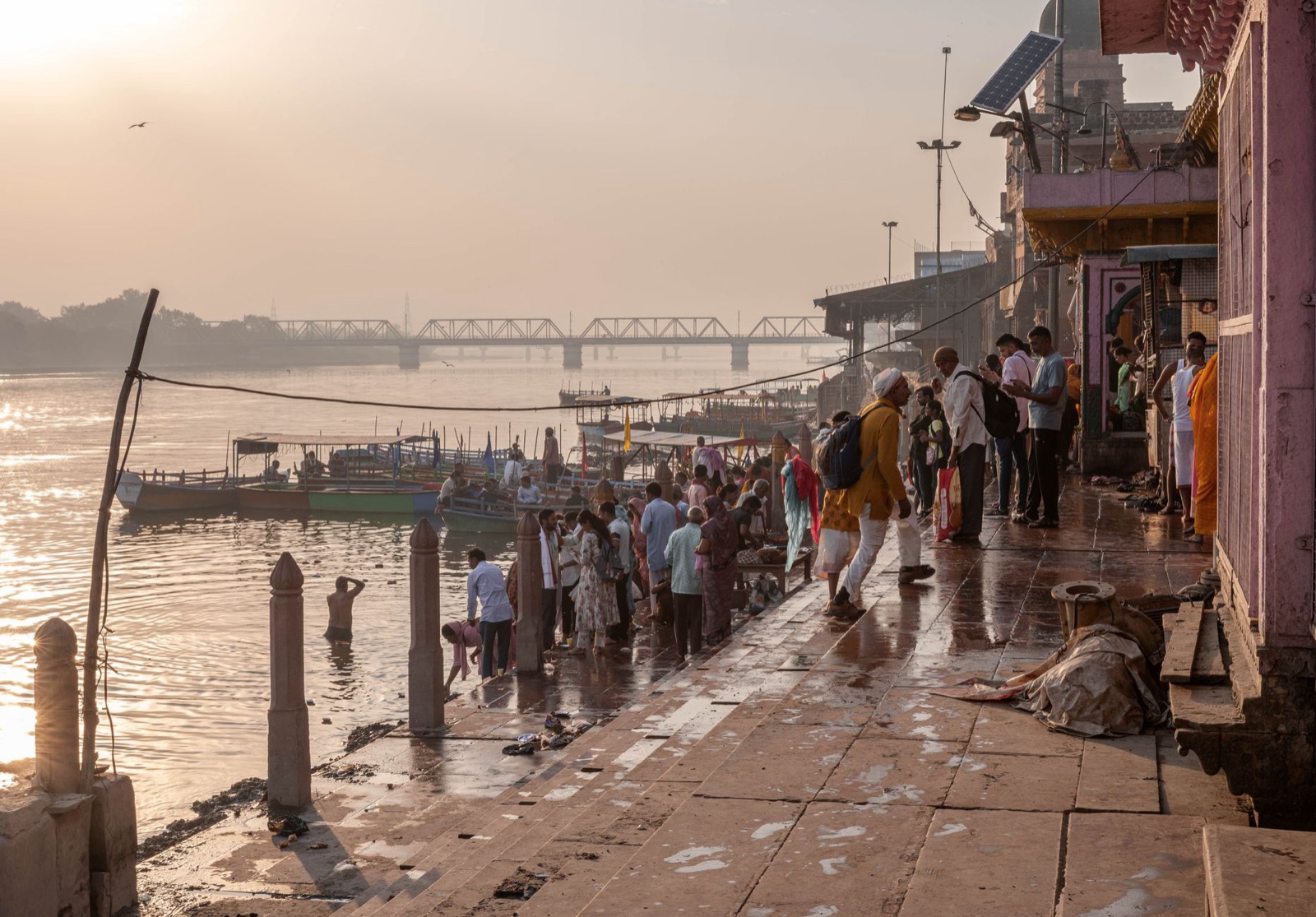
Vishram Ghat is the best-known ghat in Mathura. The name means "resting place". The Banke Bihari temple's festival page tells the story: after killing Kansa, Krishna and Balram came here to bathe and rest in the Yamuna. On Bhai Dooj the ghat takes on a second meaning. Since Yamraj is believed to visit his sister Yamuna at Mathura on this day, the temple's page says the main Yama Dwitiya celebrations are held at Vishram Ghat. Brothers and sisters come from far and near and take the dip together, holding hands.
What a family sees on the morning of Bhai Dooj 2026 is likely to follow the pattern of earlier years. On Bhai Dooj in 2025, IANS reported that around 1.25 lakh devotees gathered at Vishram Ghat for the holy dip. After bathing, sisters seated their brothers and applied the tilak. Families then went to the Yamraj-Yamuna temple near the ghat steps to light lamps and pray, with priests conducting the rituals. The belief at the ghat is that siblings who bathe here together on this day are spared the fear of Yama's messengers.
Key insight
The Vishram Ghat tradition is a short ritual inside a very crowded morning. The dip, the tilak on the steps and the temple darshan together take only a short time. Waiting your turn on the steps is what takes most of the morning. Families who arrive early, bring a change of clothes and agree in advance where to meet afterwards have the calmest experience.
Practical tips for the day in Mathura
Drik Panchang suggests the Yamuna bath in the morning and the Yama puja in the aparahna. A plan that follows that order:
| Time | What to do |
|---|---|
| Early morning | Reach Vishram Ghat, take the dip together, then do the tilak on the steps or after you change |
| Mid-morning | Darshan at the Yamraj-Yamuna temple near the ghat, then leave the ghat area before the crowd peaks |
| Midday | Return to your hotel or the sister's home for the meal |
| 01:08 PM to 03:19 PM | Aparahna muhurat in Mathura for the formal tilak and puja, if your family follows it |
- Bring a full change of clothes for everyone who will bathe, and a towel or gamchha (thin cotton towel). Women may prefer to bathe in a salwar suit or a second saree.
- Stay on the steps you can see. Hold hands, as the tradition asks, and do not let older parents or children go beyond where they can stand comfortably. Follow instructions from the police and the ghat staff.
- Carry little. Leave jewellery and most cash at the hotel, keep phones in a sealed pouch with someone who stays dry, and pick a meeting point you will all recognise.
- Agree dakshina (the offering to the priest) before any ritual. Priests at the ghat perform the sankalp and puja for families. Ask the amount first, politely, so there is no awkwardness later.
- Be careful with offers of "special" arrangements. No one can sell you a privileged place at the ghat or the temple.
- For elderly parents, a symbolic dip from the lowest step, or a few drops of Yamuna water taken in the hand, keeps the custom without the risk. A MargKGB Buddy can stay with your parents in the crowd so the family is not split up. Read about what a MargKGB Buddy does.
Many families make Bhai Dooj the last day of a longer Braj trip. Govardhan Puja is the day before, so you can do the Annakut darshan and the Govardhan parikrama on 10 November and come to Mathura for the 11th. See our Govardhan Puja 2026 guide and the Govardhan parikrama route and distance guide for that part of the trip.
The thali and the tilak at home
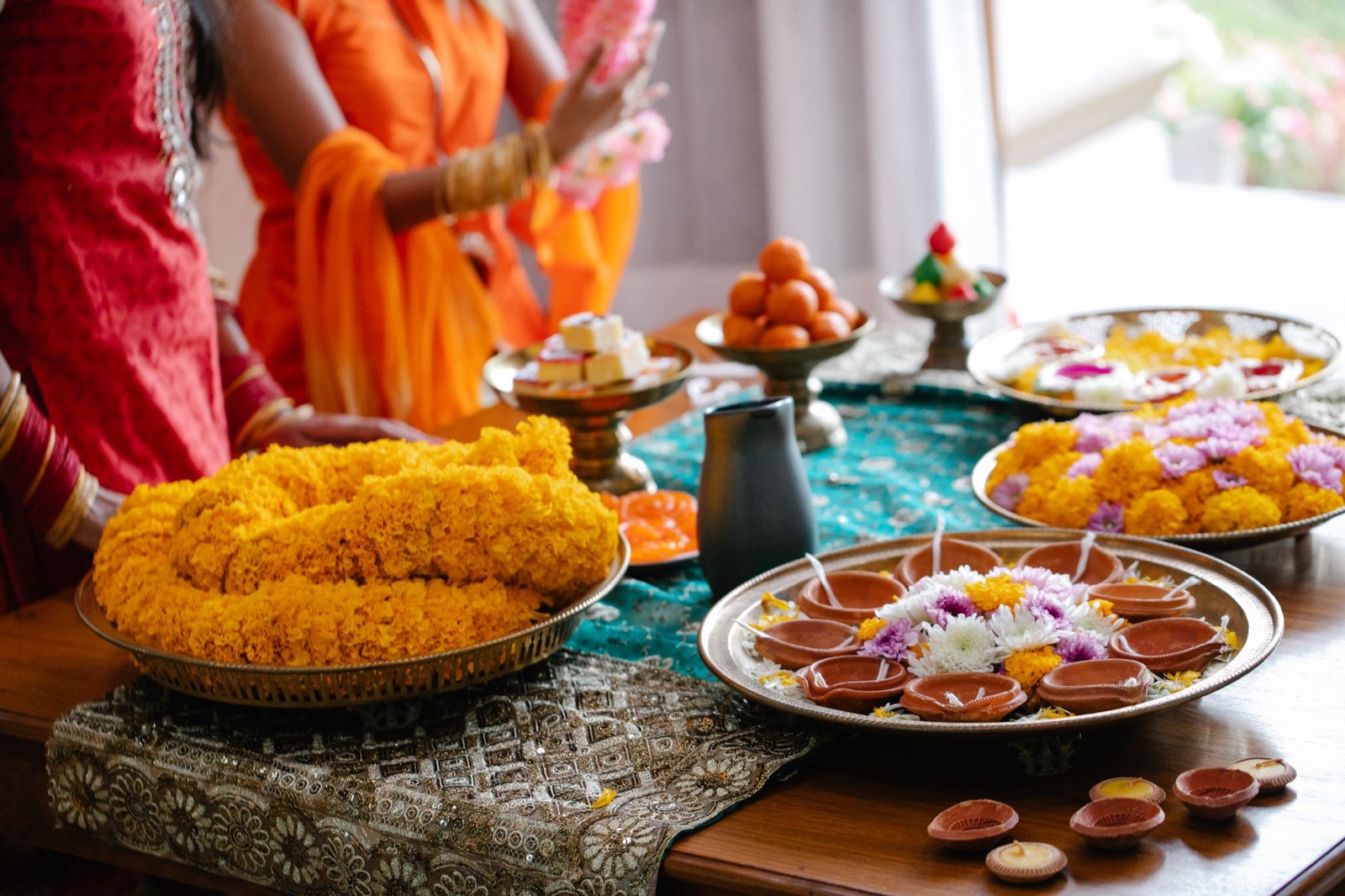
Most families observe Bhai Dooj 2026 at home. Drik Panchang describes the shape of the day: the sister bathes early, prepares a decorated puja thali, applies the tilak, ties a sacred thread if that is the family custom, performs aarti and feeds her brother sweets and a festive meal. The brother gives a gift in return. A typical thali holds:
- Roli or kumkum for the tilak, and a few grains of unbroken rice (akshat)
- A small diya (oil lamp) for the aarti
- Sweets, and in many homes dry fruits or a coconut
- A sacred thread (kalava), where the family ties one
- A little water in a small vessel, and flowers
Customs differ from region to region and family to family, so follow the way your mother or grandmother did it. Sisters who cannot be with their brothers often do the puja at home on the day and send sweets ahead. If your family wants a Pandit Ji to perform a Yamuna puja or a sankalp at Vishram Ghat for you, our puja booking service assigns a verified pandit in Mathura and confirms the details and dakshina before the day.
Diwali week is easy to lose track of. For the full run of dates from Dhanteras onward, see our Diwali 2026 muhurat guide by city.
What to do next
Note the tilak muhurat for your city, and check it again on Drik Panchang the week before. If you are going to Vishram Ghat, book a room in Mathura for the night of 10 November, pack a change of clothes and plan to be at the ghat early on the 11th. Bhai Dooj 2026 at Vishram Ghat is crowded, but it is one of the few rituals that brothers and sisters do together, and for many families it is worth the early start.
Frequently asked questions
When will Bhai Dooj be celebrated in 2026?
Bhai Dooj 2026 is on Wednesday, 11 November, according to Drik Panchang for Mathura, New Delhi, Varanasi, Prayagraj and Ujjain. The Dwitiya tithi runs from 02:00 PM on 10 November to 03:53 PM on 11 November. In Mathura the aparahna tilak muhurat is 01:08 PM to 03:19 PM. Recheck your own city's timing the week of the festival.
What is the difference between Raksha Bandhan and Bhai Dooj?
Raksha Bandhan falls on Shravan Purnima in July or August, and the sister ties a rakhi on her brother's wrist. Bhai Dooj falls two days after Diwali, on Kartik Shukla Dwitiya. The sister applies a tilak, performs aarti and feeds her brother, praying for his long life, and traditionally the brother visits her home, following the story of Yamraj visiting his sister Yamuna.
What is kept in the Bhai Dooj thali?
A Bhai Dooj thali usually holds roli or kumkum for the tilak, a few grains of unbroken rice (akshat), a small diya for the aarti, sweets, and often dry fruits or a coconut. Families who tie a sacred thread add a kalava, along with a little water and flowers. Customs vary by region and family, so follow your own household's practice.
How do you reply to 'Happy Bhai Dooj'?
A simple, warm reply is enough: 'Happy Bhai Dooj to you too,' or 'Thank you, may Yamuna Maiya bless you with a long and happy life.' A brother can thank his sister for the tilak and her prayers. A sister can wish her brother good health. Adding a line about a shared memory, or a plan to meet, makes it personal.
Why do brothers and sisters bathe together at Vishram Ghat on Bhai Dooj?
Yama Dwitiya remembers Yamraj visiting his sister Yamuna, and Mathura's Vishram Ghat is where the main celebrations are held, according to the Banke Bihari temple. Siblings take the dip hand in hand and then pray at the Yamraj-Yamuna temple near the ghat. The belief is that those who bathe together here on this day are spared the fear of Yama's messengers.