Govardhan Parikrama: Distance, Route, Stops and Time on Foot
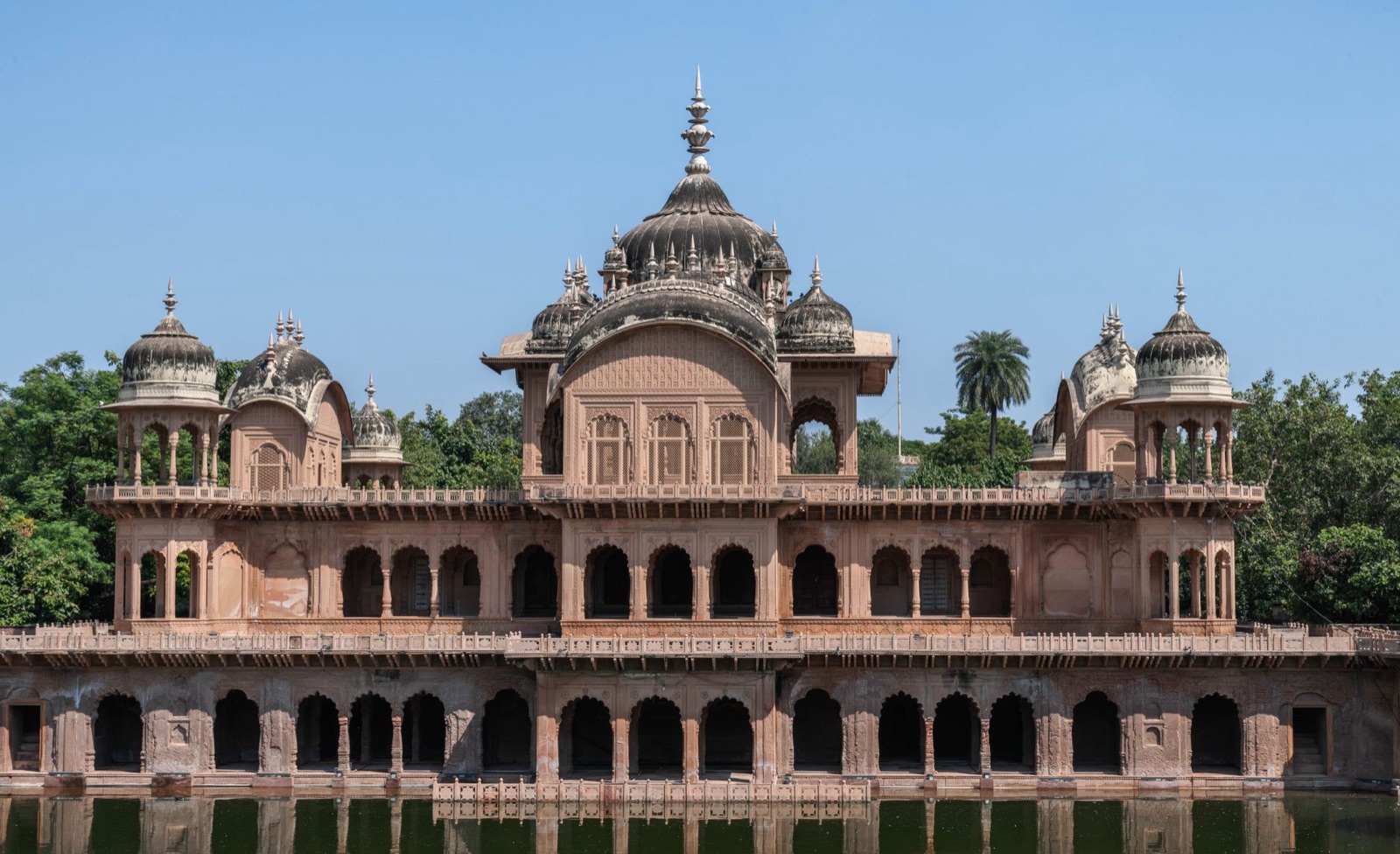
Govardhan hill is a low, long ridge of rock in the middle of Braj. Devotees believe Krishna lifted it to shelter the people of Braj, and they worship it as Giriraj Ji. Walking around it is one of the oldest acts of devotion in the region. The Govardhan parikrama (circumambulation) is about 21 km, or 7 kos, according to the Mathura district administration. Most pilgrims start at the Daan Ghati temple in Govardhan town and walk clockwise with the hill on their right. On foot it takes most of a day. This guide covers the distance, the two loops, the main stops, walking versus e-rickshaw, the best time to go and how to reach Govardhan from Mathura or Vrindavan.
Key takeaways
- The Govardhan parikrama is about 21 km (7 kos), and Govardhan is 25 km from Mathura on the Mathura-Deeg road, per the district administration.
- The circuit is usually done as two loops that meet at Govardhan town: a longer one (about 12 km) by Jatipura and Poonchhri, and a shorter one (about 9 km) by Radha Kund and Kusum Sarovar.
- Main stops include Daan Ghati, Mansi Ganga, Radha Kund and Shyam Kund, Kusum Sarovar, Jatipura Mukharvind and Poonchhri ka Lautha, which is in Rajasthan.
- Walkers usually need 5 to 8 hours, plus time for darshan and rest. Registered e-rickshaws are allowed on the parikrama marg for those who cannot walk.
- The busiest days are Purnima, Ekadashi, Govardhan Puja and above all the Mudiya Purnima (Guru Purnima) fair in July.
On this page
Govardhan parikrama distance and time
The district administration's Braj parikrama page gives the length as 21 km (7 kos). A kos is a traditional measure of roughly 3 km. Here are the figures most families need:
| Question | Answer | Source |
|---|---|---|
| Total distance | About 21 km (7 kos) | Mathura district administration |
| Distance from Mathura | 25 km, on the Mathura-Deeg road | Mathura district administration |
| Longer loop (Jatipura and Poonchhri side) | About 12 km | Pilgrim and travel guides |
| Shorter loop (Radha Kund and Kusum Sarovar side) | About 9 km | Pilgrim and travel guides |
| Time on foot | About 5 to 8 hours of walking, plus stops | Travel guides; depends on pace and crowds |
| Dandavat parikrama (full prostrations) | Many days | A devotional practice, not a plan for most visitors |
The time on foot varies more than the distance. A fit adult walking steadily in the cool hours can finish in five or six hours. Families who stop at every kund and temple, rest for tea and walk with older parents should plan for a full day or split the parikrama across two days, one loop at a time. Some devotees do the dandavat parikrama, lying down in full prostration and rising again along the whole route. You will see them on the road, and the right thing to do is give them space.
Where to start and which way to walk
You can start the Govardhan parikrama anywhere on the route, as long as you finish where you began. In practice most pilgrims start at the Daan Ghati temple on the main road in Govardhan town. That is where vehicles from Mathura arrive, and it is the point where the two loops meet. Others start at Mansi Ganga, the sacred tank in the old town a short walk away, or at Radha Kund if they are staying there.
- Make a sankalp (intention) at the start. Many pilgrims offer a short prayer at Daan Ghati before setting off.
- Walk clockwise, keeping the hill on your right. This is the standard direction for any parikrama.
- Treat the hill with respect. Giriraj Ji is worshipped as a form of Krishna, so devotees avoid climbing on the rocks or stepping over them.
The route and main stops
The district names Daan Ghati, Jatipura, Poonchhri ka Lautha, Kusum Sarovar, Radha Kund, Mansi Ganga, Uddhav Kund and Govind Kund among the places on the route. The two loops look roughly like this:
The longer loop: Jatipura and Poonchhri
| Stop | What it is |
|---|---|
| Daan Ghati temple | The usual start and finish point in Govardhan town, where Giriraj Ji is worshipped |
| Aanyor and Govind Kund | A village and a sacred tank on the way south along the hill |
| Poonchhri ka Lautha | The shrine of Lautha, a childhood friend of Krishna, at the southern tip of the hill. It lies just inside Rajasthan, so the parikrama crosses the state border. |
| Jatipura Mukharvind | Here the hill is worshipped as the face (mukharvind) of Giriraj Ji. The lane leading to it is lined with milk sellers, because milk is the main offering. |
The shorter loop: Radha Kund and Kusum Sarovar
| Stop | What it is |
|---|---|
| Mansi Ganga | The sacred tank in the old town, with the Harideva temple and other shrines around it |
| Uddhav Kund | A small tank on the way to Radha Kund |
| Radha Kund and Shyam Kund | Twin tanks separated by a narrow strip of land, among the most revered places in Braj for Radha-Krishna devotees |
| Kusum Sarovar | A large stepped tank with carved chhatris (memorial pavilions). UP Tourism notes these are memorials to members of the Bharatpur royal family, including Raja Surajmal. |
UP Tourism's page on Govardhan also mentions a temple on the hill built in 1520 by Vallabhacharya, a reminder of how long this circuit has been walked. Much of the parikrama marg is a dedicated path running beside the hill. Some stretches pass through village lanes and along tarred roads, so expect traffic in places.
Key insight
If you only have half a day, choose one loop and do it properly instead of rushing both. The shorter loop by Radha Kund and Kusum Sarovar has more to see per kilometre. The longer loop carries the Jatipura Mukharvind darshan. Either is a complete act of devotion. Many pilgrims return another time to finish the other half.
On foot or by e-rickshaw
Walking is the tradition, and most pilgrims walk the whole way. Many walk barefoot as a mark of respect, though that is a custom, not a rule. The soft path beside the hill is easier on bare feet than the tarred village stretches. Socks or soft slippers are a sensible choice for older walkers.
You can also do the Govardhan parikrama by e-rickshaw. In 2019 the National Green Tribunal allowed battery e-rickshaws on the parikrama marg. As reported at the time, the order limited each rickshaw to four passengers, fixed the fare at Rs 100 per person, required permits to be displayed, kept rickshaws to the left side of the marg and barred unregistered ones. Rules and fares may have changed since, so confirm the fare and the stops you want before you sit down.
| On foot | By e-rickshaw | |
|---|---|---|
| Time | About 5 to 8 hours, plus stops | Much shorter; depends on stops and crowds |
| Best for | Able-bodied pilgrims, the full traditional experience | Elderly parents, young children, anyone unwell |
| Watch out for | Heat after mid-morning, sore feet, dehydration | Unregistered vehicles; agree the fare and stops first |
Best time to do the parikrama
The parikrama is done all year. The district lists Purnima (full moon), Ekadashi, Guru Purnima, Govardhan Puja and Adhik Maas as the main occasions, and those are the days the path is most crowded.
- Mudiya Purnima (Guru Purnima, in July). This is the largest gathering of the year. For the July 2026 fair, the district administration said it expected more than 1.5 crore devotees. Go if you want to be part of it, but it is not a day for elderly parents or small children.
- Govardhan Puja (Kartik). In 2026 Drik Panchang places it on Tuesday, 10 November for Mathura, though some temple calendars list 9 November. Read our Govardhan Puja 2026 guide for the date, muhurat and Annakut.
- Time of day. Start before sunrise. From October to March the mornings are cool and the walk is comfortable. In summer, finish by mid-morning or walk in the evening.
- Weekday or weekend. An ordinary weekday morning away from Purnima and Ekadashi is the calmest time to walk.
How to reach Govardhan
Govardhan is 25 km from Mathura on the Mathura-Deeg road. Most pilgrims come by train to Mathura Junction and then take a taxi, auto or bus to Govardhan. From Vrindavan, families usually hire a taxi or auto for the day. The road distance is similar, but check a map app from your exact start point. Agra and Delhi are the nearest airports.
Many families stay in Vrindavan and make Govardhan a day trip. Rooms are also available in Govardhan and Radha Kund if you want to start the walk before dawn. If you are combining Govardhan with temple darshan in Vrindavan, our guide to Banke Bihari temple timings helps you plan the other half of the trip.
Doing the parikrama with elderly parents
For older pilgrims, the parikrama is often the part of a Braj trip they have wanted most, and also the part that tires them most. A few things make the day kinder:
- Be honest about the distance. Twenty-one kilometres is a long walk for anyone, and harder still at seventy. One loop on foot and the other by e-rickshaw is a good compromise.
- Start early and stop often. Carry water, something light to eat and any medicines. Sit down at the kunds, which have steps and shade.
- Keep the group together. Agree meeting points at Daan Ghati, Radha Kund and Jatipura in case you get separated.
- Do not go on the biggest days. Purnima and Mudiya Purnima crowds are very hard on older walkers.
Our checklist for taking elderly parents on pilgrimage was written for Kashi and Mahakal, but most of it applies to Braj as well. If you would like someone with you, a MargKGB Buddy is a verified local who stays with your family through darshan in Vrindavan and Mathura. Tell us your Govardhan plans when you enquire. A Buddy does not offer passes or special access, and does not replace a pandit.
What to do next
Pick a weekday morning away from Purnima. Decide if you will walk the full 21 km, one loop, or part of it by e-rickshaw, and book a stay in Vrindavan, Govardhan or Radha Kund close to where you will start. Check the district's page and any local notices the week you travel. Done unhurried, the Govardhan parikrama is often the part of a Braj trip families remember best.
Frequently asked questions
How much time does it take to complete the Govardhan Parikrama by foot?
The full parikrama is about 21 km. Travel guides put the walk at roughly 5 to 8 hours of walking at a steady pace, before stops for darshan, food and rest. Families walking with older parents or children should allow a full day or split it into two loops on different days. Starting before sunrise makes it much easier.
Can we do Govardhan Parikrama by rickshaw?
Yes. Battery e-rickshaws are allowed on the parikrama marg, and many elderly or unwell pilgrims use them. A 2019 National Green Tribunal order set a limit of four passengers, a fare of Rs 100 per person and a ban on unregistered rickshaws. Rules and fares can change, so confirm the fare and the stops before you set off.
What are the benefits of Govardhan Parikrama?
In Braj tradition the parikrama is an act of devotion to Giriraj Ji, the hill Krishna lifted to protect the people of Braj, and many devotees see it as worship of Krishna himself. On a practical level, it takes you to the places of Krishna's stories, including Radha Kund, Kusum Sarovar and Jatipura. We do not promise any specific outcome from it.
Is Giriraj parikrama and Govardhan Parikrama the same?
Yes. Giriraj, meaning king of mountains, is the name devotees use for Govardhan hill, so Giriraj parikrama and Govardhan parikrama are the same 21 km walk around the hill. You will also hear Giriraj Ji used for the deity worshipped at Daan Ghati and at the Mukharvind temples in Govardhan and Jatipura.
Where does the Govardhan parikrama start?
You can start anywhere on the route, as long as you finish where you began. Most pilgrims start at the Daan Ghati temple in Govardhan town, where vehicles from Mathura arrive and where the longer and shorter loops meet. Mansi Ganga and Radha Kund are other common starting points.