Kaal Bhairav Temple Varanasi: Timings, Rituals and Darshan Guide
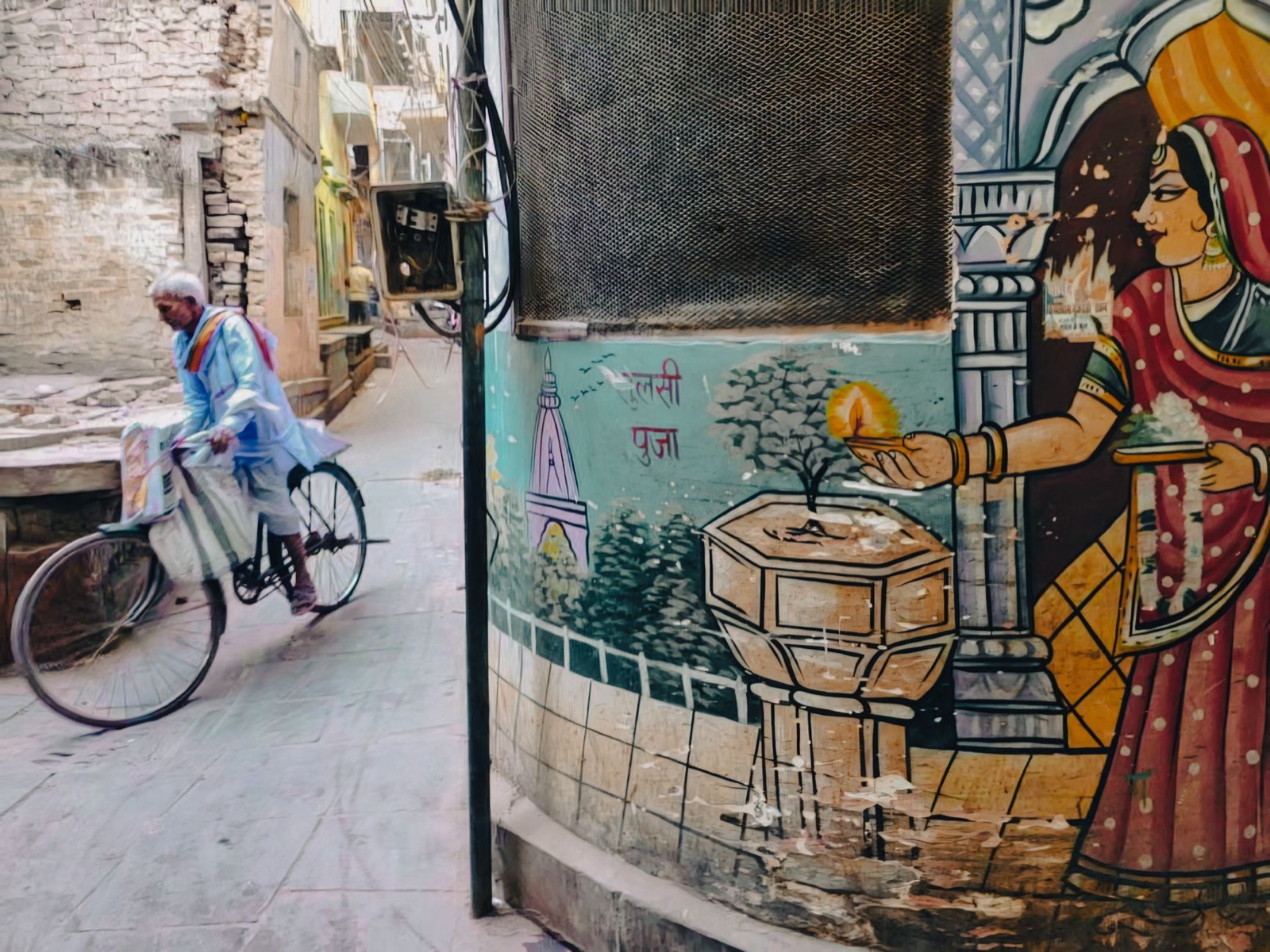
The Kaal Bhairav temple, Varanasi is the shrine of the Kotwal of Kashi: the fierce form of Lord Shiva who, devotees believe, guards the city and gives permission to those who come to live in it or visit it. It stands in the Bharonath area of Vishweshwarganj in the old city, a short way from Kashi Vishwanath temple, and for many families no Kashi yatra feels complete without his darshan. This guide covers what the temple means, the question of which darshan to take first, published timings, offerings and the black thread, the busiest days, and Kaal Bhairav Jayanti on Tuesday, 1 December 2026.
Key takeaways
- Kaal Bhairav is worshipped as the Kotwal (guardian) of Kashi; the Ministry of Tourism describes him as the deity believed to grant permission to enter or reside in Varanasi.
- The temple is in Bharonath, Vishweshwarganj; only the silver face of the deity is visible through the sanctum doorway.
- The Incredible India listing gives the temple as opening at 5:00 AM and closing around 9 to 10 PM, with possible midday closures for bhog and rest.
- Tuesdays and Sundays draw especially large crowds; early weekday mornings are calmer.
- Drik Panchang for Varanasi places Kaal Bhairav Jayanti on Tuesday, 1 December 2026.
On this page
Why he is the Kotwal of Kashi
A kotwal is the old word for a town's chief of police. In Kashi the title belongs to Kaal Bhairav, and it is the simplest way to understand why this small temple draws so many people. The Incredible India page for the temple, run by the Ministry of Tourism, describes Kaal Bhairav as the city's guardian, believed to grant devotees permission to reside in or even enter Varanasi. Amar Ujala, reporting on the temple, puts the local belief plainly: no work in Kashi is completed without Baba Kaal Bhairav's permission.
The story behind it is told in the Puranic tradition of Kashi. As summarised on Wikipedia, Brahma and Vishnu argued over who was supreme, Shiva appeared between them as a column of light, and when Brahma's fifth head spoke in pride, Shiva brought forth Kaal Bhairav, who severed it. The skull clung to Bhairav's hand, and the sin of the act followed him across the worlds until he entered Varanasi, where the skull fell and he was freed; the place is remembered as Kapal Mochan. Shiva then declared that Kaal Bhairav would remain in Kashi as its kshetrapala, the guardian of the sacred ground.
So the temple has no hidden secret in the sense people sometimes search for. Its meaning is out in the open: Kashi is Shiva's city, and Kaal Bhairav keeps it. Devotees come to ask for his protection, to be freed of fear, and to seek his leave to stay in his city.
Inside, the deity is not a full standing idol. The Incredible India listing notes that only the silver face of Kaal Bhairav is visible through the sanctum doorway, adorned with garlands, with the rest of the image draped in cloth. In Bhairav's iconography his vahana is the dog.
Kaal Bhairav or Kashi Vishwanath first
This is the question families ask us most, and honest sources do not agree. There are two living traditions:
| Tradition | The reasoning |
|---|---|
| Kaal Bhairav first | As Kotwal, he is approached first to seek permission to be in Kashi, before darshan of Baba Vishwanath. |
| Kashi Vishwanath first | The Incredible India listing says pilgrims traditionally visit Kaal Bhairav after darshan at Kashi Vishwanath, and that his darshan is considered essential to begin and complete a Varanasi pilgrimage. |
Both views agree on the part that matters: a Kashi yatra includes Kaal Bhairav. If your family has a custom, follow it. If not, let practicality decide. Many families take Kashi Vishwanath darshan early in the morning, when the queues are calmer, and walk on to Kaal Bhairav afterwards; others arriving by train go straight to Kaal Bhairav on the first morning to begin the stay with his darshan. Neither is a mistake.
Key insight
The order matters far less than the attitude. Choose the sequence that keeps the day calm, especially if elderly parents are with you; a rushed second darshan after a long first queue serves no one.
Kaal Bhairav temple Varanasi timings
For the Kaal Bhairav temple, Varanasi has no official published timetable that we could find, and listings differ. Here is what the published sources say:
| Source | Opening hours given |
|---|---|
| Incredible India (Ministry of Tourism) | Opens 5:00 AM; closes around 9:00 to 10:00 PM; midday closures may occur during bhog and rest periods |
| Several travel and temple directories | 5:00 AM to 1:30 PM, and 4:30 PM to 9:30 PM |
Read together, the safe plan is to go in the morning between opening and early afternoon, or in the evening after about 4:30 PM, and not to count on darshan in the early-afternoon gap. Aarti times are not published officially either; directories list morning, midday and evening aartis at varying times. If you want to attend a particular aarti, ask at your stay or at the temple the day before. Timings change on festivals and during the Kartik month, so check again the week you travel.
Directories list no entry fee for ordinary darshan at the Kaal Bhairav temple in Varanasi. Offerings bought at the stalls outside are paid for separately.
Where it is and how to reach
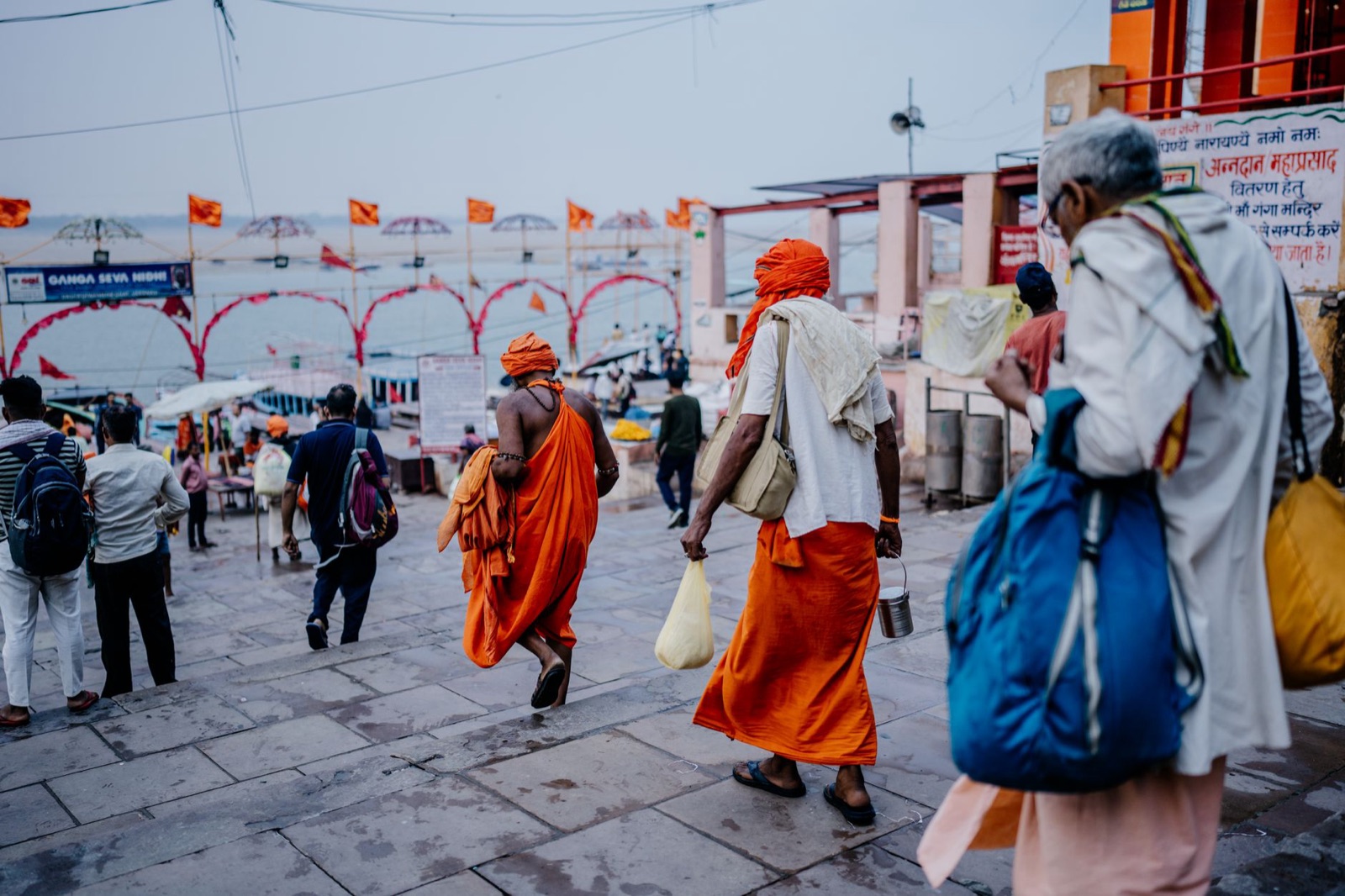
The temple stands in Bharonath, in the Vishweshwarganj area of the old city. Local temple directories put it at about a kilometre from Kashi Vishwanath temple. The last stretch is through narrow lanes, and vehicles cannot go up to the door, so plan to walk the final part. Autos and e-rickshaws can bring you to the nearest road point.
- From Varanasi Junction: the Incredible India listing estimates 20 to 30 minutes by auto or taxi, depending on traffic.
- From the ghats or Kashi Vishwanath: most families combine the two on foot or by e-rickshaw; ask your stay for the easiest route on the day, as police diversions change on busy days.
- Where to stay: a room in the old city or near the Kashi Vishwanath corridor turns both darshans into short trips. Our guide to staying near Kashi Vishwanath compares the options.
If you want a driver who waits, or a stay you can trust, our verified contacts in Varanasi have passed document checks and manual approval.
Offerings and the black thread
The offerings at this temple are simple and are sold at the stalls in the lane outside:
- Oil and a lamp. Offering oil, and the oil aarti, are central to Kaal Bhairav's worship; Amar Ujala's report on the temple describes the oil offering and lighting a jyot as especially important. Mustard oil is the usual choice.
- Black sesame, flowers and garlands, which the Incredible India listing names among the usual offerings.
- The black thread. Devotees take home a black thread, the Bhairav raksha sutra, tied on the wrist as a sign of his protection. The Incredible India listing calls it a ritual particular to this temple.
- The touch of the staff. Amar Ujala describes the Kashi tradition in which devotees are touched with Baba's staff (danda) to remove the evil eye, a practice many pilgrims receive at the sanctum.
These are acts of devotion, and their meaning is a matter of faith. Be wary of anyone near the temple who promises a particular result in exchange for an expensive special offering; Kaal Bhairav's blessing is not sold by the kilogram.
Rules and etiquette
The temple does not publish a written code online, so the rules you meet are the ordinary ones of an old, small and crowded shrine, plus whatever the staff and police announce on the day:
- Dress modestly and leave footwear at the stands or with a family member outside.
- Keep offerings small. The sanctum is compact, darshan is quick, and the queue moves fast. Hand your offering to the priest rather than reaching in.
- Follow the instructions at the gate on phones, bags and photography, which can change on busy days.
- Keep the queue. No one outside the temple can sell you a shortcut. Anyone offering paid VIP darshan in the lanes is a tout, not a temple official.
- Go gently with elderly parents. The lanes are uneven and the push near the doorway can be strong on Sundays and Tuesdays. Our checklist for elderly parents in Kashi covers the practical side.
Crowds and Kaal Bhairav Jayanti 2026
Sundays and Tuesdays are the busiest days of the week here; the Incredible India listing notes that both draw especially large crowds. The year's biggest days at the temple are Bhairav Ashtami, Mahashivratri and Annakoot.
Bhairav Ashtami is Kaal Bhairav Jayanti, the day of his manifestation, observed on the Ashtami of the waning moon in Margashirsha (by the purnimanta calendar used in North India). For 2026, Drik Panchang for Varanasi gives:
| Kaal Bhairav Jayanti 2026 | Varanasi, per Drik Panchang |
|---|---|
| Date | Tuesday, 1 December 2026 |
| Ashtami tithi begins | 12:11 AM, 1 December 2026 |
| Ashtami tithi ends | 11:13 PM, 1 December 2026 |
Some sites list 30 November instead; that is usually a calendar set to a location outside India. For Varanasi the date is 1 December, and since it is also a Tuesday, expect one of the heaviest days of the year at the temple. If you can, take darshan on another day that week and keep the Jayanti for a quiet puja where you stay.
The weeks around it are busy too. Late November brings Dev Uthani Ekadashi, Tulsi Vivah and the lamps of Kartik Purnima to Kashi; our note on Kashi Vishwanath timings covers the main temple's schedule for the same trip.
A simple darshan plan
For a family with one or two days in Kashi, a plan that works:
- Early morning: Kashi Vishwanath darshan, when the queue is shortest.
- Mid-morning: walk or take an e-rickshaw to Kaal Bhairav, buy a small oil and flower offering in the lane, take darshan and the black thread.
- Late morning: rest and eat before the afternoon heat and the midday closure.
- Evening: the Ganga aarti at the ghats, or a second, quiet temple visit.
If your family follows the Kaal Bhairav-first custom, simply swap steps one and two. On a Sunday or Tuesday, start earlier and allow twice the time.
When parents are travelling without you, or you would rather not manage the lanes, queues and footwear alone, a MargKGB Buddy is a verified person who stays with your family through both darshans and the walk between them. A Buddy keeps touts away and handles the practical side; a Buddy does not arrange passes or special entry, which no one outside the temple can do.
What to do next
Decide with your family which darshan you will take first, pick a weekday morning if you can, and avoid 1 December unless the Jayanti itself is the reason for your trip. Check the temple's hours again the week you travel, keep the offering simple, and take the black thread home as a reminder of the Kotwal who keeps Kashi.
Frequently asked questions
What is the significance (rahasya) of the Kaal Bhairav temple in Varanasi?
There is no hidden secret; the meaning is open. Kaal Bhairav, a fierce form of Shiva, is worshipped as the Kotwal or guardian of Kashi. In the Puranic story he severed Brahma's fifth head, was freed of that sin on entering Varanasi, and was asked by Shiva to remain as the city's protector. Devotees believe he grants permission to stay in Kashi and protects against fear.
What time does the Kaal Bhairav temple in Varanasi open?
The Ministry of Tourism's Incredible India listing gives the opening time as 5:00 AM, with the temple closing around 9 to 10 PM and possible midday closures for bhog and rest. Several directories list 5:00 AM to 1:30 PM and 4:30 PM to 9:30 PM. Plan for the morning or evening, and check locally the week you travel, as timings change on festivals.
What are the rules at the Kaal Bhairav temple in Varanasi?
The temple does not publish a written code online. Dress modestly, leave footwear outside, keep offerings small, keep to the queue and follow the staff's instructions on phones, bags and photography, which can change on busy days. No one outside the temple can sell a shortcut or VIP darshan; anyone offering one in the lanes is a tout.
Kaal Bhairav or Kashi Vishwanath temple: where should one go first?
Traditions differ. Many devotees visit Kaal Bhairav first, as Kotwal, to seek permission to be in Kashi. The Incredible India listing says pilgrims traditionally visit Kaal Bhairav after Kashi Vishwanath darshan. Both agree that a Kashi yatra includes him. Follow your family custom; if you have none, choose the order that keeps queues short and the day calm.
When is Kaal Bhairav Jayanti in 2026?
Drik Panchang for Varanasi places Kaal Bhairav Jayanti, also called Bhairav Ashtami, on Tuesday, 1 December 2026, with the Ashtami tithi from 12:11 AM to 11:13 PM that day. Some sites show 30 November, usually because they are set to a location outside India. Expect very heavy crowds at the Varanasi temple, as it is also a Tuesday.