Ganesh Chaturthi: The Story Behind the Ten Days We Welcome Ganesha Home
By MARG KGB Team · Last updated 13 September 2026
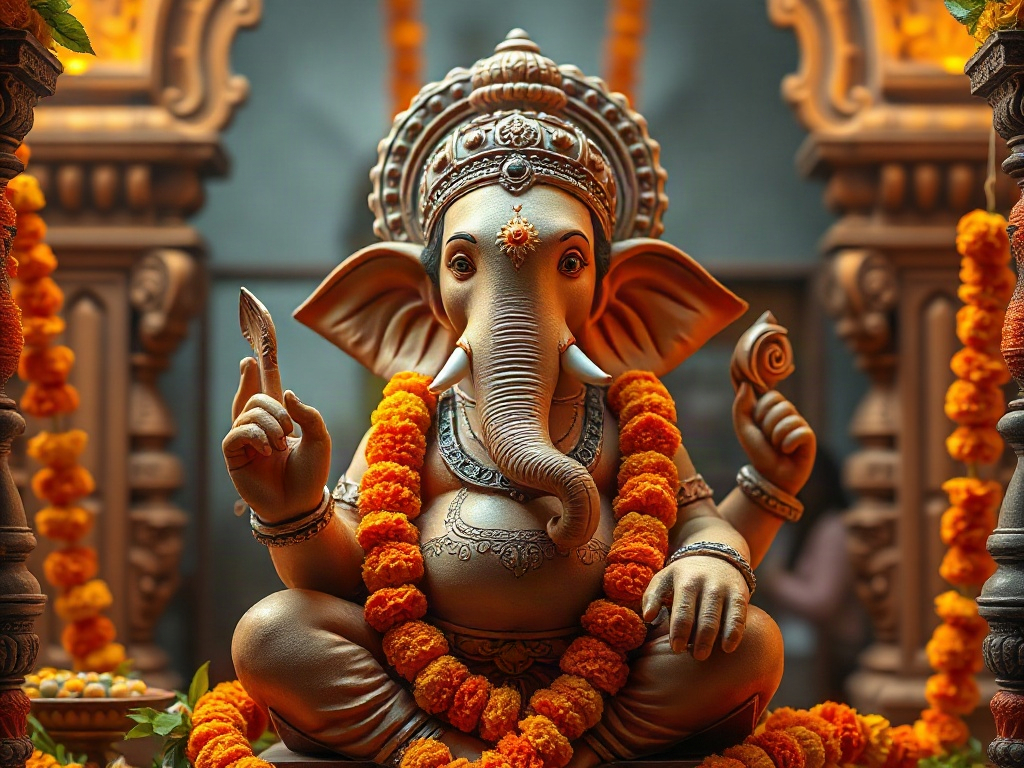
Nine days before the immersion, a potter in Pune squints at a half-finished clay trunk and decides it isn't curved enough yet. He'll fix it tonight. In a few days, thousands of families will bring an idol like his into their homes, keep it for ten days, feed it modak, sing to it — and then walk it to the nearest river, pond, or sea, and let it go.
Ganesh Chaturthi marks the birthday of Lord Ganesha, the elephant-headed god of new beginnings, on the fourth day of the bright fortnight of Bhadrapada. In 2026, it falls on Monday, September 14. The festival runs ten days, ending on Anant Chaturdashi, when the idol is immersed in water — a goodbye built into the welcome from the very first day.
Why an elephant's head?
The story pilgrims grow up hearing is this: Parvati, wanting someone to guard her door while she bathed, made a boy out of turmeric paste and breathed life into him. When Shiva returned home and found a stranger blocking his own doorway, refusing to let even him pass, he didn't wait to ask who the boy was. In the fight that followed, the boy's head was struck off.
Parvati's grief was enough to shake the heavens. To undo what had happened, Shiva sent his attendants to bring back the head of the first living creature they found facing north — an elephant. He placed it on the boy's shoulders and gave him life again. That boy became Ganesha: the god you pray to first, before anything else, because he has already known what it is to be stopped at the door.
Why he goes first
Before a wedding, a new business, an exam, a journey — Ganesha is invoked first. He is called Vighnaharta, the remover of obstacles, precisely because he was, for a moment, the obstacle himself. Devotees who chant before starting anything new often reach for this verse:
वक्रतुण्ड महाकाय सूर्यकोटि समप्रभ। निर्विघ्नं कुरु मे देव सर्वकार्येषु सर्वदा॥
vakratuṇḍa mahākāya sūrya-koṭi samaprabha, nirvighnaṃ kuru me deva sarva-kāryeṣu sarvadā
O Lord with the curved trunk and mighty form, radiant as a million suns — make all my endeavors free of obstacles, always.
It's one of the most recited verses in Indian homes, and most people who say it were never told where it comes from — the Ganapati tradition, chanted for centuries before anyone writes an exam or opens a shop.
A festival that became a homecoming for everyone
For a long time, Ganesh Chaturthi was mostly observed quietly, at home. That changed in 1893, when the freedom fighter Lokmanya Bal Gangadhar Tilak encouraged families to bring their idols out into shared public spaces — turning a private prayer into a ten-day gathering where an entire neighborhood, regardless of caste or class, stood shoulder to shoulder. It was as much a quiet act of unity under British rule as it was a festival. That's still what it feels like today: strangers on the same street, singing the same aarti.
Why the goodbye matters as much as the welcome
The immersion, or visarjan, confuses people who meet this festival for the first time. Why build something so carefully, only to let it dissolve in water days later?
That's the point. Ganesha is made of clay — earth returning to earth. The ten days aren't about keeping him; they're about how you carry yourself while he's there, and what you're willing to let go of when Anant Chaturdashi comes. If you've ever visited a temple and felt like you had to hold on to that feeling forever to make it count, this festival says otherwise. You don't. You just have to show up fully while it lasts.
If that verse stayed with you, MARG's Naam Jaap counter has Ganesha's mantra ready to chant — at home, on a train platform, or standing in line for darshan.
Frequently asked questions
When is Ganesh Chaturthi in 2026?
Ganesh Chaturthi 2026 falls on Monday, September 14. The festival continues for ten days, ending with the idol's immersion (visarjan) on Anant Chaturdashi.
Why is Lord Ganesha worshipped before starting anything new?
Ganesha is known as Vighnaharta, the remover of obstacles. Devotees invoke him first — before a wedding, a journey, an exam, or a new venture — so that what follows is free of hindrance.
What does the Vakratunda Mahakaya mantra mean?
“Vakratunda Mahakaya” is a Sanskrit verse asking Ganesha, described as having a curved trunk and a form as radiant as a million suns, to keep every undertaking free of obstacles. It is one of the most widely chanted verses in Indian homes.
Why is the Ganesha idol immersed in water at the end of the festival?
The immersion, or visarjan, reflects the idea that the clay idol returns to the elements it came from. It marks the cycle of creation and dissolution, and is a reminder to hold the festival's devotion lightly rather than clinging to the object itself.
Who made Ganesh Chaturthi a public festival?
Freedom fighter Lokmanya Bal Gangadhar Tilak popularized public celebration of Ganesh Chaturthi in 1893, turning what had largely been a household observance into a community gathering that brought people together across caste and class during British rule.