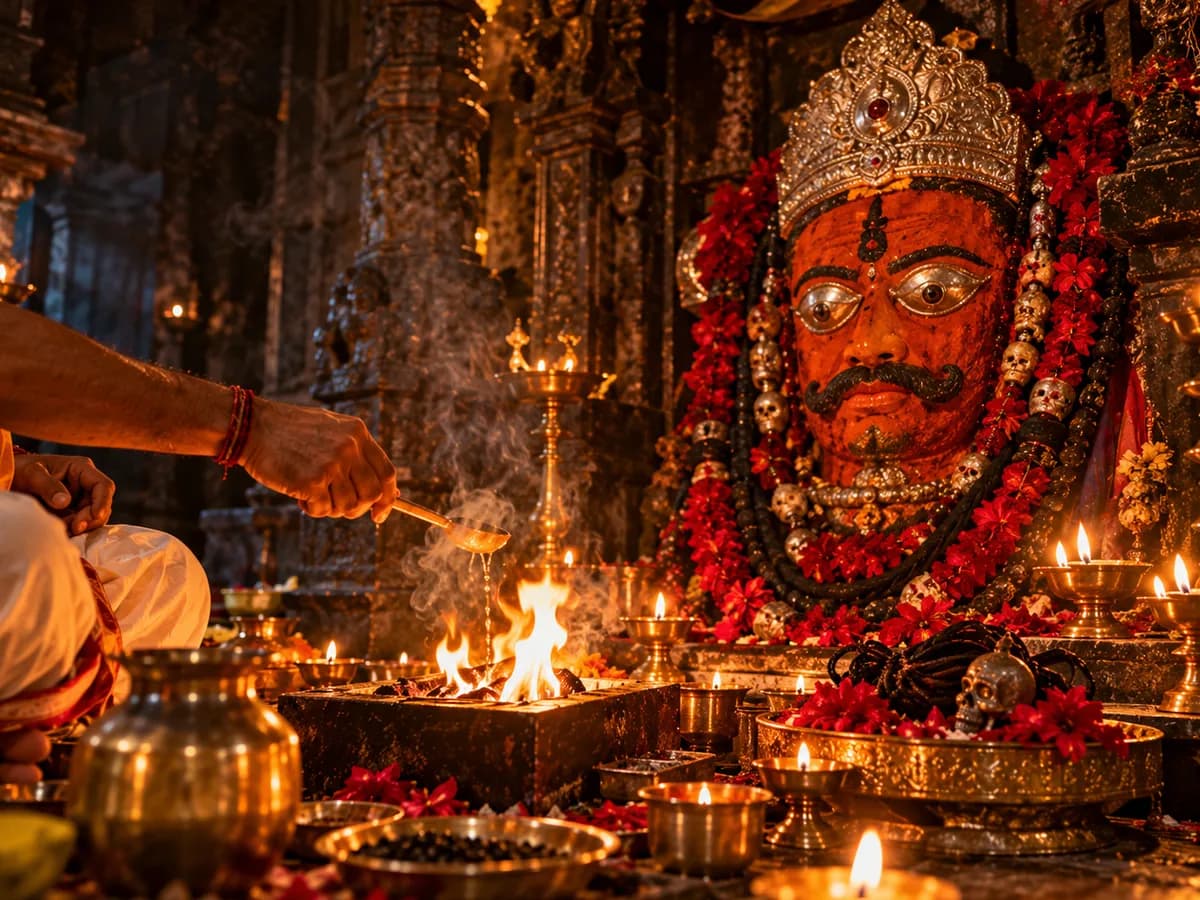
Special Prasad Offering Seva
Shri Kal Bhairav Temple, Ujjain
Offering of special prasad to Kal Bhairav.
Price on requestView details →
Lord Kaal Bhairav
Ujjain, Madhya Pradesh
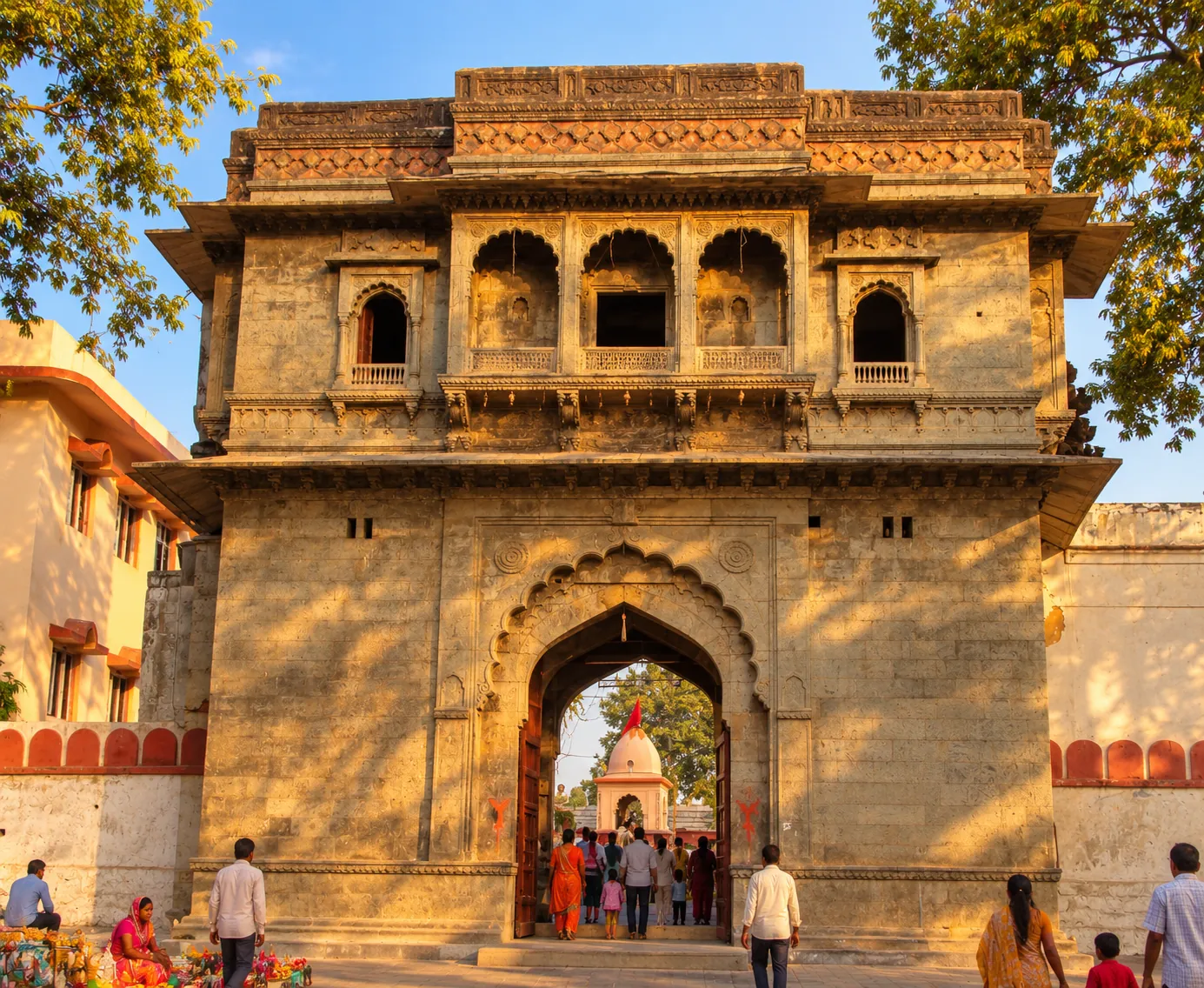
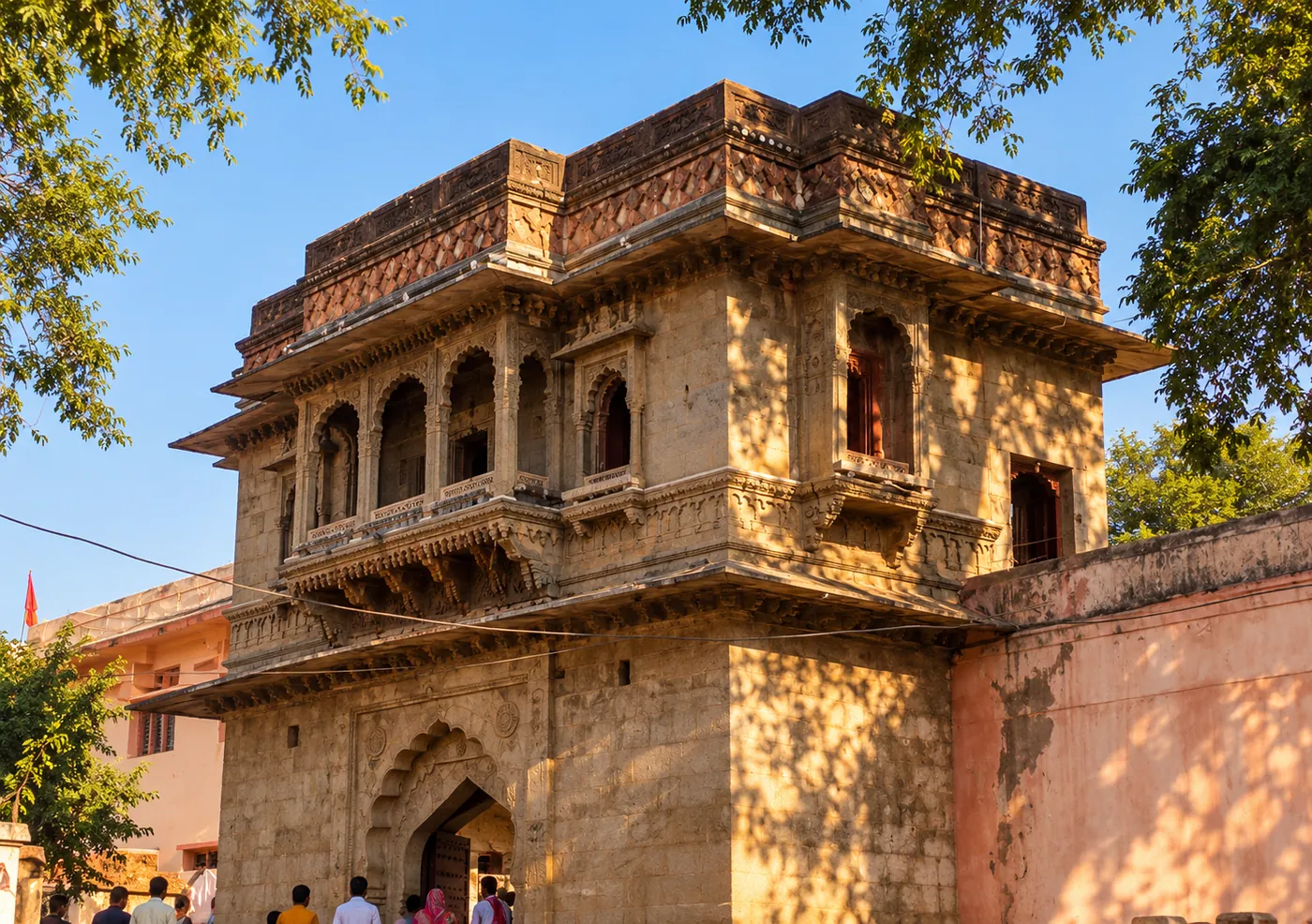
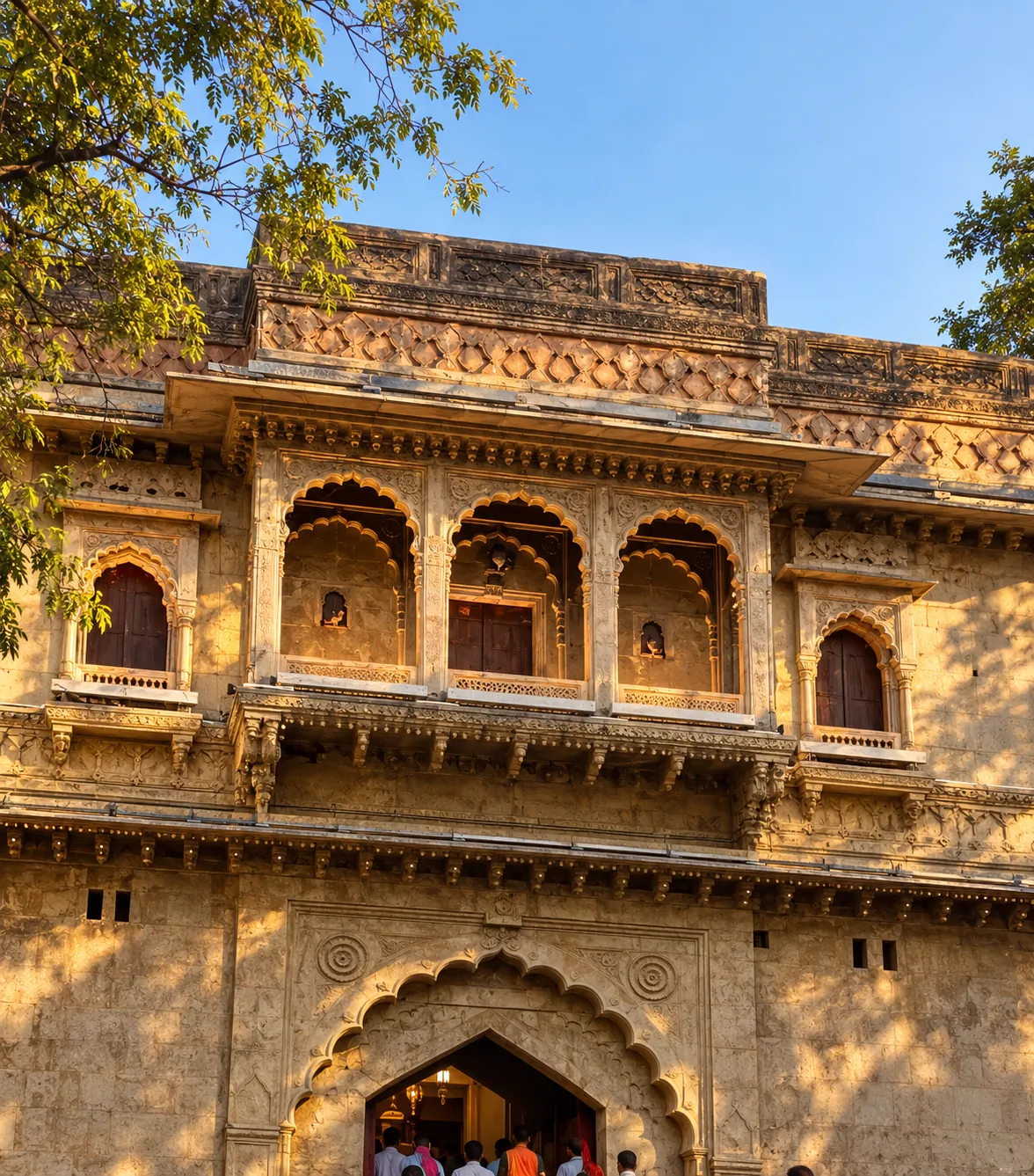
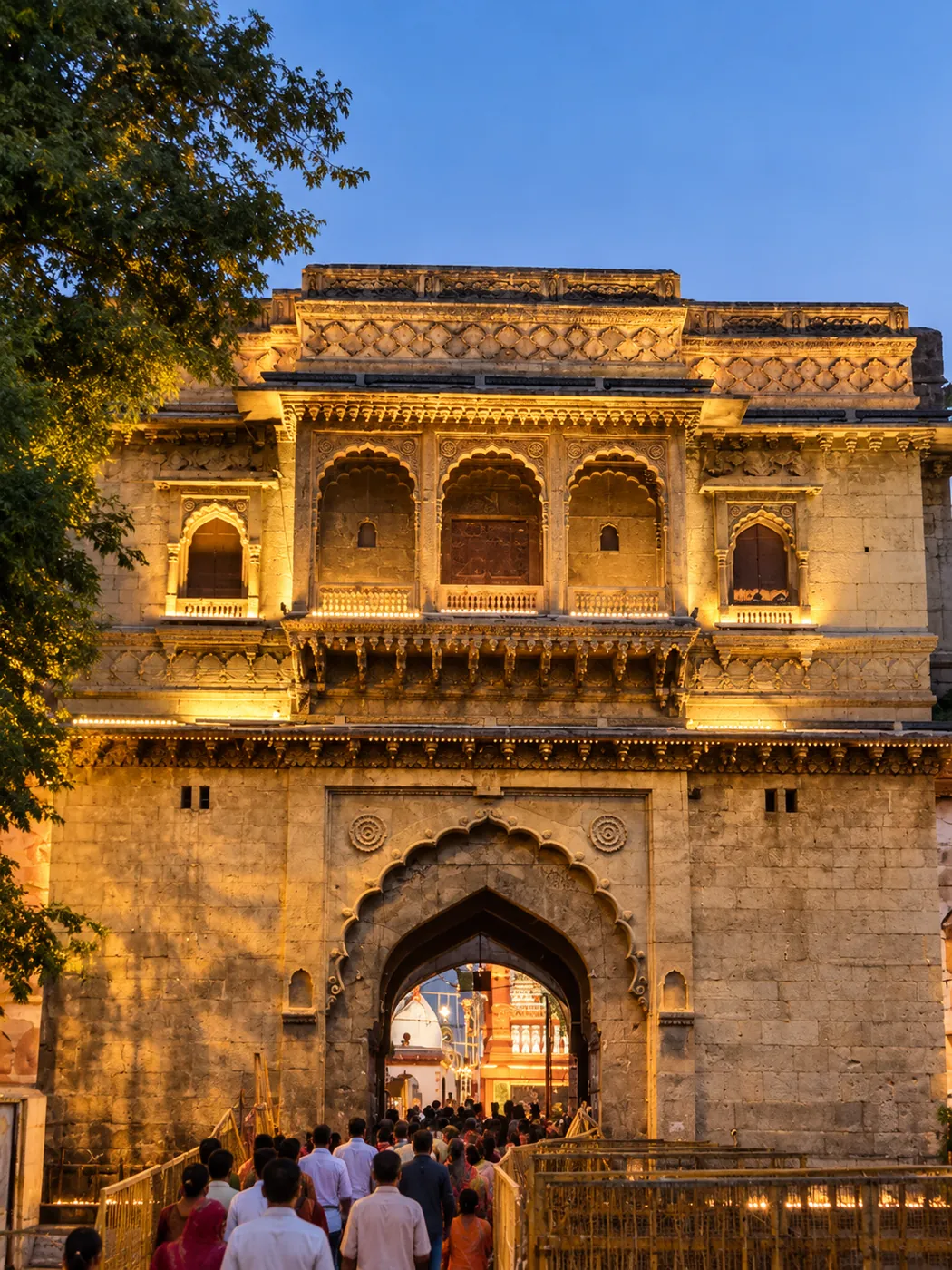
The temple of Ujjain's guardian deity, Kaal Bhairav, on the banks of the Shipra, famous for the offering of liquor as prasad.
Performed by local pandits. MargKGB confirms the date and dakshina with you.
Shri Kal Bhairav Temple, Ujjain
Offering of special prasad to Kal Bhairav.
Shri Kal Bhairav Temple, Ujjain
The royal (rajsi) seva of Kal Bhairav with full shringar and bhog.
Shri Kal Bhairav Temple, Ujjain
A havan dedicated to Lord Bhairav.
Shri Kal Bhairav Temple, Ujjain
Chanting of the Batuk Bhairav mantra.
Kaal Bhairav, a fierce form of Lord Shiva, is worshipped as the kotwal or protector of Ujjain, and pilgrims traditionally visit him to complete their Ujjain yatra. The temple stands near the Shipra river. The temple is best known for its unique offering: liquor is presented to the deity as bhog, and the priest offers it to the idol. Devotees pray here for protection from negative energies, relief from Rahu's malefic effects, and freedom from past karma. Kalashtami, the eighth day after the full moon, is especially sacred to Kaal Bhairav.
Ujjain, Madhya Pradesh
Open in Google Maps →How to reach: Ujjain Junction railway station is about 2–3 km away, and autos and e-rickshaws run from the station to the temple. The nearest airport is Devi Ahilyabai Holkar Airport in Indore, about 60 km away by taxi or bus. Ujjain is well linked by highway to Indore, Bhopal and Dewas. Best time to visit: October to March, when the weather is pleasant for darshan and sightseeing.
He is worshipped as the guardian of the city, believed to protect devotees from troubles and negative energies.
Kalashtami, the eighth day after the full moon, is dedicated to his worship.
Protection, fulfilment of wishes, spiritual progress, good health, success and relief from the effects of Rahu.
Liquor is offered as bhog, a tradition unique to this temple.
Photography is restricted in some areas, so check with the temple staff first.